
CureSureMedico
|
EN

Cleft Lip and Palate Repair

Plastic Surgery

payments

Starting from

$2,200

Up to $4,500 depending on centre

schedule

Typical duration

7–14 days

Including pre-operative work-up

arrow_downwardlocal_hospital

Partner hospitals

1

Vetted for outcome data & accreditation

Dr. Rodina Ainasoa

Content reviewed for medical accuracy by: Dr. Rodina Ainasoa · Medical Content Writer & Health Communications

Overview

Cleft lip and palate repair is one of the most impactful pediatric plastic surgeries, restoring normal facial anatomy, speech, and feeding in affected children. India and Thailand host world-class craniofacial teams who deliver outcomes on par with Western centers at a cost that makes treatment accessible to families worldwide.

Your case is matched to a centre on the basis of clinical outcome data, not marketing. We coordinate every step — from pre-operative work-up to post-treatment follow-up — with a dedicated care coordinator.

What's included

Pre-operative craniofacial assessment and imaging
Pediatric anesthesia and surgeon fees
Hospital stay including pediatric nursing care
All surgical consumables and implant materials
Speech therapy referral and post-op follow-up
Orthodontic coordination consultation

Cleft Lip and Palate Repair

Coordinated from

$2,200

or message us on WhatsApp

No commitment required. Your data is never shared with third parties.

Cleft Lip Repair vs. Cleft Palate Repair

Cleft lip and cleft palate are related but distinct conditions, and they are typically repaired as two separate operations at different ages. Here is how the two procedures compare, per Cleveland Clinic and Mayo Clinic.

ParameterCleft Lip RepairCleft Palate Repair
Typical age at surgeryUsually performed at 3 to 6 months of age, sometimes preceded by preparatory lip taping or nasoalveolar molding shortly after birth, per Cleveland Clinic.Usually performed around 9 to 15 months of age, before speech development begins, per Cleveland Clinic and published craniofacial-surgery guidance.
What the surgery involvesThe surgeon makes incisions on either side of the cleft, brings the skin and muscle together, and closes with absorbable stitches to reshape the lip and nostril; the operation itself generally takes under 2 hours, per Cleveland Clinic.The surgeon rearranges tissue layers in the roof of the mouth and nasal cavity, closing the separation and securing it with absorbable stitches; the operation itself generally takes 2 to 3 hours, per Cleveland Clinic.
Typical hospital stayAn overnight hospital stay is generally required, per Cleveland Clinic.At least one to two days, with some children needing a longer stay depending on recovery, per Mayo Clinic.
Main purposeRestores the continuity of the lip muscle, which also guides healthy growth of the mouth, and improves the appearance of the lip and lower nose, per published craniofacial-surgery guidance.Supports normal speech development and stops nasal regurgitation of food and liquid, per published craniofacial-surgery guidance.
Follow-on careSets up the foundation for later palate repair and, for some children, an alveolar bone graft in later childhood.Followed by ongoing speech-language assessment starting around age 1, with some children needing palate revision surgery at ages 4 to 6.

The Procedure: Step by Step

The description below outlines the general process for cleft lip and cleft palate repair. Your craniofacial/plastic surgeon will confirm the specific technique, timing, and any adjustments for your child's case.

1

Pre-operative assessment and preparation

A craniofacial or plastic surgery team examines the cleft, reviews feeding and growth history, and confirms fitness for anesthesia; some infants first undergo non-surgical nasoalveolar molding or lip taping to narrow the gap before surgery, per Mayo Clinic.

2

General anesthesia

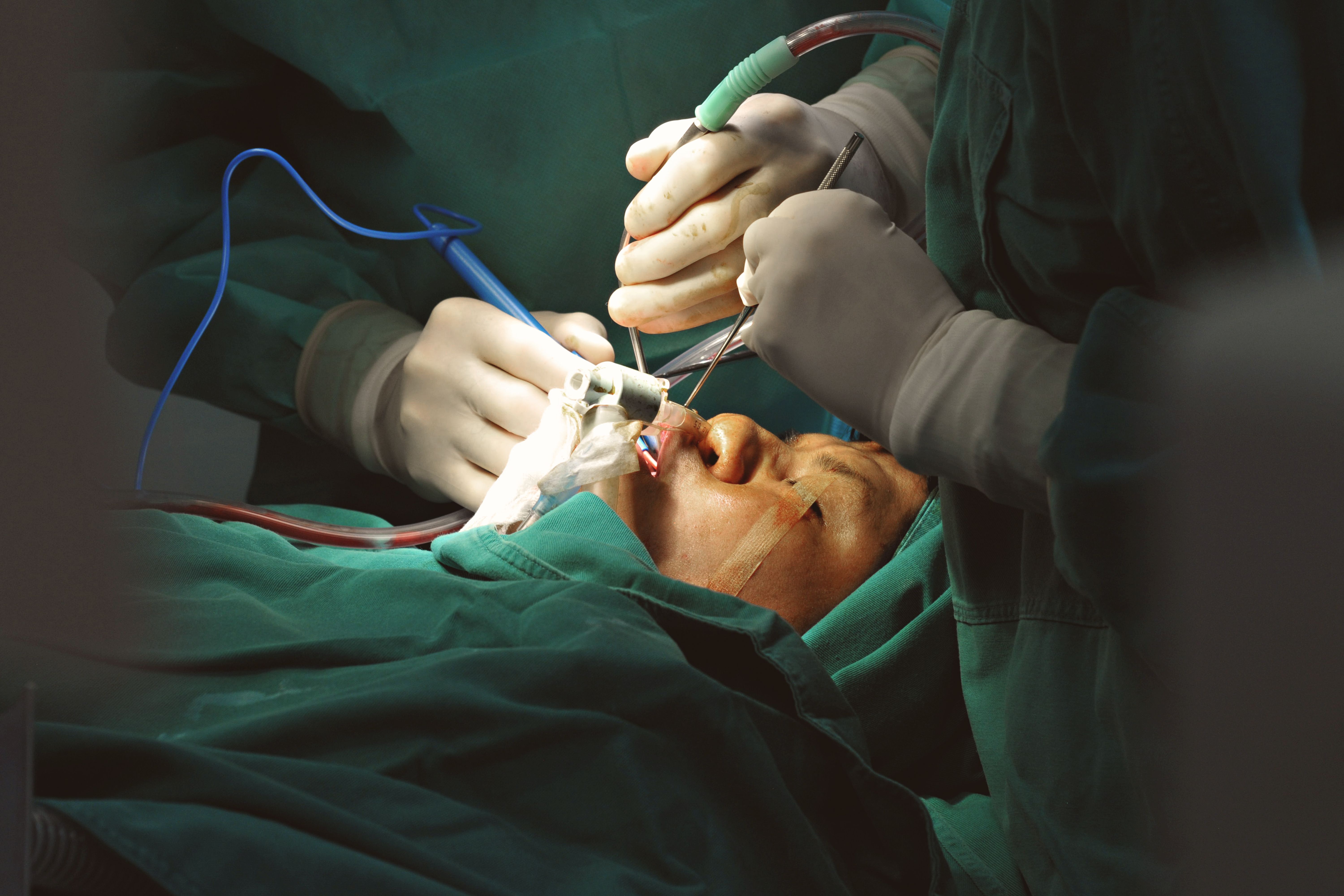
Both cleft lip repair and cleft palate repair are performed under general anesthesia, so the child is fully asleep and feels nothing during surgery, per Cleveland Clinic.

3

Surgical repair

For lip repair, the surgeon closes the cleft in the lip and nostril tissue with absorbable stitches; for palate repair, the surgeon rearranges and closes the tissue layers in the roof of the mouth. Lip repair typically takes under 2 hours; palate repair typically takes 2 to 3 hours, per Cleveland Clinic.

4

Recovery room monitoring and arm restraints

The child is monitored in a recovery area as anesthesia wears off. Soft splints or cuffs are placed around the arms for a period after surgery to prevent the child from touching the healing lip or palate, per Cleveland Clinic.

Recovery Timeline

Recovery Timeline
Days 1-2

Hospital observation continues; swelling and small amounts of blood-tinged saliva are normal. Feeding is limited to clear liquids from a cup only — no straws or utensils near the surgical site, per Mayo Clinic.

First 1-2 weeks

Soft splints/arm cuffs generally stay on to prevent the child from touching the mouth. Diet is limited to soft foods and liquids by cup or specialized bottle/syringe; stitches are absorbable and typically dissolve within this window, per Cleveland Clinic and Mayo Clinic.

~2 weeks

A follow-up appointment with the surgical team is typically scheduled to check healing of the incision, per Cleveland Clinic.

Up to 4 weeks

Most visible surface healing is complete by around 4 weeks, though internal tissue continues to mature for longer; speech-language evaluation begins in the following months as part of ongoing care, per Cleveland Clinic and published craniofacial-surgery guidance.

Source: Cleveland Clinic; Mayo Clinic. Individual recovery varies and is guided by your craniofacial/plastic surgery team.

Known Risks & Limitations

  • Oronasal fistula (a small opening that can reform between the mouth and nose after palate repair) is a recognized complication, with published rates varying widely by study — a meta-analysis of studies from 2000-2012 found an average rate of about 4.9%, while other individual studies report higher rates, per peer-reviewed craniofacial-surgery literature.
  • Delayed wound healing after palate surgery is reported in roughly one in ten children in published surgical-outcome studies, per peer-reviewed craniofacial-surgery literature.
  • General risks of the surgery include bleeding, infection, and breathing problems, as with any procedure performed under general anesthesia, per Cleveland Clinic.
  • Cleft repair is rarely a single, one-time fix — many children need one or more additional procedures over childhood, such as an alveolar bone graft (typically ages 6-10), palate revision surgery (sometimes ages 4-6), or later jaw surgery, per published craniofacial-surgery guidance and ACPA-aligned cleft-team protocols.
  • Speech, hearing, and dental development need ongoing monitoring throughout childhood, since palate function, ear health, and tooth/jaw alignment can all be affected by cleft anatomy even after successful surgical repair, per published craniofacial-surgery guidance.

Source: Cleveland Clinic; peer-reviewed craniofacial-surgery outcome studies; published cleft-care timeline guidance aligned with ACPA (American Cleft Palate-Craniofacial Association) protocols. No procedure is without risk; your surgical team will review your child's individual case.

The CureSureMedico Care Pathway

Remote craniofacial team review

Share your child's cleft type, feeding history, growth records, and any prior imaging. Our coordination team forwards the case to a craniofacial/plastic surgery team for an initial suitability and staging assessment.

Surgeon & hospital matching

Based on your child's age, cleft type, and whether lip repair, palate repair, or a later stage (such as bone grafting) is needed next, we match you with a craniofacial surgeon and a hospital equipped with pediatric anesthesia and nursing facilities.

Cost estimate & travel planning

A consolidated cost estimate covering pre-operative assessment, the surgery itself, and the immediate post-operative stay is issued before you travel, along with guidance on the recommended minimum stay before flying home.

Surgery day & recovery monitoring

Your child's pre-operative work-up, the surgery, and recovery-room monitoring are coordinated with the care team, followed by discharge with clear feeding, wound-care, and arm-restraint guidance.

Continuity of lifelong cleft care

Because comprehensive cleft care spans childhood — including future stages such as bone grafting, orthodontics, speech therapy, and possible revision surgery — discharge summaries and surgeon contact details are shared so your child's future care, wherever it takes place, can build on a clear record of what was done.

Global cost comparison — Cleft Lip and Palate Repair

Average coordinated costs across our partner centres. Final pricing depends on clinical complexity and chosen hospital.

CountryAvg. costvs. cheapest
🇮🇳

India

New Delhi · Chennai · Bengaluru · Hyderabad · Mumbai · Kochi

Best value✓ Verified
$3,000
chevron_right
🇹🇷

Turkey

Istanbul

✓ Verified
$3,500
chevron_right

Costs are indicative estimates and vary by procedure specifics, hospital, and clinical complexity. Request a personalised estimate for your specific case.

Partner hospitals

1 centres
View all hospitals
Amrita Hospital

Amrita Hospital

Faridabad, India

Asia's largest private hospital — 2,600 beds, 64 operation theatres, 81 specialties on a 130-acre campus in Delhi NCR. NABH & NABL accredited. Centres of excellence in oncology, cardiac surgery, BMT, organ transplantation, neurosciences, and IVF.

NABHNABL

800+

Specialists

2,600+

Beds

View Profile

Frequently asked questions

Cleft lip repair is typically performed between 3 and 6 months of age, while palate repair is done between 9 and 18 months to support normal speech development. Alveolar bone grafting is usually performed between ages 7 and 10 when the canine tooth begins to emerge.

No fees. No commitment.

Our guidance is completely free

We are compensated by our partner hospitals — never by patients. You get independent clinical matching, cost transparency, and end-to-end coordination at no cost to you.

Message us on WhatsApp