
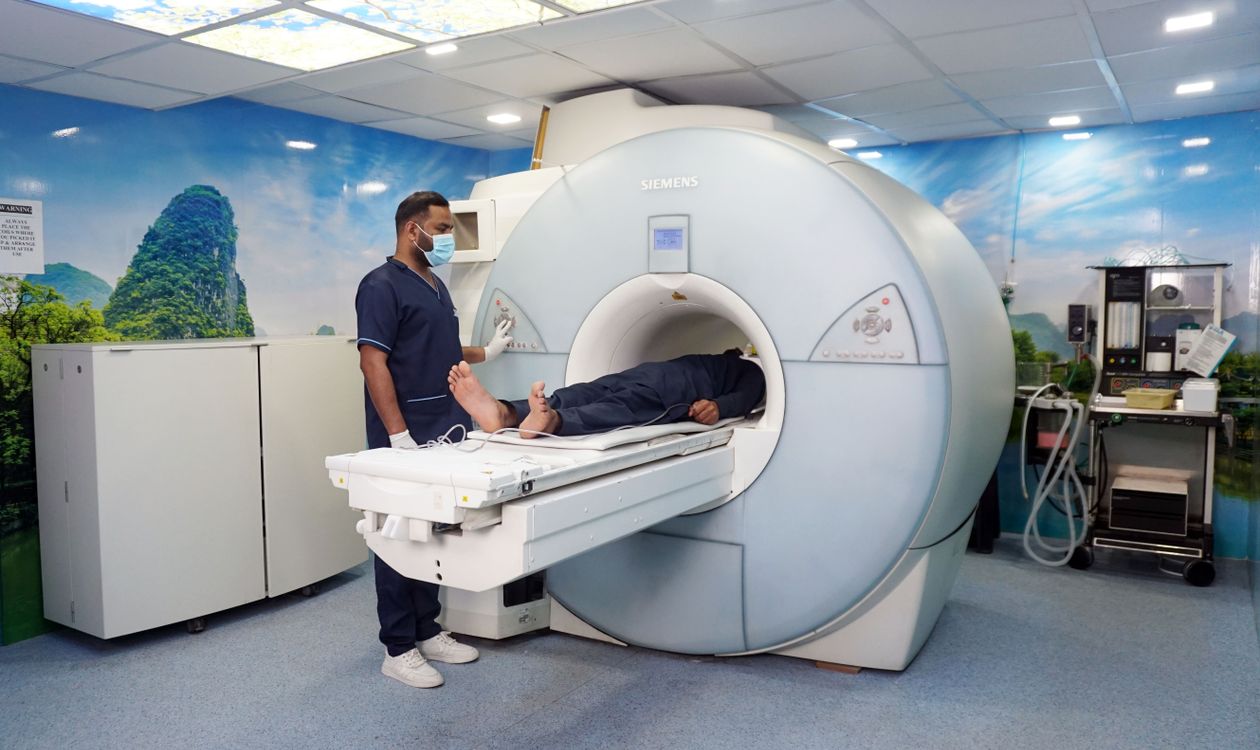
Full-Body MRI & PET-CT Screening
Diagnostics
Starting from
$800
Up to $3,500 depending on centre
Typical duration
1–2 days
Including pre-operative work-up

Content reviewed for medical accuracy by: Dr. Rodina Ainasoa · Medical Content Writer & Health Communications
Overview
Whole-body MRI and PET-CT scanning provide the most comprehensive single-session view of the body for cancer detection, staging, and preventive health screening without surgery. International patients benefit from access to the latest generation scanners and specialist radiologists at significantly lower cost than in the US or UK.
Your case is matched to a centre on the basis of clinical outcome data, not marketing. We coordinate every step — from pre-operative work-up to post-treatment follow-up — with a dedicated care coordinator.
What's included
Full-Body MRI & PET-CT Screening
Coordinated from
or message us on WhatsApp
No commitment required. Your data is never shared with third parties.
Whole-Body MRI vs. PET-CT Screening
Whole-body MRI and PET-CT are both used for comprehensive body screening, but they work differently and suit different situations. Here is how the two approaches compare.
| Parameter | Whole-Body MRI | PET-CT Scan |
|---|---|---|
| How it works | Uses magnetic fields and radio waves to produce detailed anatomical images of soft tissue, organs, and the musculoskeletal system. | Combines a metabolic tracer (usually FDG glucose) with CT imaging to highlight areas of abnormally high metabolic activity alongside anatomical detail. |
| Radiation exposure | No ionising radiation, making it suitable for repeat scanning and for patients who wish to avoid radiation exposure. | Involves a moderate dose of ionising radiation from the CT component and the radioactive tracer, comparable to several years of background radiation. |
| Most appropriate use | General anatomical screening and detection of soft-tissue, brain, spinal, or organ abnormalities, per the American College of Radiology's guidance for asymptomatic screening. | Typically used where there is a specific clinical indication, such as known or suspected cancer staging, monitoring treatment response, or investigating unexplained findings, per the Society of Nuclear Medicine and Molecular Imaging. |
| Contraindications | Certain metallic implants, cardiac pacemakers, and severe claustrophobia can limit or prevent MRI scanning. | Uncontrolled diabetes can affect tracer uptake and image quality; pregnancy is generally avoided because of the radiation dose. |
| Typical scan time | Roughly 45-90 minutes depending on the number of body regions imaged. | Roughly 30-45 minutes for the scan itself, plus a waiting period of 60-90 minutes after tracer injection for it to distribute through the body. |
The Scan: Step by Step
The steps below outline a typical whole-body MRI or PET-CT screening visit. Your coordinating radiologist or oncologist will confirm the exact protocol appropriate for your individual health profile and screening goals.
Pre-scan consultation and preparation
A radiologist or oncologist reviews your medical history, risk factors, and screening goals during a tele-consultation to select the most appropriate scan protocol, and you receive preparation instructions such as fasting before a PET-CT.
The scan itself
For MRI, you lie on a scanning table that moves through the scanner while it captures detailed images over multiple sequences; for PET-CT, a radioactive tracer is injected first and, after an uptake period, you are scanned on a combined PET-CT system.
Radiologist interpretation
A specialist radiologist reviews and annotates the full set of images, comparing findings against normal anatomy and, where relevant, any prior scans, to compile a detailed written report.
Results consultation
You review the findings with a radiologist or coordinating physician, who explains any normal variants, incidental findings, or areas that may warrant further investigation, and helps plan appropriate next steps.
Results & Follow-Up Timeline
The scan itself is same-day and outpatient, with no sedation or anaesthesia required for either MRI or PET-CT screening, and most patients resume normal activity immediately afterward.
The specialist radiologist report, with annotated images, is typically ready within one to three days and shared through a secure online portal alongside a digital copy of your images.
An optional teleconsultation with a specialist is scheduled to walk through the findings in plain language and answer questions, whether the scan is entirely normal or shows something requiring attention.
Where an incidental or suspicious finding is identified, your physician will recommend a specific, targeted next step — such as a follow-up scan, blood test, or biopsy — rather than repeating whole-body screening; most such findings ultimately prove benign, per published screening literature.
Source: American College of Radiology; Society of Nuclear Medicine and Molecular Imaging; Mayo Clinic; Cleveland Clinic. Individual pathways vary and are guided by your coordinating radiologist or physician.
Known Risks & Limitations
- The American College of Radiology has stated there is insufficient evidence to recommend total-body MRI screening for people with no symptoms, risk factors, or family history suggesting underlying disease, and cautions that the practice remains debated within mainstream radiology.
- False positives and overdiagnosis are a well-documented concern with whole-body screening in asymptomatic individuals — published series report that a majority of patients scanned have at least one abnormal finding requiring further workup, while confirmed cancer detection rates are low (roughly 1-2%), meaning most flagged findings turn out to be benign.
- PET-CT involves a moderate dose of ionising radiation from the CT component and radioactive tracer, which is an additional consideration weighed against the diagnostic benefit, particularly for repeat or purely preventive scanning without a specific clinical indication.
- Screening is not a substitute for symptom-driven diagnostic workup — if you have specific symptoms, a targeted evaluation guided by a physician is generally more appropriate than, or should accompany, general whole-body screening.
- Incidental findings are common and can require further, sometimes invasive, investigation such as additional imaging, blood tests, or biopsy, which carries its own costs and psychological burden even when the eventual finding is benign — and a normal result does not guarantee the absence of all disease, since both modalities have known limitations in detecting certain small, early-stage, or specific tumour types, so a clear scan should not replace routine, guideline-based screening (such as mammography or colonoscopy) recommended for your age and risk profile.
Source: American College of Radiology; Society of Nuclear Medicine and Molecular Imaging; Mayo Clinic; Cleveland Clinic; peer-reviewed screening literature. No screening test is without limitations; your coordinating radiologist or physician will review your individual case and goals.
The CureSureMedico Care Pathway
Remote case review
Share your health history, risk factors, and screening goals with our coordination team, who forward your case for an initial review of which scan protocol — whole-body MRI, PET-CT, or a combination — is appropriate for you.
Radiologist and facility matching
We match you with an accredited imaging centre offering the latest-generation MRI and PET-CT equipment and experienced specialist radiologists suited to your screening purpose.
Cost estimate and travel planning
Once your case is reviewed, we issue a consolidated cost estimate covering the consultation, scan, and report, and help plan a short one-to-two-day visit around your scan appointment.
Scan day and results
You attend your scan with a dedicated patient coordinator and interpreter on hand, and receive your annotated radiologist report and secure digital image access, followed by an optional specialist teleconsultation to review findings.
Follow-up and continuity of care
Before you depart, your images and report are shared with your home-country physician so they can incorporate the results into your ongoing care and coordinate any recommended follow-up.
Global cost comparison — Full-Body MRI & PET-CT Screening
Average coordinated costs across our partner centres. Final pricing depends on clinical complexity and chosen hospital.
| Country | Avg. cost | vs. cheapest |
|---|---|---|
🇮🇳 India New Delhi · Chennai · Bengaluru · Hyderabad · Mumbai · Kochi | $1,000 | —chevron_right |
🇹🇷 Turkey Istanbul | $1,800 | +80%chevron_right |
Costs are indicative estimates and vary by procedure specifics, hospital, and clinical complexity. Request a personalised estimate for your specific case.
Frequently asked questions
Whole-body MRI uses magnetic fields and radio waves to produce detailed anatomical images of soft tissues, organs, and the musculoskeletal system without radiation. It is excellent for detecting soft tissue tumours, brain and spinal abnormalities, and organ pathology. PET-CT combines a metabolic tracer (usually FDG glucose) with CT anatomy to identify areas of abnormally high metabolic activity, which is characteristic of cancer. PET-CT is particularly valuable for cancer staging, detecting distant metastases, and monitoring treatment response. Many patients opt for a combined whole-body MRI plus PET-CT protocol to get both anatomical detail and functional metabolic information in a single visit. Your coordinating physician will recommend the right combination based on your clinical history and the purpose of your screening.
No fees. No commitment.
Our guidance is completely free
We are compensated by our partner hospitals — never by patients. You get independent clinical matching, cost transparency, and end-to-end coordination at no cost to you.