
Spinal Cord Injury Rehabilitation
Rehabilitation
Starting from
$5,000
Up to $32,000 depending on centre
Typical duration
30–90 days
Including pre-operative work-up

Content reviewed for medical accuracy by: Dr. Rodina Ainasoa · Medical Content Writer & Health Communications
Overview
Structured inpatient and outpatient rehabilitation for paraplegic and tetraplegic patients following spinal cord injury, covering mobility training, bladder and bowel management, pressure injury prevention, and community reintegration. Top SCI rehabilitation centers in India and Turkey offer internationally trained physiatrists and comprehensive multidisciplinary teams at far lower cost than Western facilities.
Your case is matched to a centre on the basis of clinical outcome data, not marketing. We coordinate every step — from pre-operative work-up to post-treatment follow-up — with a dedicated care coordinator.
What's included
Spinal Cord Injury Rehabilitation
Coordinated from
or message us on WhatsApp
No commitment required. Your data is never shared with third parties.
Conventional Physical Therapy vs. Robotic/Exoskeleton-Assisted Gait Training
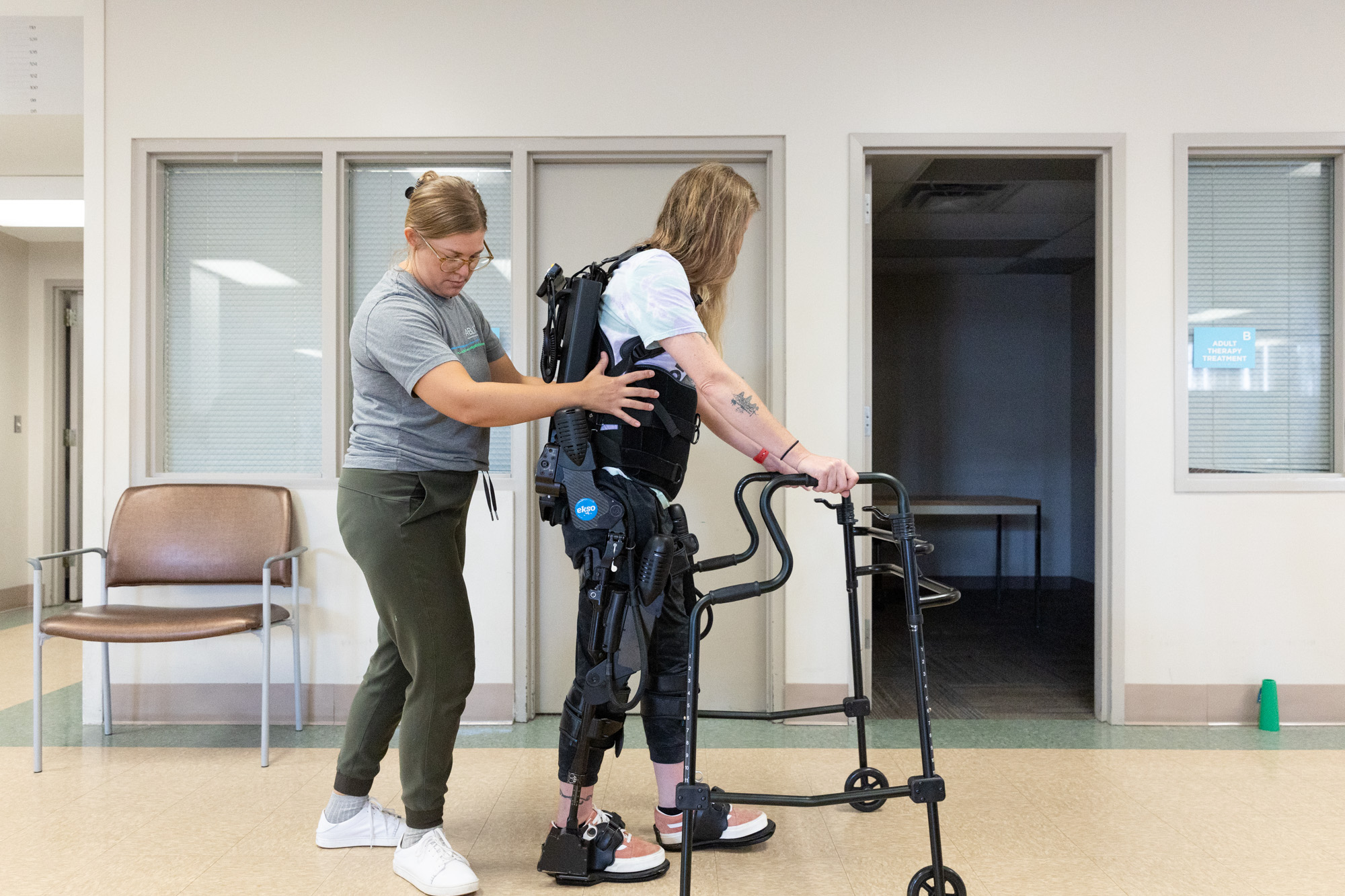
Gait and mobility training after spinal cord injury is most often delivered as conventional, therapist-led physical therapy; at some advanced rehabilitation centres it can be supplemented with a powered exoskeleton device (such as Ekso, ReWalk, or Lokomat). Here is how the two approaches compare, based on current published evidence.
| Parameter | Conventional Physical Therapy | Robotic/Exoskeleton-Assisted Training |
|---|---|---|
| How it works | A physiotherapist manually guides transfers, standing, and stepping practice, tailoring hands-on assistance and progression to the patient's strength and injury level. | A powered wearable device supports the legs and hips through a walking pattern, allowing repetitive, high-volume stepping practice with the therapist supervising and adjusting settings. |
| Who it is generally suited for | Patients across the full range of injury levels and completeness, including those who are not candidates for standing devices due to medical instability, severe spasticity, or other contraindications. | Most published evidence involves patients with incomplete injuries (ASIA B-D); suitability also depends on bone density, blood pressure stability, joint range of motion, and body size limits set by the specific device. |
| Current evidence on walking outcomes | Long-established as a core component of SCI rehabilitation, with a large body of evidence supporting gains in strength, transfers, and functional mobility over a course of therapy. | Recent systematic reviews and randomised controlled trials report that exoskeleton training is safe and feasible and may improve walking speed and endurance for some patients, but several trials have not shown it to be statistically superior to conventional therapy for walking outcomes when used as a short-term add-on, per peer-reviewed 2025-2026 literature. |
| Other reported benefits | Builds practical, transferable skills (transfers, wheelchair mobility, balance) that translate directly into daily independence. | May allow more stepping repetitions per session and can support cardiovascular conditioning, bone loading, and patient motivation, even where walking-speed gains are not clearly superior to conventional therapy. |
| Availability and cost | Widely available at essentially all SCI rehabilitation centres and included as standard in most inpatient programmes. | Available only at a subset of advanced rehabilitation centres with the relevant equipment, and typically offered as a supplementary session type rather than a replacement for conventional therapy. |
The Rehabilitation Process: Step by Step
The steps below outline a typical inpatient spinal cord injury rehabilitation pathway. Your physiatrist and rehabilitation team will confirm the exact plan based on your neurological level, completeness of injury, and overall medical status.
Acute assessment and neurological classification
A physiatrist performs a standardised neurological examination (the ASIA Impairment Scale) to classify the level and completeness of the injury, and screens for related medical issues such as spasticity, autonomic dysreflexia risk, and pressure injury risk.
Individualised rehabilitation plan
Based on the classification, a multidisciplinary team — physiatrist, physiotherapist, occupational therapist, and nursing — sets realistic, individualised functional goals and designs a therapy schedule addressing mobility, self-care, and medical needs.
Active therapy: mobility, strength, and functional training
Daily therapy sessions build strength, transfers, wheelchair skills, and, where appropriate, standing or stepping practice — which may include conventional physiotherapy alone or, at some centres, exoskeleton-assisted sessions as a supplement — alongside bladder, bowel, and skin management training.
Discharge planning and equipment needs
The team assesses and arranges the wheelchair, mobility aids, home modifications, and any assistive equipment needed, and provides caregiver training and a structured plan for outpatient therapy and long-term follow-up after discharge.
Recovery & Rehabilitation Timeline
Focused on medical stabilisation, early mobilisation, and beginning intensive daily therapy; duration varies widely by injury level and any associated medical complications, per Christopher & Dana Reeve Foundation guidance.
The period of greatest neurological change for many patients, particularly those with incomplete injuries; therapy intensifies around functional goals such as transfers, wheelchair independence, or, for some, walking practice.
Neurological recovery, where it occurs, typically slows considerably by this point, though functional gains from continued practice, adaptive equipment, and skill-building can still continue, per Mayo Clinic and ASIA guidance.
Spinal cord injury generally requires lifelong management of bladder, bowel, skin, and mobility needs regardless of the degree of functional recovery achieved; periodic specialist review helps address secondary complications as they arise.
Source: American Spinal Injury Association (ASIA); Christopher & Dana Reeve Foundation; Mayo Clinic; Cleveland Clinic. Individual trajectory and outcomes vary significantly by injury level and completeness and are guided by your treating physiatrist.
Known Risks & Limitations
- The degree of functional and neurological recovery achievable depends heavily on the level and completeness of the injury (ASIA A-D) and is not guaranteed; rehabilitation aims to maximise function and independence rather than promising a cure or full recovery.
- Autonomic dysreflexia — a potentially serious rise in blood pressure triggered by an irritating stimulus below the injury level, most often seen in injuries at or above T6 — requires ongoing monitoring and prompt management; other medical complications such as spasticity, deep vein thrombosis, and orthostatic hypotension are also common during rehabilitation.
- Ongoing bladder, bowel, and skin management is essential to prevent serious complications such as urinary tract infections, kidney damage, and pressure injuries, and typically requires lifelong attention rather than a one-time programme.
- Psychological adjustment to a significant, often life-changing injury is a normal and substantial part of recovery; access to counselling, peer support, and mental health care is an important component of comprehensive rehabilitation.
- Rehabilitation goals should be set realistically with your care team based on your specific injury; no therapy, device, or programme — including robotic or exoskeleton-assisted training — can be assumed to restore pre-injury function, and claims of guaranteed or dramatic recovery should be treated with caution.
Source: American Spinal Injury Association (ASIA); Christopher & Dana Reeve Foundation; Mayo Clinic; Cleveland Clinic; peer-reviewed rehabilitation literature. No treatment guarantees a specific outcome; your treating physiatrist will review your individual case.
The CureSureMedico Care Pathway
Remote case review
Share your neurological level, ASIA classification if available, medical history, and current functional status with our coordination team, who forward your case for an initial review of suitable rehabilitation centres and programme intensity.
Rehabilitation centre and specialist matching
We match you with an accredited spinal cord injury rehabilitation centre experienced in your specific injury level, with the multidisciplinary team, equipment, and accessible facilities your case requires.
Cost estimate and accessible travel planning
Once your case is reviewed, we issue a consolidated cost estimate covering assessment, daily therapy, and equipment, and arrange accessible transport, accommodation, and travel logistics suited to your mobility needs.
Inpatient rehabilitation programme
You attend your individualised rehabilitation programme, with your SCI coordinator liaising with the clinical team and supporting any caregiver who travels with you throughout your stay.
Discharge planning and continuity of care
Before you depart, your rehabilitation records, equipment prescriptions, and a recommended long-term follow-up and home-care plan are shared with your home-country physician so your ongoing management can continue without interruption.
Global cost comparison — Spinal Cord Injury Rehabilitation
Average coordinated costs across our partner centres. Final pricing depends on clinical complexity and chosen hospital.
| Country | Avg. cost | vs. cheapest |
|---|---|---|
🇮🇳 India New Delhi · Chennai · Bengaluru · Hyderabad · Mumbai · Kochi | $8,000 | —chevron_right |
🇹🇷 Turkey Istanbul | $25,000 | +213%chevron_right |
Costs are indicative estimates and vary by procedure specifics, hospital, and clinical complexity. Request a personalised estimate for your specific case.
Frequently asked questions
Rehabilitation is beneficial for all levels and completeness of spinal cord injury. For patients with incomplete injuries (ASIA B, C, D), intensive therapy can significantly improve motor and sensory function, walking ability, and independence. For patients with complete injuries (ASIA A), rehabilitation focuses on maximizing independence with the level of injury — including wheelchair mobility, pressure injury prevention, bladder and bowel management, and community reintegration. Our partner centers have experience managing injuries from C1 (ventilator-dependent) through sacral levels and use validated assessment tools (ASIA, FIM, SCIM) to track progress objectively.
No fees. No commitment.
Our guidance is completely free
We are compensated by our partner hospitals — never by patients. You get independent clinical matching, cost transparency, and end-to-end coordination at no cost to you.