

CureSureMedico
|
EN

Bipolar & Schizophrenia Treatment

Psychiatry

payments

Starting from

$5,000

Up to $45,000 depending on centre

schedule

Typical duration

21–90 days

Including pre-operative work-up

arrow_downwardlocal_hospital

Partner hospitals

3

Vetted for outcome data & accreditation

Dr. Rodina Ainasoa

Content reviewed for medical accuracy by: Dr. Rodina Ainasoa · Medical Content Writer & Health Communications

Overview

Specialist inpatient and outpatient management for bipolar disorder, schizophrenia, and schizoaffective disorder at accredited centres with expert psychopharmacologists and multidisciplinary teams. Patients access advanced diagnostic workups, mood stabiliser optimisation, and structured psychosocial rehabilitation in private, internationally recognised facilities.

Your case is matched to a centre on the basis of clinical outcome data, not marketing. We coordinate every step — from pre-operative work-up to post-treatment follow-up — with a dedicated care coordinator.

What's included

Comprehensive diagnostic evaluation including neuroimaging if indicated
Inpatient or day-hospital program with 24-hour psychiatric supervision
Medication initiation, titration, and therapeutic drug monitoring
Individual psychotherapy and family psychoeducation sessions
Occupational therapy and psychosocial skills groups
Detailed discharge plan with medication summary and follow-up coordination

Bipolar & Schizophrenia Treatment

Coordinated from

$5,000

or message us on WhatsApp

No commitment required. Your data is never shared with third parties.

Global cost comparison — Bipolar & Schizophrenia Treatment

Average coordinated costs across our partner centres. Final pricing depends on clinical complexity and chosen hospital.

CountryAvg. costvs. cheapest
🇮🇳

India

New Delhi · Chennai · Bengaluru · Hyderabad · Mumbai · Kochi

Best value
$8,000
chevron_right
🇹🇷

Turkey

Istanbul

$25,000
chevron_right

Costs are indicative estimates and vary by procedure specifics, hospital, and clinical complexity. Request a personalised estimate for your specific case.

Cost & recovery by procedure

This treatment category covers several different operations with different levels of invasiveness, recovery times, and costs. The country averages above blend all of them together — use the breakdown below for a more realistic, procedure-specific estimate.

Mood Stabiliser Optimisation

A psychiatrist reviews and adjusts mood-stabilising medication — commonly lithium or an anticonvulsant such as valproate or lamotrigine — using regular blood levels to find the lowest dose that controls manic and depressive episodes safely. This is ongoing disease management, not a one-time fix: the goal is a stable long-term dose, not a cure.

Typical recovery · Weeks to reach a stable dose, then ongoing monitoring

Managed entirely on an outpatient basis, with occasional day-visits for blood draws. Dose is typically adjusted every 5–7 days early on, with blood levels checked before and after each change, since lithium in particular has a narrow safe range; most patients reach a stable maintenance dose within 4–12 weeks. After stabilisation, levels plus kidney and thyroid function are typically checked every 3–6 months, and treatment is generally continued indefinitely to prevent relapse rather than stopped once symptoms settle.

India

$40–$100 per consultation, plus routine blood monitoring

Turkey

Estimate pending verification — ask your care coordinator for a current quote

Thailand

Estimate pending verification — ask your care coordinator for a current quote

Antipsychotic Medication Management

A psychiatrist selects and titrates an antipsychotic medication — a second-generation agent for most patients, or clozapine specifically for schizophrenia that has not responded to at least two other antipsychotics — to control hallucinations, delusions, and disorganised thinking. As with mood stabilisation, this is long-term symptom control rather than a cure, and most patients remain on some maintenance dose to prevent relapse.

Typical recovery · Ongoing / lifelong, with mandatory blood monitoring for clozapine

Standard antipsychotics are managed on an outpatient basis with periodic metabolic monitoring (weight, blood sugar, lipids). Clozapine requires a stricter schedule because of a small risk of dangerously low white blood cell counts: weekly blood counts for the first 6 months, fortnightly to 12 months, then monthly indefinitely for as long as the medication is taken — monitoring that cannot be discontinued without stopping the drug. Most patients see meaningful symptom improvement within 4–8 weeks of reaching an effective dose, but treatment itself is typically indefinite.

India

$50–$120 per consultation, plus weekly-to-monthly blood monitoring (higher for clozapine)

Turkey

Estimate pending verification — ask your care coordinator for a current quote

Thailand

Estimate pending verification — ask your care coordinator for a current quote

Psychosocial Rehabilitation Program

A structured, team-based program — social skills training, supported employment or education, family psychoeducation, and community reintegration support — helps patients rebuild daily functioning alongside medication, rather than replacing it. This is a functional-recovery program measured in months, not a discrete medical procedure with a fixed endpoint.

Typical recovery · 6 months to 2 years, individualised

Delivered through scheduled outpatient sessions (individual and group), typically several hours per week rather than as an inpatient admission. Programs generally run 6 months to 2 years depending on individual goals and severity, with progress reviewed regularly by the multidisciplinary team; many patients continue lighter-touch peer or community support indefinitely after the structured program ends, since functional gains are best sustained with ongoing engagement rather than a hard stop.

India

Estimate pending verification — ask your care coordinator for a current quote

Turkey

Estimate pending verification — ask your care coordinator for a current quote

Thailand

Estimate pending verification — ask your care coordinator for a current quote

Early Psychosis Intervention

Coordinated specialty care for a first psychotic episode combines rapid diagnostic assessment, low-dose antipsychotic treatment, individual therapy, family education, and case management delivered by one integrated team, aiming to limit the duration of untreated psychosis and support the best possible long-term functional outcome.

Typical recovery · Intensive first 1–2 years, then step-down monitoring

Initial assessment and treatment planning is typically completed within days; the coordinated-care program itself runs on an outpatient basis (occasionally with brief inpatient stabilisation if the initial episode is severe) for around 2 years, the period evidence shows most strongly improves outcomes. After this intensive phase, many patients step down to standard psychiatric follow-up, though ongoing monitoring for relapse continues well beyond the initial program, and some patients require longer-term care depending on how the illness evolves.

India

Estimate pending verification — ask your care coordinator for a current quote

Turkey

Estimate pending verification — ask your care coordinator for a current quote

Thailand

Estimate pending verification — ask your care coordinator for a current quote

Cost ranges are indicative estimates for international patients and vary with implant choice, number of levels treated, surgeon, and hospital. Request a personalised quote for your specific case.

Clinical detail: AAOS OrthoInfo, Mayo Clinic Health System, Cleveland Clinic. Cost ranges cross-checked across multiple independent medical-tourism sources per country where marked; ranges flagged "pending verification" could not be independently confirmed at the time of writing.

Partner hospitals

3 centres
View all hospitals
Amrita Hospital

Amrita Hospital

Faridabad, India

Asia's largest private hospital — 2,600 beds, 64 operation theatres, 81 specialties on a 130-acre campus in Delhi NCR. NABH & NABL accredited. Centres of excellence in oncology, cardiac surgery, BMT, organ transplantation, neurosciences, and IVF.

NABHNABL

800+

Specialists

2,600+

Beds

View Profile
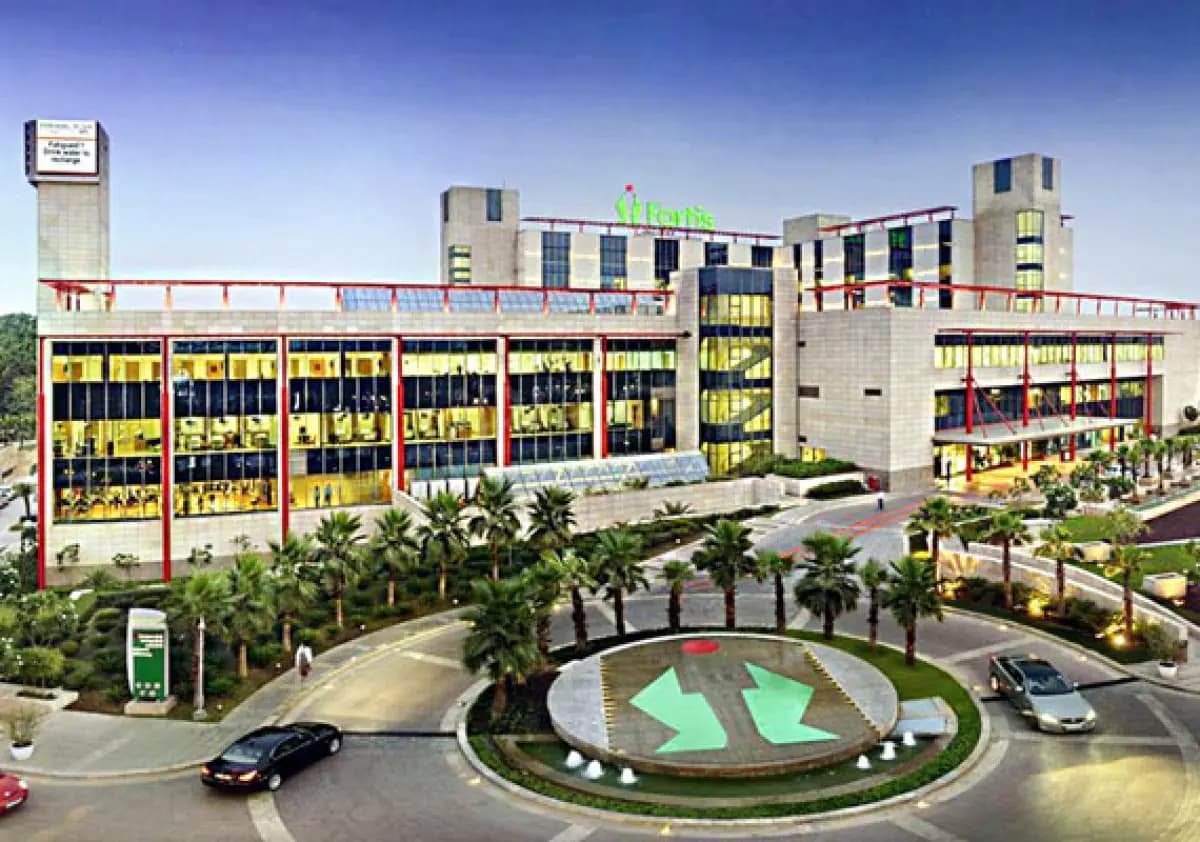
Fortis Memorial Research Institute

Fortis Memorial Research Institute

Gurugram, India

Fortis Memorial Research Institute (FMRI) in Sector 44, Gurugram is one of India's most advanced tertiary care hospitals, offering 1,000+ beds across 40+ specialties. Home to leading specialists in neurosurgery, cardiac surgery, oncology, organ transplantation, and orthopaedics, FMRI features CyberKnife radiosurgery, CAR-T cell therapy, and full robotic surgery capabilities. The hospital serves patients from 118 countries, supported by a dedicated international patients department providing visa assistance, interpreters, airport transfers, and end-to-end care coordination.

JCINABHNABL

400+

Specialists

330+

Beds

View Profile
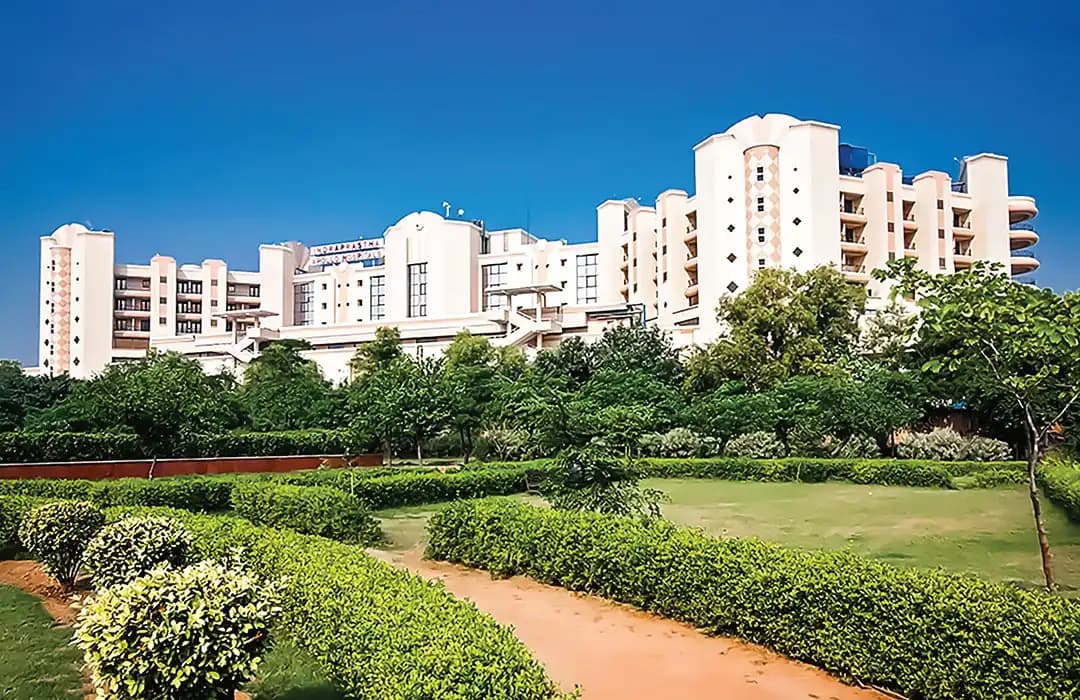
Indraprastha Apollo Hospital

Indraprastha Apollo Hospital

New Delhi, India

Indraprastha Apollo Hospital in Sarita Vihar, New Delhi is one of India's foremost multi-specialty tertiary care centres, part of the Apollo Hospitals network established by Dr. Prathap C Reddy in 1983. The 710-bed facility records 1,600+ daily OPD visits, 1,000+ international patient consultations monthly, and receives 5,000+ international patients per year from over 120 countries. Its Centres of Excellence span cardiac sciences, oncology, neurosciences, organ transplantation, nephrology, orthopaedics, gastroenterology, and bariatric surgery. The hospital is equipped with Da Vinci XI robotic systems, CyberKnife radiosurgery, 3 Tesla MRI, LINAC, ECMO, and a 3D neuro-navigation system.

JCINABHNABL

700+

Specialists

710+

Beds

View Profile

Frequently asked questions

All partner hospitals have protocols for managing acute psychiatric episodes within the facility, including access to higher levels of care such as locked or intensive psychiatric units if needed. Your treating psychiatrist will adjust your treatment plan immediately and notify your designated emergency contact. The patient coordinator remains reachable 24 hours a day throughout your stay. If hospitalisation is extended due to clinical need, your coordinator will assist with visa extension documentation and communicate with your family.

No fees. No commitment.

Our guidance is completely free

We are compensated by our partner hospitals — never by patients. You get independent clinical matching, cost transparency, and end-to-end coordination at no cost to you.

Message us on WhatsApp