

CureSureMedico
|
EN

Liver Cancer (Hepatocellular Carcinoma) Treatment

Oncology

payments

Starting from

$5,000

Up to $33,000 depending on centre

schedule

Typical duration

10–30 days

Including pre-operative work-up

arrow_downwardlocal_hospital

Partner hospitals

2

Vetted for outcome data & accreditation

Dr. Rodina Ainasoa

Content reviewed for medical accuracy by: Dr. Rodina Ainasoa · Medical Content Writer & Health Communications

Overview

Expert hepato-oncology care for primary liver cancer, integrating surgical resection, liver-directed ablative therapies, and systemic treatment to maximise outcomes for patients with hepatocellular carcinoma who may be ineligible for surgery at home.

Your case is matched to a centre on the basis of clinical outcome data, not marketing. We coordinate every step — from pre-operative work-up to post-treatment follow-up — with a dedicated care coordinator.

What's included

Comprehensive liver imaging — MRI, CT volumetry & AFP tumour markers
Multidisciplinary hepato-oncology board review
Surgical or interventional procedure & hospitalisation
Systemic therapy administration if indicated
Hepato-oncologist & interventional radiology fees
Interpreter, care coordinator & post-treatment surveillance plan at home

Liver Cancer (Hepatocellular Carcinoma) Treatment

Coordinated from

$5,000

or message us on WhatsApp

No commitment required. Your data is never shared with third parties.

Treatment approaches

Standard and robotic-assisted Liver Cancer (Hepatocellular Carcinoma) Treatment

Standard Approach

Open or Laparoscopic Minor Liver Resection

$5,000

1030 days

Robotic-Assisted Option

Robotic-Assisted Minor Liver Resection

$12,000

714 days

Comparing the two approaches

StandardRobotic-Assisted
ProcedureOpen or Laparoscopic Minor Liver ResectionRobotic-Assisted Minor Liver Resection
TechnologyConventional surgical instrumentsRobotic-assisted surgical system with surgeon oversight
AvailabilityHospital-dependentSelected hospitals with robotic capability
SpecialistProcedure specialistSpecialist with relevant robotic experience
Clinical suitabilityCase-dependentCase-dependent
Tariff$5,000–$33,000$12,000–$25,000
Duration10–30 days7–14 days

Eligibility for robotic-assisted treatment

  • Applies specifically to minor or peripheral liver resections for a solitary, favourably located HCC — not to major resections (removal of 3 or more liver segments), tumors involving major blood vessels, or complex cases, where an open approach remains standard
  • A single tumor, generally under 5cm, confirmed on cross-sectional imaging as accessible without extensive mobilisation of the liver
  • Adequate remaining liver function (Child-Pugh A, and occasionally selected Child-Pugh B) confirmed by multidisciplinary hepatobiliary tumor board review
  • Availability of the robotic platform and a hepatobiliary surgeon with specific robotic liver resection experience at your selected hospital — this is offered at fewer centres than robotic surgery for more common procedures

Risks and limitations of robotic-assisted surgery

  • Robotic assistance does not eliminate the surgical risks of liver resection, including bleeding, bile leak, and post-hepatectomy liver failure, particularly in patients with underlying cirrhosis
  • The surgeon remains responsible for achieving a complete resection with clear margins; robotic guidance is an aid to precision and visualization, not a substitute for surgical judgement
  • Current evidence for minor robotic liver resections shows reduced blood loss and shorter hospital stays compared with open surgery, with comparable oncologic outcomes in appropriately selected patients — it has not been shown to improve long-term survival over open or laparoscopic resection
  • Robotic surgery for major or complex liver resections is far less established; the surgeon may still need to convert to an open approach if the tumor or anatomy proves more extensive than expected on imaging

Tariff structure

Standard procedure$5,000$33,000
Robotic-assisted technology fee+$3,000$6,000
Total estimated robotic-assisted tariff$12,000$25,000

Why can robotic-assisted procedures cost more?

Robotic-assisted procedures rely on additional technology and equipment beyond the standard operating platform and clinical team. This additional technology component is generally not included in standard case pricing.

Is robotic-assisted surgery always recommended?

No. Robotic-assisted surgery is not appropriate for every procedure or patient. Availability and suitability are determined by the treating specialist, based on your imaging, clinical condition, and the treating hospital's capabilities.

Global cost comparison — Liver Cancer (Hepatocellular Carcinoma) Treatment

Average coordinated costs across our partner centres. Final pricing depends on clinical complexity and chosen hospital.

CountryAvg. costvs. cheapest
🇮🇳

India

New Delhi · Chennai · Bengaluru · Hyderabad · Mumbai · Kochi

Best value
$7,000
chevron_right
🇹🇷

Turkey

Istanbul

$20,000
chevron_right

Costs are indicative estimates and vary by procedure specifics, hospital, and clinical complexity. Request a personalised estimate for your specific case.

Cost & recovery by procedure

This treatment category covers several different operations with different levels of invasiveness, recovery times, and costs. The country averages above blend all of them together — use the breakdown below for a more realistic, procedure-specific estimate.

Hepatic Resection (Liver Surgery)

Surgical removal of the tumor-bearing portion of the liver (partial hepatectomy) — ranging from a small peripheral resection to removal of an entire lobe — performed openly or via a laparoscopic/robotic-assisted approach at experienced centers. It offers the best chance of cure but requires adequate remaining liver function reserve and the absence of significant portal hypertension.

Typical recovery · 6–8 weeks

Hospital stay is typically 7–12 days depending on the extent of resection and whether it is performed laparoscopically; bleeding, bile leak, and post-hepatectomy liver failure (a particular risk in patients with underlying cirrhosis) are the main complications monitored via regular liver function tests, with return to normal activity generally by 6–8 weeks.

India

$7,000–$13,000

Turkey

$12,000–$20,000

Thailand

Estimate pending verification — ask your care coordinator for a current quote

TACE & TARE (Liver-Directed Embolisation)

Catheter-based liver-directed therapy delivered through the hepatic artery — TACE delivers chemotherapy directly into the tumor's blood supply while blocking it, and TARE (radioembolisation with Y-90 microspheres) irradiates the tumor from within. Both are typically given as staged sessions rather than a single treatment, and are chosen when surgery is not suitable.

Typical recovery · 1–3 days per session

Each session usually requires a 1–2 night hospital stay followed by a brief recovery period of a few days before resuming normal activity; post-embolisation syndrome (fever, pain, and nausea lasting several days) is common and expected. Most patients need 2–4 sessions spaced over several months for optimal tumor control.

India

$3,500–$7,000 per session

Turkey

$6,000–$10,000 per session

Thailand

Estimate pending verification — ask your care coordinator for a current quote

Thermal Ablation (RFA / MWA)

A needle-like probe is guided through the skin (or laparoscopically) into the tumor under imaging guidance and destroys it with either extreme heat (radiofrequency or microwave ablation), without open surgery. It is best suited to smaller tumors — generally under 3cm — in patients who are not fit for, or do not want, surgery.

Typical recovery · 3–5 days

Usually performed under sedation or general anesthesia with a hospital stay of 1–3 days; most patients resume light activity within a week. Follow-up imaging at around 1 month confirms complete tumor destruction, with ongoing surveillance afterward since a repeat ablation is sometimes needed.

India

$2,800–$5,500

Turkey

$4,500–$8,000

Thailand

Estimate pending verification — ask your care coordinator for a current quote

Systemic Therapy — Sorafenib, Lenvatinib & Immunotherapy

Oral targeted drugs (such as sorafenib or lenvatinib) or immunotherapy combinations (such as atezolizumab plus bevacizumab) used for advanced HCC that is not suitable for surgery or liver-directed therapy, or after other treatments have been exhausted. This is an ongoing outpatient programme over months to years rather than a single treatment episode, and the choice of regimen depends heavily on liver function and prior treatment.

Typical recovery · Ongoing

Administered mostly as outpatient oral medication or periodic infusions rather than requiring hospital admission; fatigue, hand-foot skin reactions, high blood pressure, and diarrhea are common with targeted drugs, while immunotherapy carries a risk of immune-related side effects requiring regular monitoring of liver, thyroid, and other organ function throughout treatment.

India

Estimate pending verification — ask your care coordinator for a current quote

Turkey

Estimate pending verification — ask your care coordinator for a current quote

Thailand

Estimate pending verification — ask your care coordinator for a current quote

Cost ranges are indicative estimates for international patients and vary with implant choice, number of levels treated, surgeon, and hospital. Request a personalised quote for your specific case.

Clinical detail: AAOS OrthoInfo, Mayo Clinic Health System, Cleveland Clinic. Cost ranges cross-checked across multiple independent medical-tourism sources per country where marked; ranges flagged "pending verification" could not be independently confirmed at the time of writing.

Partner hospitals

2 centres
View all hospitals
Amrita Hospital

Amrita Hospital

Faridabad, India

Asia's largest private hospital — 2,600 beds, 64 operation theatres, 81 specialties on a 130-acre campus in Delhi NCR. NABH & NABL accredited. Centres of excellence in oncology, cardiac surgery, BMT, organ transplantation, neurosciences, and IVF.

NABHNABL

800+

Specialists

2,600+

Beds

View Profile
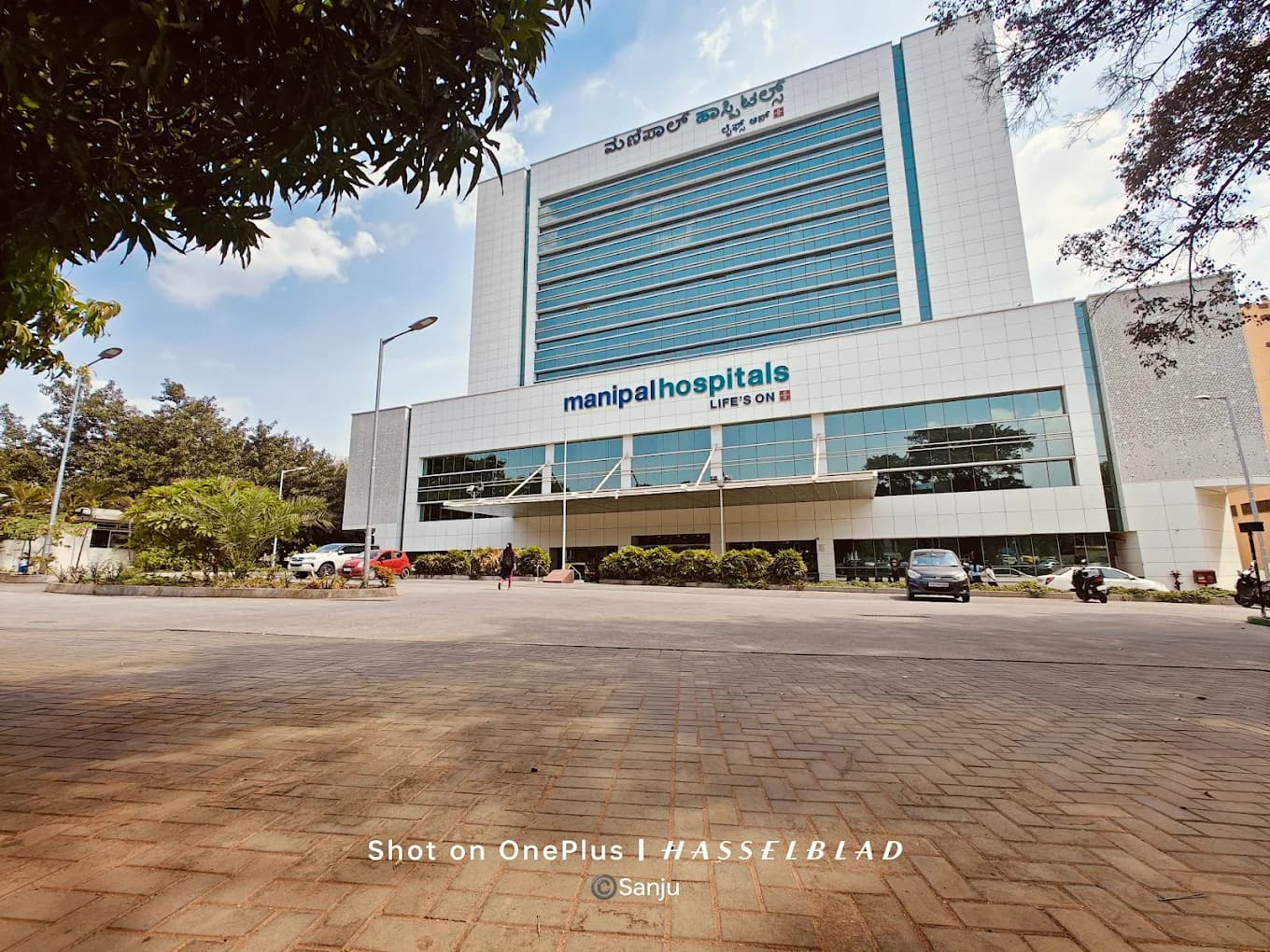
Manipal Hospital Old Airport Road

Manipal Hospital Old Airport Road

Bengaluru, India

Manipal Hospitals Old Airport Road is the flagship and founding campus of one of India's largest healthcare networks, established in 1991 on HAL Old Airport Road, Kodihalli, Bengaluru. Part of the Manipal Education and Medical Group (MEMG), the network spans 49 hospitals and 12,600+ beds across India. The Old Airport Road campus anchors the group's academic and clinical identity, housing specialist institutes including the Manipal Institute for Joint Replacement and Robotic Surgery (MIJRRS), the Manipal Robotic Spine Surgery centre (MIRSS), the Manipal Skull Base Institute (MSBI), and the Manipal Institute for Bariatric Surgery (MIBS). Its quaternary-level capabilities cover cardiology, oncology, neurosurgery, organ transplantation, orthopaedics, spine surgery, bariatric surgery, and paediatrics, all within a NABH and NABL accredited environment. The hospital provides dedicated international patient services through the Manipal Global network, with support for visa, travel, language, and end-to-end care coordination.

NABHNABL

264+

Specialists

600+

Beds

View Profile

Frequently asked questions

Surgery is feasible when liver function reserve is adequate — assessed using the Child-Pugh score and MELD score alongside imaging. For patients with compromised liver function, liver-directed therapies such as TACE or ablation are preferred. Our medical team evaluates your full liver profile before recommending the safest and most effective approach.

No fees. No commitment.

Our guidance is completely free

We are compensated by our partner hospitals — never by patients. You get independent clinical matching, cost transparency, and end-to-end coordination at no cost to you.

Message us on WhatsApp