

CureSureMedico
|
EN

Uterine Fibroid Surgery

Gynecology

payments

Starting from

$2,000

Up to $12,000 depending on centre

schedule

Typical duration

5–10 days

Including pre-operative work-up

arrow_downwardlocal_hospital

Partner hospitals

2

Vetted for outcome data & accreditation

Dr. Rodina Ainasoa

Content reviewed for medical accuracy by: Dr. Rodina Ainasoa · Medical Content Writer & Health Communications

Overview

Uterine fibroids are non-cancerous growths that cause heavy bleeding, pelvic pain, and fertility problems — and treatment options range from uterine artery embolization to laparoscopic myomectomy, preserving the uterus for women who wish to conceive. International centers in India, Turkey, and Thailand offer all modalities with high success rates and costs up to 70% below Western prices.

Your case is matched to a centre on the basis of clinical outcome data, not marketing. We coordinate every step — from pre-operative work-up to post-treatment follow-up — with a dedicated care coordinator.

What's included

Specialist gynecology consultation with review of ultrasound/MRI reports
Fibroid removal procedure (laparoscopic, hysteroscopic, open, or UAE as indicated)
Hospital stay with nursing care (typically same-day discharge for hysteroscopic or laparoscopic/robotic myomectomy or UAE; 2–3 nights for open abdominal myomectomy)
Anesthesia, theater, and interventional radiology fees
Post-operative follow-up ultrasound and discharge summary
International patient coordinator, interpreter, and airport transfer

Uterine Fibroid Surgery

Coordinated from

$2,000

or message us on WhatsApp

No commitment required. Your data is never shared with third parties.

Myomectomy vs. Uterine Fibroid Embolization (UFE)

Fibroids that need treatment can be addressed surgically, by removing the fibroids while preserving the uterus (myomectomy), or non-surgically, by blocking the blood supply that feeds the fibroids (uterine fibroid embolization). The right choice depends on fibroid size, number, and location, and — importantly — whether you wish to preserve fertility for a future pregnancy.

ParameterMyomectomyUterine Fibroid Embolization (UFE)
What it isSurgical removal of fibroids while leaving the uterus in place, performed via an open incision, laparoscopic/robotic ports, or hysteroscopically through the vagina with no incision, per Cleveland Clinic.A non-surgical interventional radiology procedure: a catheter is guided through a blood vessel to inject small particles that block blood flow to the fibroids, per Johns Hopkins Medicine.
Hospital staySame day for hysteroscopic or laparoscopic/robotic approaches; typically a few days for open abdominal myomectomy, per Cleveland Clinic.Most patients stay one night in hospital, per published UFE outcomes research.
Full recoveryA matter of days for hysteroscopic myomectomy, about 2–4 weeks for laparoscopic/robotic, and up to about 6 weeks for open abdominal myomectomy, per Cleveland Clinic.Many patients resume light activity within a few days and regular activity within about a week, per Johns Hopkins Medicine.
Fertility preservationThe recommended approach for women who want to preserve their fertility and the option of future pregnancy, per Cleveland Clinic and Johns Hopkins Medicine.Not recommended for women planning a future pregnancy — Johns Hopkins Medicine notes more research is still needed on how UFE affects fertility and pregnancy outcomes.
Who decidesYour gynecological surgical team recommends the surgical approach based on fibroid characteristics, your fertility goals, and overall health.Considered for women who have completed childbearing or prefer to avoid surgery, decided jointly by an interventional radiologist and your gynecology team.

The Procedure: Step by Step

The steps below describe myomectomy, the surgical option chosen by most patients wishing to preserve fertility. UFE follows a different, non-surgical path — a catheter is used to block blood flow to the fibroids rather than removing them (see comparison above).

1

Pre-operative evaluation

Imaging such as ultrasound or MRI maps the number, size, and location of your fibroids to confirm your candidacy for myomectomy and the most suitable surgical approach, per Cleveland Clinic.

2

Anaesthesia

Myomectomy is performed under general anaesthesia and typically takes about two to three hours, depending on fibroid size, number, and location, per Cleveland Clinic.

3

Removal of the fibroids

Fibroids are removed through the chosen approach — an abdominal incision, laparoscopic/robotic ports, or a hysteroscopic approach through the vagina with no incision — while the uterus is preserved.

4

Recovery room monitoring

You are monitored as the anaesthesia wears off before being moved to a hospital room, or home, for the remainder of your recovery.

Recovery Timeline

Recovery Timeline
First days

Patients having a hysteroscopic myomectomy — the least invasive option, with no incision — often return to normal activity within a matter of days, per Cleveland Clinic.

Same day–1 night

Most patients having a laparoscopic or robotic myomectomy go home the same day, per Cleveland Clinic.

2–4 weeks

Full recovery after laparoscopic or robotic myomectomy is typically about 2 to 4 weeks, per Cleveland Clinic.

Up to 6 weeks

Patients having an open abdominal myomectomy need up to about 6 weeks for full recovery and may require 4–8 weeks off work depending on job demands, per Cleveland Clinic and Johns Hopkins Medicine.

Source: Cleveland Clinic; Johns Hopkins Medicine. Individual recovery varies and is guided by your surgical team.

Known Risks & Limitations

  • General surgical risks of myomectomy include bleeding, infection, blood clots, and injury to nearby organs, per Cleveland Clinic.
  • A future pregnancy after myomectomy carries an increased risk of needing a cesarean delivery, per Cleveland Clinic.
  • UFE commonly causes postembolization syndrome — pain, fever, and nausea — which typically resolves within about 2 to 7 days and is managed with pain and anti-nausea medication, per published clinical research.
  • UFE carries a risk of reduced ovarian function or ovarian failure, reported in a minority of patients and more common in women over 45; because its long-term effects on fertility and pregnancy are not fully established, Johns Hopkins Medicine advises against UFE for women who want a future pregnancy.
  • As with any procedure involving anaesthesia or sedation, there are anaesthesia-related risks your medical team will review with you individually.

Source: Cleveland Clinic; Johns Hopkins Medicine; peer-reviewed research on UFE outcomes. No procedure is without risk; your surgical or interventional team will review your individual case and fertility goals.

The CureSureMedico Care Pathway

Remote clinical review

Share your fibroid imaging, symptoms, and fertility goals. Our coordination team forwards your case to a gynecological surgical team, or an interventional radiologist for UFE, to assess the most suitable treatment.

Clinic matching & estimate

A consolidated cost estimate covering the procedure, hospital stay, anaesthesia or sedation, and follow-up is issued before you travel, based on the recommended approach.

Travel & pre-operative evaluation

On arrival, your care team reviews your fibroid mapping and confirms the treatment plan, including whether myomectomy or UFE best matches your fertility goals.

Surgery & hospital stay

Hospital stay ranges from same-day to a few days for myomectomy depending on approach, or typically one night for UFE, with your team monitoring recovery before discharge.

Continuity of care post-return

A treatment summary — including pathology results for myomectomy, or follow-up imaging guidance for UFE, plus any fertility considerations — is shared with your home gynecologist.

Treatment approaches

Standard and robotic-assisted Uterine Fibroid Surgery

Standard Approach

Open (Abdominal) Myomectomy

$2,000

510 days

Robotic-Assisted Option

Robotic-Assisted Myomectomy

$5,500

59 days

Comparing the two approaches

StandardRobotic-Assisted
ProcedureOpen (Abdominal) MyomectomyRobotic-Assisted Myomectomy
TechnologyConventional surgical instrumentsRobotic-assisted surgical system with surgeon oversight
AvailabilityHospital-dependentSelected hospitals with robotic capability
SpecialistProcedure specialistSpecialist with relevant robotic experience
Clinical suitabilityCase-dependentCase-dependent
Tariff$2,000–$12,000$5,500–$10,000
Duration5–10 days5–9 days

Eligibility for robotic-assisted treatment

  • A moderate number and size of fibroids, mapped on ultrasound or MRI, that are amenable to a minimally invasive dissection and reconstruction of the uterine wall
  • A wish to preserve fertility or the uterus, where fibroid count, size, and location make robotic removal and layered uterine repair feasible
  • No suspicion of malignancy (leiomyosarcoma) and no extensive prior abdominal surgery that would significantly complicate robotic port placement
  • Availability of the specific robotic platform and a gynecologic surgeon experienced in robotic myomectomy at your selected hospital — this comparison applies specifically to myomectomy, not to uterine artery embolization (a non-surgical interventional-radiology procedure with no robotic equivalent) or to hysterectomy for fibroids

Risks and limitations of robotic-assisted surgery

  • Robotic assistance does not eliminate the surgical risks of myomectomy, including bleeding, infection, and — rarely — the need for an unplanned hysterectomy if bleeding cannot be controlled
  • The surgeon remains responsible for the procedure and for reconstructing the uterine wall in layers to preserve its strength for a future pregnancy; robotic guidance is an aid, not a substitute for surgical judgement
  • Operative time for robotic myomectomy can be longer than for laparoscopic myomectomy, though evidence generally shows less blood loss, fewer transfusions, and a shorter hospital stay than open surgery
  • As with any myomectomy, fibroids can recur over time, and a future pregnancy after significant uterine wall reconstruction should be discussed with your obstetrician regarding delivery mode

Tariff structure

Standard procedure$2,000$12,000
Robotic-assisted technology fee+$1,800$3,000
Total estimated robotic-assisted tariff$5,500$10,000

Why can robotic-assisted procedures cost more?

Robotic-assisted procedures rely on additional technology and equipment beyond the standard operating platform and clinical team. This additional technology component is generally not included in standard case pricing.

Is robotic-assisted surgery always recommended?

No. Robotic-assisted surgery is not appropriate for every procedure or patient. Availability and suitability are determined by the treating specialist, based on your imaging, clinical condition, and the treating hospital's capabilities.

Global cost comparison — Uterine Fibroid Surgery

Average coordinated costs across our partner centres. Final pricing depends on clinical complexity and chosen hospital.

CountryAvg. costvs. cheapest
🇮🇳

India

New Delhi · Chennai · Bengaluru · Hyderabad · Mumbai · Kochi

Best valueEstimate
$2,500
chevron_right
🇹🇷

Turkey

Istanbul

✓ Verified
$5,000
chevron_right
🇹🇭

Thailand

Bangkok · Phuket · Chiang Mai

✓ Verified
$4,000
chevron_right

Costs are indicative estimates and vary by procedure specifics, hospital, and clinical complexity. Request a personalised estimate for your specific case.

Cost & recovery by procedure

This treatment category covers several different operations with different levels of invasiveness, recovery times, and costs. The country averages above blend all of them together — use the breakdown below for a more realistic, procedure-specific estimate.

Laparoscopic Myomectomy

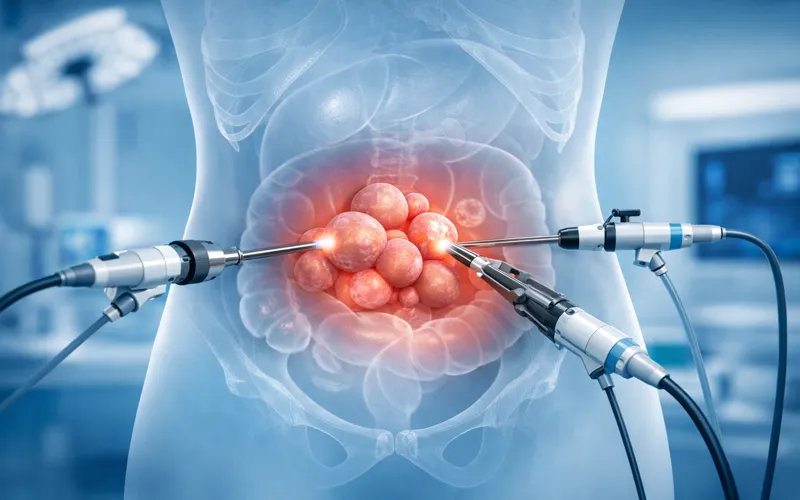
Fibroids are removed through several small (0.5–1 cm) abdominal incisions using a camera and long instruments, leaving the uterus otherwise intact and reconstructed in layers. It is the preferred minimally invasive approach for women with a moderate number and size of fibroids who wish to preserve fertility or simply keep the uterus.

Typical recovery · 2–4 weeks

Most patients go home the same day or after one night; light activity resumes within 1–2 weeks and most return to normal activity by 2–4 weeks. Bleeding, infection, and — rarely — the need to convert to open surgery are the main things to watch for; a future pregnancy is generally advised to wait 3–6 months to allow the uterine incision to heal.

India

$3,200–$6,000

Turkey

$5,500–$8,500

Thailand

Estimate pending verification — ask your care coordinator for a current quote

Open (Abdominal) Myomectomy

Fibroids are removed through a single 4–8 inch incision in the lower abdomen. This open approach is reserved for very large, numerous, or awkwardly positioned fibroids where a minimally invasive technique would not allow safe or complete removal.

Typical recovery · 4–6 weeks

Hospital stay is typically 2–4 days, longer than for minimally invasive approaches; most patients need 4–6 weeks before resuming normal activity, including avoiding heavy lifting during that time. Wound infection, bleeding, and blood clots are the main complications to watch for, and a future pregnancy is generally advised to wait 3–6 months afterward.

India

$2,500–$5,000

Turkey

Estimate pending verification — ask your care coordinator for a current quote

Thailand

Estimate pending verification — ask your care coordinator for a current quote

Hysteroscopic Fibroid Resection

A thin, lighted scope is passed through the cervix, with no abdominal incisions at all, to shave away fibroids that bulge into the uterine cavity (submucosal fibroids) — a common cause of heavy bleeding and implantation problems.

Typical recovery · 1–2 weeks

Usually a same-day, outpatient procedure; most patients return to normal activity within a few days to two weeks. Cramping and light spotting are common in the first few days, and — rarely — fluid overload or uterine perforation can occur during the procedure; a repeat session is sometimes needed for large or multiple fibroids.

India

$1,500–$3,000

Turkey

Estimate pending verification — ask your care coordinator for a current quote

Thailand

Estimate pending verification — ask your care coordinator for a current quote

Uterine Artery Embolization

A catheter is threaded through an artery in the groin or wrist and small particles are injected to block blood flow to the fibroids, causing them to shrink over the following months. It is a non-surgical, uterus-sparing alternative performed by an interventional radiologist, and is generally not recommended for women planning a future pregnancy.

Typical recovery · 1–2 weeks

Most patients stay in hospital overnight for pain control, with cramping and pelvic pain (post-embolization syndrome) common for the first 24–48 hours; normal activity typically resumes within 1–2 weeks. Fibroids continue shrinking over 3–6 months, and a small proportion of patients need a repeat procedure or eventual surgery if symptoms persist.

India

$1,800–$3,600

Turkey

Estimate pending verification — ask your care coordinator for a current quote

Thailand

$6,000–$12,000

Cost ranges are indicative estimates for international patients and vary with implant choice, number of levels treated, surgeon, and hospital. Request a personalised quote for your specific case.

Clinical detail: AAOS OrthoInfo, Mayo Clinic Health System, Cleveland Clinic. Cost ranges cross-checked across multiple independent medical-tourism sources per country where marked; ranges flagged "pending verification" could not be independently confirmed at the time of writing.

Partner hospitals

2 centres
View all hospitals
Amrita Hospital

Amrita Hospital

Faridabad, India

Asia's largest private hospital — 2,600 beds, 64 operation theatres, 81 specialties on a 130-acre campus in Delhi NCR. NABH & NABL accredited. Centres of excellence in oncology, cardiac surgery, BMT, organ transplantation, neurosciences, and IVF.

NABHNABL

800+

Specialists

2,600+

Beds

View Profile
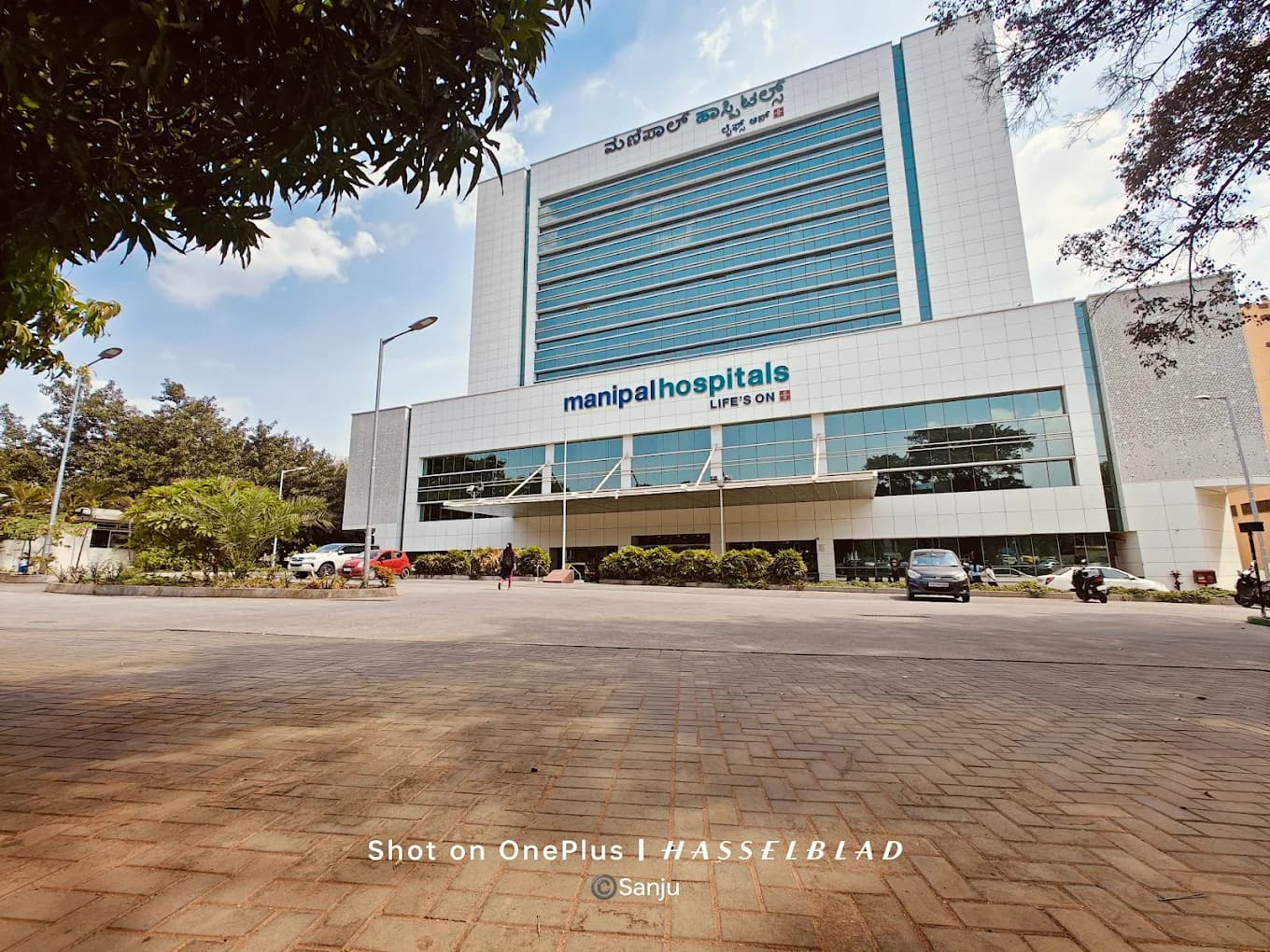
Manipal Hospital Old Airport Road

Manipal Hospital Old Airport Road

Bengaluru, India

Manipal Hospitals Old Airport Road is the flagship and founding campus of one of India's largest healthcare networks, established in 1991 on HAL Old Airport Road, Kodihalli, Bengaluru. Part of the Manipal Education and Medical Group (MEMG), the network spans 49 hospitals and 12,600+ beds across India. The Old Airport Road campus anchors the group's academic and clinical identity, housing specialist institutes including the Manipal Institute for Joint Replacement and Robotic Surgery (MIJRRS), the Manipal Robotic Spine Surgery centre (MIRSS), the Manipal Skull Base Institute (MSBI), and the Manipal Institute for Bariatric Surgery (MIBS). Its quaternary-level capabilities cover cardiology, oncology, neurosurgery, organ transplantation, orthopaedics, spine surgery, bariatric surgery, and paediatrics, all within a NABH and NABL accredited environment. The hospital provides dedicated international patient services through the Manipal Global network, with support for visa, travel, language, and end-to-end care coordination.

NABHNABL

264+

Specialists

600+

Beds

View Profile

Frequently asked questions

Yes — myomectomy (fibroid removal) is specifically designed to preserve the uterus and improve fertility. Laparoscopic myomectomy has the best evidence for fertility preservation, with pregnancy rates of 40–60% in women who were previously struggling to conceive due to fibroids. Hysteroscopic resection is ideal for submucosal fibroids that distort the uterine cavity. Uterine artery embolization (UAE) is generally not recommended if you plan a future pregnancy as it can reduce ovarian reserve and uterine blood flow. During your pre-travel consultation, the gynecologist will review your fibroid mapping (ultrasound or MRI) and fertility goals to recommend the most suitable approach.

No fees. No commitment.

Our guidance is completely free

We are compensated by our partner hospitals — never by patients. You get independent clinical matching, cost transparency, and end-to-end coordination at no cost to you.

Message us on WhatsApp