
CureSureMedico
|
EN

Kidney Stone Treatment

Nephrology

payments

Starting from

$1,000

Up to $5,000 depending on centre

schedule

Typical duration

3–7 days

Including pre-operative work-up

arrow_downwardlocal_hospital

Partner hospitals

144

Vetted for outcome data & accreditation

Dr. Rodina Ainasoa

Content reviewed for medical accuracy by: Dr. Rodina Ainasoa · Medical Content Writer & Health Communications

Overview

Minimally invasive procedures to fragment and remove kidney stones, selected according to stone size, location, and composition.

Your case is matched to a centre on the basis of clinical outcome data, not marketing. We coordinate every step — from pre-operative work-up to post-treatment follow-up — with a dedicated care coordinator.

What's included

Pre-operative imaging & stone analysis
Surgical procedure under general anaesthesia
Urologist & surgical team fees
Post-operative stent management
Interpreter & care coordinator
Metabolic stone prevention plan at home

Kidney Stone Treatment

Coordinated from

$1,000

or message us on WhatsApp

No commitment required. Your data is never shared with third parties.

Global cost comparison — Kidney Stone Treatment

Average coordinated costs across our partner centres. Final pricing depends on clinical complexity and chosen hospital.

CountryAvg. costvs. cheapest
🇮🇳

India

New Delhi · Chennai · Bengaluru · Hyderabad · Mumbai · Kochi

Best value
$1,800
chevron_right
🇹🇷

Turkey

Istanbul

$2,800
chevron_right
🇹🇭

Thailand

Bangkok · Phuket · Chiang Mai

$2,500
chevron_right
🇲🇦

Morocco

Casablanca · Rabat · Marrakech

$2,000
chevron_right

Costs are indicative estimates and vary by procedure specifics, hospital, and clinical complexity. Request a personalised estimate for your specific case.

Cost & recovery by procedure

This treatment category covers several different operations with different levels of invasiveness, recovery times, and costs. The country averages above blend all of them together — use the breakdown below for a more realistic, procedure-specific estimate.

Percutaneous Nephrolithotomy (PCNL)

A telescope and instruments are passed through a small (about 1cm) incision in the back directly into the kidney to break up and remove the stone, using ultrasonic or laser energy to fragment larger stones. It is the preferred approach for large stones (over 2cm), staghorn calculi, or stones that have not responded to less invasive options.

Typical recovery · 1–2 weeks

Hospital stay is typically 1–2 days after minimally invasive (tubeless) PCNL, though more complex cases may need up to 5 days. Most patients resume light activity within 1–2 weeks, with full recovery by about 4 weeks; blood in the urine and mild flank discomfort are expected initially. Watch for fever, worsening pain, or heavy bleeding, which can signal infection or injury requiring prompt attention.

India

$2,500–$4,500

Turkey

$5,000–$12,000

Thailand

Estimate pending verification — ask your care coordinator for a current quote

Ureteroscopy (URS)

A thin scope is passed through the urethra and bladder up into the ureter or kidney, with no external incision, to locate the stone, which is then fragmented with a holmium or thulium laser and the pieces removed or left to pass naturally; a temporary stent is usually left in place to keep the ureter open while it heals. It is well suited to small-to-medium stones anywhere along the urinary tract.

Typical recovery · 2–3 days

Usually performed as day surgery or with a single overnight stay; most patients return to light activity within 2–3 days and normal activity within a week. Burning on urination, urgency, and blood-tinged urine are common until the stent is removed, typically 1–2 weeks later in a brief outpatient visit. Fever or severe flank pain should be reported promptly, as these can indicate infection or stent-related obstruction.

India

$1,200–$2,500

Turkey

$2,000–$6,000

Thailand

Estimate pending verification — ask your care coordinator for a current quote

Extracorporeal Shock Wave Lithotripsy (ESWL)

Focused shock waves are delivered from outside the body through the skin to shatter the stone into fragments small enough to pass naturally in the urine. It is a non-invasive outpatient option best suited to smaller stones (generally under 2cm) in favourable locations.

Typical recovery · 1–2 days

Performed under sedation or light anaesthesia with same-day discharge; most patients return to normal activity within 1–2 days, though passing stone fragments over the following days to weeks can cause intermittent cramping or discomfort. Fever, inability to urinate, or a cluster of fragments blocking the ureter (steinstrasse) warrant urgent evaluation.

India

$800–$1,800

Turkey

$1,000–$3,000

Thailand

Estimate pending verification — ask your care coordinator for a current quote

Cost ranges are indicative estimates for international patients and vary with implant choice, number of levels treated, surgeon, and hospital. Request a personalised quote for your specific case.

Clinical detail: AAOS OrthoInfo, Mayo Clinic Health System, Cleveland Clinic. Cost ranges cross-checked across multiple independent medical-tourism sources per country where marked; ranges flagged "pending verification" could not be independently confirmed at the time of writing.

Partner hospitals

144 centres
View all hospitals
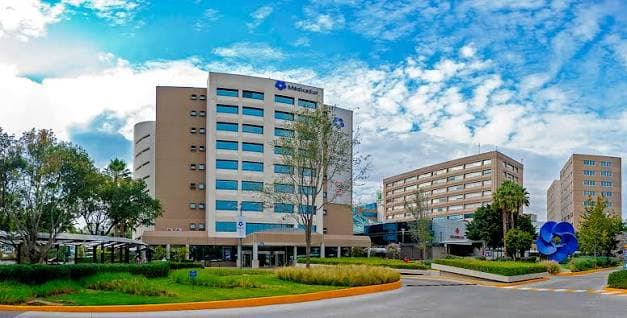
Hospital Medica Sur

Hospital Medica Sur

Mexico City, Mexico

Hospital Médica Sur is a world-class tertiary referral centre in Tlalpan, Mexico City, recognised as Mexico's best hospital for six consecutive years by Newsweek's World's Best Hospitals ranking (2026). The hospital is the first and only institution in Latin America to join the Mayo Clinic Care Network — with a dedicated Mayo Clinic office on-site since 2018 — and is one of only four JCI-accredited hospitals in Mexico. Its 35+ specialty centres span the full spectrum of high-complexity medicine: robotic surgery (Da Vinci X), Gamma Knife radiosurgery, organ transplantation (150+ procedures since 2002), bariatric surgery, oncology, neurosurgery, nephrology, and orthopaedics.

JCIMayo Clinic Care Network

200+

Specialists

220+

Beds

View Profile
Memorial Hospitals Group

Memorial Hospitals Group

Istanbul, Turkey

Memorial Hospitals Group is Turkey's most internationally recognised private hospital network, founded in 1995 and opened to patients in February 2000. Its flagship Sisli campus in Istanbul was the first hospital in Turkey — and 21st in the world — to receive JCI accreditation in 2002, with uninterrupted renewals ever since. Across 11 hospitals and 2 medical centres, Memorial hosts 1,300+ physicians and treats 75,000 international patients per year from 167 countries. The group is celebrated for cardiac surgery (1,400+ operations/year), organ transplantation (including Turkey's first blood-type-incompatible kidney transplant), IVF (10,000+ babies born), oncology with TrueBeam and CyberKnife, and robotic neurosurgery.

JCIISO 15189:2022

1,300+

Specialists

252+

Beds

View Profile
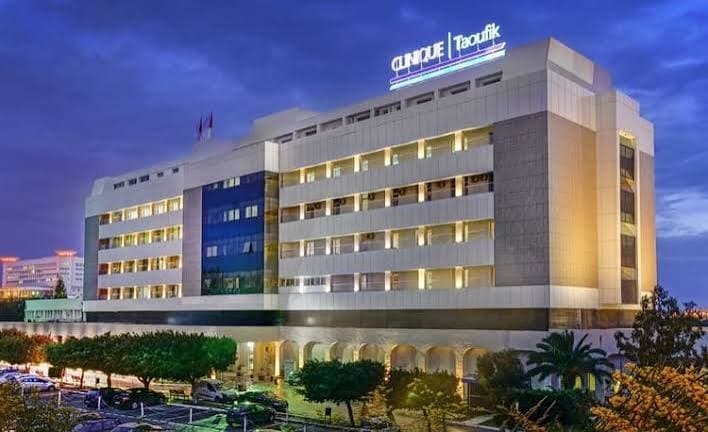
Taoufik Hospital Group

Taoufik Hospital Group

Tunis, Tunisia

Taoufik Hospitals Group (THG) is Tunisia's first multi-site hospital network covering all medical-surgical specialties, founded in 2014 and expanded through four successive acquisitions to include Clinique Taoufik, Clinique Soukra, Clinique Ezzahra, and Clinique Hannibal across Tunis. The group operates 626 beds, 100 ICU beds, and 30 operating rooms, recording over 180,000 admissions per year across 24 specialties including cardiology, oncology, neurology, orthopaedics, fertility, nephrology, and paediatrics. THG holds France Accreditation and Bureau Veritas certification, and provides dedicated international patient services including a 48-hour cost estimate, multilingual patient relations coordinators available throughout the stay, and fully transparent itemised billing.

France Accr.Bureau Veritas

200+

Specialists

626+

Beds

View Profile
Amrita Hospital

Amrita Hospital

Faridabad, India

Asia's largest private hospital — 2,600 beds, 64 operation theatres, 81 specialties on a 130-acre campus in Delhi NCR. NABH & NABL accredited. Centres of excellence in oncology, cardiac surgery, BMT, organ transplantation, neurosciences, and IVF.

NABHNABL

800+

Specialists

2,600+

Beds

View Profile

Frequently asked questions

PCNL is recommended for stones larger than 2cm, staghorn calculi, or stones that have failed ESWL. Smaller stones are typically managed with ureteroscopy or ESWL.

No fees. No commitment.

Our guidance is completely free

We are compensated by our partner hospitals — never by patients. You get independent clinical matching, cost transparency, and end-to-end coordination at no cost to you.

Message us on WhatsApp