

CureSureMedico
|
EN

Pediatric & Congenital Heart Surgery

Cardiology

payments

Starting from

$8,000

Up to $40,000 depending on centre

schedule

Typical duration

14–28 days

Including pre-operative work-up

arrow_downwardlocal_hospital

Partner hospitals

1

Vetted for outcome data & accreditation

Dr. Rodina Ainasoa

Content reviewed for medical accuracy by: Dr. Rodina Ainasoa · Medical Content Writer & Health Communications

Overview

Specialized open-heart and minimally invasive surgery to correct congenital heart defects in infants, children, and young adults. India and Israel offer world-class pediatric cardiac centers with outcomes rivaling top Western hospitals at a fraction of the cost.

Your case is matched to a centre on the basis of clinical outcome data, not marketing. We coordinate every step — from pre-operative work-up to post-treatment follow-up — with a dedicated care coordinator.

What's included

Pre-operative cardiac evaluation and echocardiography
Surgical procedure and anesthesia fees
Pediatric ICU stay (up to 7 days) and ward care
Post-operative follow-up consultations
Dedicated medical coordinator and interpreter
Assistance with medical visa and travel documentation

Pediatric & Congenital Heart Surgery

Coordinated from

$8,000

or message us on WhatsApp

No commitment required. Your data is never shared with third parties.

Transcatheter Device Closure vs. Open Surgical Repair

Some congenital heart defects, such as certain ASDs and VSDs, can be closed with a catheter-delivered device instead of open-heart surgery, while more complex defects such as Tetralogy of Fallot require open surgical repair. Note: robotic-assisted approaches were reviewed and are not included here — current robotic platforms use relatively large (about 8mm) instruments and widely spaced port sites that make them unsuitable for infants and most small children, restricting use to older, larger pediatric patients in a small number of centers worldwide.

ParameterTranscatheter Device ClosureOpen Surgical Repair
Suitable defectsSelected secundum ASDs and certain muscular or perimembranous VSDs with favourable anatomy, per peer-reviewed pediatric cardiology literature.Tetralogy of Fallot, arterial-level defects, complex or multiple defects, and any defect with anatomy unsuitable for a device, per the American Academy of Pediatrics.
Access and incisionA catheter is guided through a blood vessel (typically in the groin) to the heart under imaging guidance — no chest incision or heart-lung bypass is required.Open-heart surgery through a sternotomy (breastbone incision), typically using cardiopulmonary bypass to support circulation while the repair is performed.
Hospital stayGenerally shorter — often 1-2 days for straightforward device closures, per published comparative studies.Longer — typically 1-2 weeks including PICU time, depending on the defect's complexity and the child's recovery.
Procedural risksDevice embolization, residual shunt, and vascular access complications are recognised risks; heart block is a rare but serious concern with some VSD devices.Bleeding, arrhythmia, and infection risks associated with bypass and a chest incision, alongside the specific risks of the underlying repair.
Long-term outcomesEffective and durable for suitable, carefully selected defects, with closure success rates comparable to surgery in appropriate candidates, per multicenter comparative trials.Decades of published outcome data across a wide range of congenital defects, including complex repairs that cannot be treated by catheter.

The Procedure: Step by Step

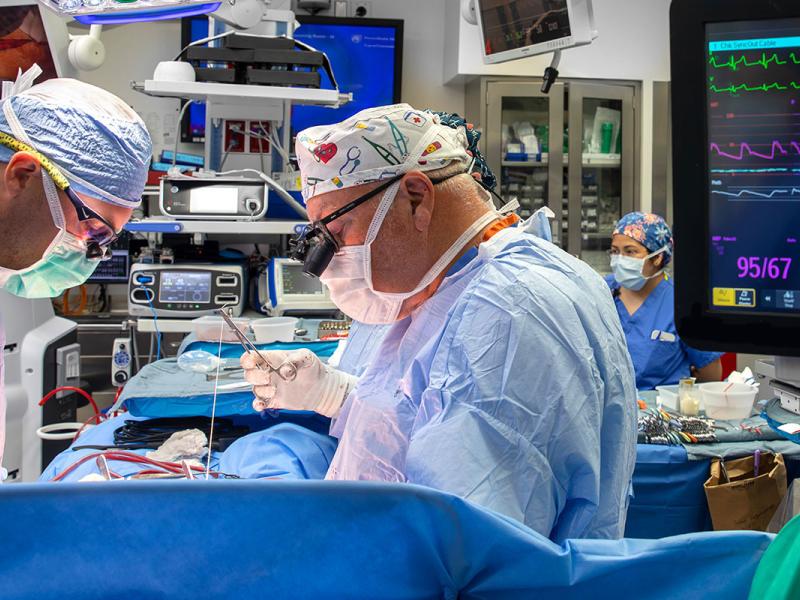
The steps below outline a typical open surgical repair for a congenital heart defect such as Tetralogy of Fallot or a VSD. Your pediatric cardiac surgeon will confirm the exact plan for your child's specific defect and anatomy.

1

Anesthesia and preparation

Your child is placed under general anesthesia, and the surgical team connects monitoring lines before beginning the operation, with a pediatric cardiac anesthesiologist present throughout.

2

Establishing cardiopulmonary bypass

A sternotomy is made to access the heart, and the child is placed on a heart-lung bypass machine, which takes over circulation and oxygenation so the surgeon can operate on a still, open heart.

3

Repairing the defect

The surgeon corrects the specific defect — for example, closing a septal hole with a patch, relieving an obstructed outflow tract, or rerouting blood flow — using techniques tailored to the child's anatomy.

4

Weaning from bypass and closure

Once the repair is complete, the heart is gradually weaned off bypass support and its function is checked with echocardiography, before the chest is closed and the child is transferred to the pediatric ICU.

Recovery Timeline

Recovery Timeline
First 24-72 hours

Your child remains in the pediatric or cardiac intensive care unit (PICU/CICU) on a ventilator initially, with continuous monitoring of heart rhythm, oxygen levels, and chest drainage, per the Congenital Heart Public Health Consortium.

Days 3-7

Most children are extubated (breathing tube removed) within 12-24 hours in straightforward cases and transferred from the ICU to the general pediatric cardiac ward once stable, resuming oral feeding gradually.

Week 1-2

Discharge typically occurs after roughly 1-2 weeks in hospital, once wound healing, feeding, and heart rhythm are satisfactory; the treating cardiologist issues discharge instructions and a fitness-to-fly assessment before international travel home.

Weeks to months

A follow-up echocardiogram and cardiology review are usually scheduled within 4-6 weeks to confirm the repair is functioning well, with longer-term surveillance continuing through childhood as advised by the cardiology team.

Source: Congenital Heart Public Health Consortium; American Academy of Pediatrics; Mayo Clinic; Cleveland Clinic. Individual recovery varies by defect complexity and is guided by your treating pediatric cardiac team.

Known Risks & Limitations

  • Bleeding requiring transfusion or, rarely, a return to the operating room is a recognised risk of open-heart surgery on bypass, particularly in smaller infants, per the American Academy of Pediatrics.
  • Post-operative arrhythmias (irregular heart rhythms) can occur as the heart recovers from surgery and manipulation of conduction tissue; some children require temporary or, less commonly, permanent pacing.
  • Residual defects or the need for reintervention — a further catheter procedure or surgery later in childhood — are a recognised possibility for certain complex repairs, and are part of routine long-term follow-up.
  • Infection, including surgical site infection or, rarely, endocarditis, is a risk of any open cardiac procedure; strict sterile technique and post-operative monitoring aim to minimise this.
  • Pediatric cardiac surgery carries inherently higher stakes than many adult procedures because of the child's smaller size, developing physiology, and the complexity of congenital anatomy — outcomes depend heavily on defect type, the child's overall condition, and the surgical team's case volume, per the Congenital Heart Public Health Consortium.

Source: American Academy of Pediatrics; Congenital Heart Public Health Consortium; Mayo Clinic; Cleveland Clinic; peer-reviewed pediatric cardiac surgery literature. No procedure is without risk; your treating pediatric cardiac surgeon and cardiologist will review your child's individual case.

The CureSureMedico Care Pathway

Remote cardiac case review

Share your child's echocardiogram, cardiology notes, and any prior imaging with our coordination team, who forward the case to a pediatric cardiac surgeon for an initial suitability review.

Specialist center and surgeon matching

We match your family with an internationally accredited pediatric cardiac center experienced in your child's specific defect, and request the surgeon's case volume and outcome data for your review.

Cost estimate and family travel planning

Once the case is reviewed, we issue a consolidated cost estimate covering surgery, PICU care, and ward stay, and help plan accommodation and travel for the accompanying parent or caregiver for the full recommended stay.

Surgery, PICU care, and ward recovery

Your child undergoes the procedure with a dedicated interpreter and coordinator supporting your family throughout the PICU stay and subsequent ward recovery, keeping you informed at every stage.

Discharge, fitness-to-fly, and continuity of care

Before you fly home, we help arrange the follow-up echocardiogram and fitness-to-fly clearance, and ensure your child's full treatment records are shared with your home-country pediatric cardiologist for ongoing care.

Global cost comparison — Pediatric & Congenital Heart Surgery

Average coordinated costs across our partner centres. Final pricing depends on clinical complexity and chosen hospital.

CountryAvg. costvs. cheapest
🇮🇳

India

New Delhi · Chennai · Bengaluru · Hyderabad · Mumbai · Kochi

Best value
$10,000
chevron_right
🇹🇷

Turkey

Istanbul

$20,000
chevron_right

Costs are indicative estimates and vary by procedure specifics, hospital, and clinical complexity. Request a personalised estimate for your specific case.

Partner hospitals

1 centres
View all hospitals
Indraprastha Apollo Hospital

Indraprastha Apollo Hospital

New Delhi, India

Indraprastha Apollo Hospital in Sarita Vihar, New Delhi is one of India's foremost multi-specialty tertiary care centres, part of the Apollo Hospitals network established by Dr. Prathap C Reddy in 1983. The 710-bed facility records 1,600+ daily OPD visits, 1,000+ international patient consultations monthly, and receives 5,000+ international patients per year from over 120 countries. Its Centres of Excellence span cardiac sciences, oncology, neurosciences, organ transplantation, nephrology, orthopaedics, gastroenterology, and bariatric surgery. The hospital is equipped with Da Vinci XI robotic systems, CyberKnife radiosurgery, 3 Tesla MRI, LINAC, ECMO, and a 3D neuro-navigation system.

JCINABHNABL

700+

Specialists

710+

Beds

View Profile

Frequently asked questions

Yes — provided you choose a JCI-accredited or nationally top-ranked pediatric cardiac center. Hospitals in India (e.g., AIIMS, Narayana Health) and Israel routinely treat international pediatric patients with outcomes comparable to leading US and UK centers. Before traveling, request the surgeon's case volume and mortality statistics for your child's specific defect. Our coordinators will vet the hospital, arrange pre-travel telemedicine consultations with the surgeon, and support you throughout the stay.

No fees. No commitment.

Our guidance is completely free

We are compensated by our partner hospitals — never by patients. You get independent clinical matching, cost transparency, and end-to-end coordination at no cost to you.

Message us on WhatsApp