
CureSureMedico
|
EN

TAVI / TAVR

Cardiology

payments

Starting from

$20,000

Up to $55,000 depending on centre

schedule

Typical duration

5–10 days

Including pre-operative work-up

arrow_downwardlocal_hospital

Partner hospitals

85

Vetted for outcome data & accreditation

Dr. Rodina Ainasoa

Content reviewed for medical accuracy by: Dr. Rodina Ainasoa · Medical Content Writer & Health Communications

Overview

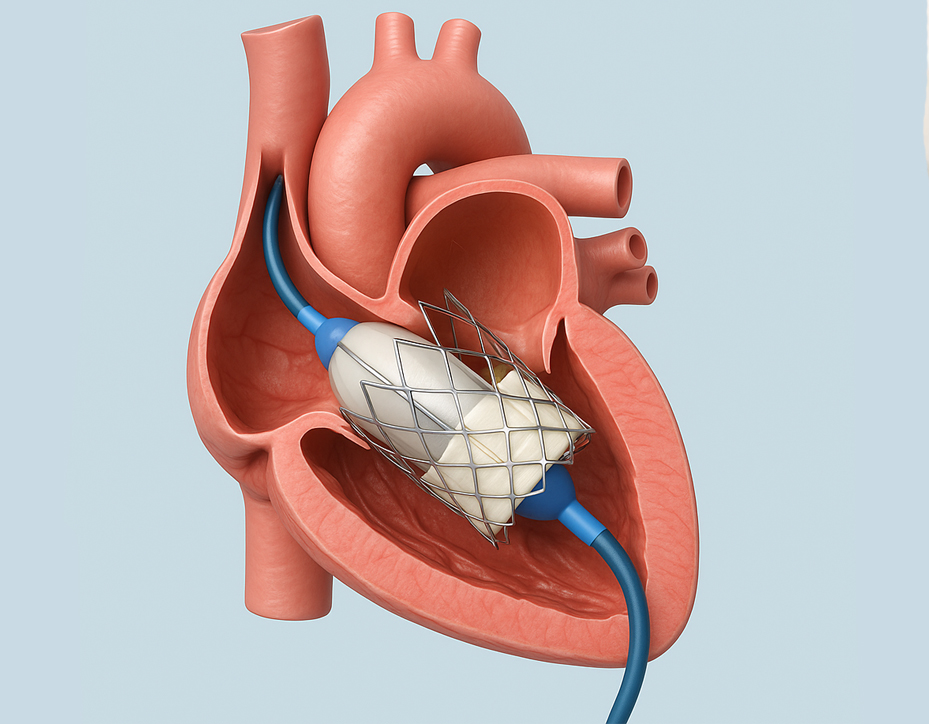
Minimally invasive catheter-based replacement of a diseased aortic valve without open-heart surgery, indicated for patients with severe aortic stenosis who face elevated risk from conventional surgery.

Your case is matched to a centre on the basis of clinical outcome data, not marketing. We coordinate every step — from pre-operative work-up to post-treatment follow-up — with a dedicated care coordinator.

What's included

Pre-operative cardiac CT, echo & catheterisation
Structural heart team review (cardiologist + cardiac surgeon)
TAVI procedure & catheterisation laboratory fees
Valve prosthesis
ICU & inpatient recovery
Interpreter & care coordinator
Post-discharge cardiology follow-up plan

TAVI / TAVR

Coordinated from

$20,000

or message us on WhatsApp

No commitment required. Your data is never shared with third parties.

TAVI (TAVR) vs. Surgical Aortic Valve Replacement (SAVR)

Both procedures replace a severely narrowed aortic valve. TAVI delivers the new valve via a catheter, typically through the femoral artery, while SAVR replaces the valve through open-heart surgery. A multidisciplinary Heart Team — not patient self-assessment — evaluates each case and recommends the approach best suited to individual anatomy and risk factors.

ParameterTAVI (TAVR)Surgical AVR (SAVR)
AccessCatheter-based, usually through a small incision in the groin (femoral artery); no chest incision or heart-lung machine in most casesOpen-heart surgery through a chest incision (sternotomy), typically using a heart-lung machine
Typical procedure lengthAbout 1 to 2 hours, per Cleveland ClinicSeveral hours, including anaesthesia and heart-lung bypass time
Typical hospital stay1 to 2 days, per Cleveland Clinic (some patients stay longer)3 to 7 days, including time in intensive care
1-year composite outcome (low-risk patients)8.5% experienced death, stroke, or rehospitalisation at 1 year in the PARTNER 3 trial15.1% experienced death, stroke, or rehospitalisation at 1 year in the same trial
Typically considered forA broad range of surgical-risk profiles, decided case by case by the Heart Team based on anatomy, frailty, and comorbiditiesSelected patients where the Heart Team favours open surgical access, such as certain anatomies unsuitable for catheter delivery or when combined cardiac surgery is also needed

The Procedure: Step by Step

TAVI typically takes about one to two hours from start to finish, according to Cleveland Clinic. The core stages below describe a standard transfemoral approach.

1

Vascular access

The interventional cardiologist makes a small incision, most often in the upper thigh, to access the femoral artery.

2

Catheter delivery to the heart

A catheter carrying the collapsed replacement valve is threaded through the artery to the diseased aortic valve.

3

Valve placement and expansion

The new valve is positioned inside the existing diseased valve and expanded, pushing the old valve leaflets aside so the new valve takes over function immediately.

4

Confirm function and close

The team checks the new valve for proper function and leaks, then removes the catheter and closes the small entry point.

Recovery Timeline

Recovery Timeline
1–2 days

Most people who have TAVI can leave the hospital within a day, per Cleveland Clinic; some stay two days or more depending on procedure outcomes and overall health.

2 weeks

Many patients return to work around two weeks after the procedure, per Cleveland Clinic, though this varies by role and overall recovery.

1 month

Driving is typically resumed about one month after TAVI, per Cleveland Clinic.

6–10 weeks

Complete recovery is typically reached within six to ten weeks, per Cleveland Clinic. Individual timelines vary with age, frailty, and overall cardiac condition.

Source: Cleveland Clinic. Individual recovery varies and is guided by your care team.

Known Risks & Limitations

  • Permanent pacemaker implantation is needed in a meaningful share of patients after TAVI — a Journal of the American Heart Association meta-analysis found an overall rate around 17.5% within 30 days, with rates lower for balloon-expandable valves (around 10.1%) and higher for self-expanding valves (around 17.9%).
  • In the PARTNER 3 low-risk trial, 5-year stroke rates were comparable between approaches — 5.8% for TAVI versus 6.4% for SAVR.
  • Vascular access-site complications occur more often with TAVI than with SAVR, while major bleeding and new-onset atrial fibrillation are more common after SAVR, per PARTNER-trial data reviewed by the American College of Cardiology.
  • Other recognised complications include paravalvular valve leakage, stroke, infection, heart attack, kidney injury, and reactions to anaesthesia, per Cleveland Clinic.
  • Valve durability through 5 years appears similar between TAVI and SAVR — the PARTNER 3 trial found bioprosthetic valve failure in 1.6% of TAVI patients versus 2.4% of SAVR patients at 5 years — though data beyond 10 years remains limited.

Source: Cleveland Clinic; PARTNER 3 trial as reported by the American College of Cardiology and JACC; Journal of the American Heart Association meta-analysis on post-TAVI pacemaker rates. No procedure is without risk; a multidisciplinary Heart Team reviews your individual anatomy and risk profile before recommending TAVI, SAVR, or continued medical management — this is a clinical decision, not a self-assessment.

The CureSureMedico Care Pathway

Remote clinical review

Share your echocardiogram, cardiac CT, and catheterisation results. Our coordination team forwards your case to a structural heart team, who determine candidacy — this decision is made by the multidisciplinary team, not by self-assessment.

Hospital matching & estimate

A consolidated cost estimate covering the procedure, valve prosthesis, catheterisation laboratory fees, and inpatient recovery is issued before travel.

Travel & pre-procedure work-up

On arrival, final cardiac CT, echocardiography, and vascular access assessment confirm the procedural plan before admission.

Procedure & early recovery

Catheterisation laboratory procedure followed by monitored recovery, typically progressing from a short ICU or step-down stay to ward-based recovery before discharge.

Continuity of care post-return

Discharge summary, imaging, and a follow-up plan are shared with your home cardiologist, alongside a scheduled remote follow-up consultation.

Global cost comparison — TAVI / TAVR

Average coordinated costs across our partner centres. Final pricing depends on clinical complexity and chosen hospital.

CountryAvg. costvs. cheapest
🇮🇳

India

New Delhi · Chennai · Bengaluru · Hyderabad · Mumbai · Kochi

✓ Verified
$43,500
chevron_right
🇹🇷

Turkey

Istanbul

Best valueEstimate
$26,100
chevron_right
🇹🇭

Thailand

Bangkok · Phuket · Chiang Mai

✓ Verified
$32,000
chevron_right

Costs are indicative estimates and vary by procedure specifics, hospital, and clinical complexity. Request a personalised estimate for your specific case.

Cost & recovery by procedure

This treatment category covers several different operations with different levels of invasiveness, recovery times, and costs. The country averages above blend all of them together — use the breakdown below for a more realistic, procedure-specific estimate.

Transfemoral TAVI

A collapsed replacement valve is guided on a catheter through an artery in the groin (femoral artery) up to the heart, then expanded inside the diseased aortic valve without opening the chest. This is the standard, most commonly used TAVI route and is suitable for the large majority of eligible patients.

Typical recovery · 1–2 weeks

Most patients stay in hospital 1–3 days, and many centres now discharge fit patients the day after the procedure. Groin-site soreness and mild fatigue are common for the first few days; light activity typically resumes within a week, with most people feeling fully recovered within 2–4 weeks. A small proportion of patients need a permanent pacemaker for a slow heart rhythm afterward.

India

$28,000–$45,000

Turkey

$20,000–$32,000

Thailand

$25,000–$38,000

Alternative-Access TAVI (transapical / subclavian)

When the femoral artery is too narrow, calcified, or otherwise unsuitable, the replacement valve is delivered by an alternative route instead — most often through a small incision between the ribs into the tip of the heart (transapical) or through the collarbone artery (subclavian). It achieves the same result as transfemoral TAVI but involves a small surgical incision.

Typical recovery · 3–5 weeks

Hospital stay is typically longer than transfemoral TAVI, usually 3–6 days, because of the small chest or shoulder incision. Incision-site discomfort is expected for one to two weeks; most patients resume light activity within 3–5 weeks. Overall recovery is still considerably faster than open aortic valve surgery.

India

$32,000–$50,000

Turkey

$24,000–$36,000

Thailand

Estimate pending verification — ask your care coordinator for a current quote

Pre-TAVI Cardiac CT & Catheterisation

Before TAVI, a detailed cardiac CT scan (to measure the valve annulus and plan the safest arterial access route) and a coronary catheterisation (to check for blockages in the heart's own arteries) are performed so the structural heart team can select the correct valve size and access approach.

Typical recovery · Same day–1 day

Both the CT scan and catheterisation are typically outpatient or same-day procedures. After catheterisation, a few hours of monitoring are needed to check the artery access site (usually the wrist or groin); most patients go home the same day or the following morning with no activity restrictions beyond avoiding heavy lifting for 24–48 hours.

India

$800–$1,800

Turkey

$1,200–$2,200

Thailand

Estimate pending verification — ask your care coordinator for a current quote

Cost ranges are indicative estimates for international patients and vary with implant choice, number of levels treated, surgeon, and hospital. Request a personalised quote for your specific case.

Clinical detail: AAOS OrthoInfo, Mayo Clinic Health System, Cleveland Clinic. Cost ranges cross-checked across multiple independent medical-tourism sources per country where marked; ranges flagged "pending verification" could not be independently confirmed at the time of writing.

Partner hospitals

85 centres
View all hospitals
Hospital Medica Sur

Hospital Medica Sur

Mexico City, Mexico

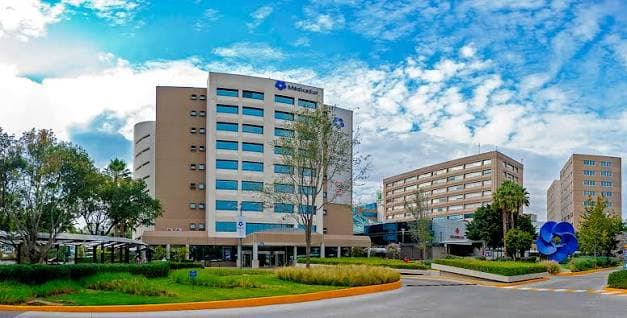
Hospital Médica Sur is a world-class tertiary referral centre in Tlalpan, Mexico City, recognised as Mexico's best hospital for six consecutive years by Newsweek's World's Best Hospitals ranking (2026). The hospital is the first and only institution in Latin America to join the Mayo Clinic Care Network — with a dedicated Mayo Clinic office on-site since 2018 — and is one of only four JCI-accredited hospitals in Mexico. Its 35+ specialty centres span the full spectrum of high-complexity medicine: robotic surgery (Da Vinci X), Gamma Knife radiosurgery, organ transplantation (150+ procedures since 2002), bariatric surgery, oncology, neurosurgery, nephrology, and orthopaedics.
JCIMayo Clinic Care Network

200+

Specialists

220+

Beds

View Profile
Memorial Hospitals Group

Memorial Hospitals Group

Istanbul, Turkey

Memorial Hospitals Group is Turkey's most internationally recognised private hospital network, founded in 1995 and opened to patients in February 2000. Its flagship Sisli campus in Istanbul was the first hospital in Turkey — and 21st in the world — to receive JCI accreditation in 2002, with uninterrupted renewals ever since. Across 11 hospitals and 2 medical centres, Memorial hosts 1,300+ physicians and treats 75,000 international patients per year from 167 countries. The group is celebrated for cardiac surgery (1,400+ operations/year), organ transplantation (including Turkey's first blood-type-incompatible kidney transplant), IVF (10,000+ babies born), oncology with TrueBeam and CyberKnife, and robotic neurosurgery.

JCIISO 15189:2022

1,300+

Specialists

252+

Beds

View Profile
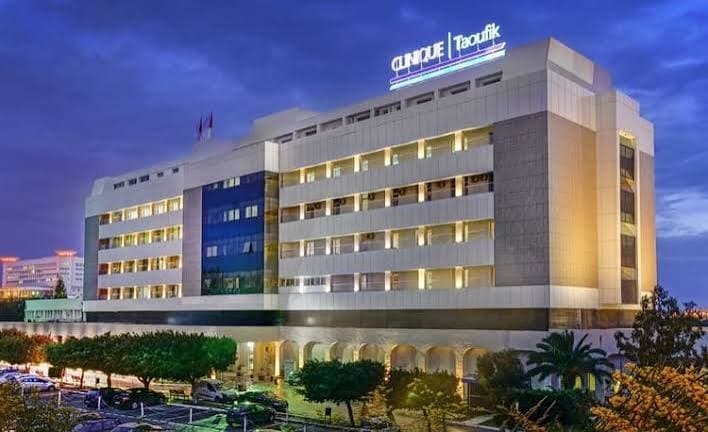
Taoufik Hospital Group

Taoufik Hospital Group

Tunis, Tunisia

Taoufik Hospitals Group (THG) is Tunisia's first multi-site hospital network covering all medical-surgical specialties, founded in 2014 and expanded through four successive acquisitions to include Clinique Taoufik, Clinique Soukra, Clinique Ezzahra, and Clinique Hannibal across Tunis. The group operates 626 beds, 100 ICU beds, and 30 operating rooms, recording over 180,000 admissions per year across 24 specialties including cardiology, oncology, neurology, orthopaedics, fertility, nephrology, and paediatrics. THG holds France Accreditation and Bureau Veritas certification, and provides dedicated international patient services including a 48-hour cost estimate, multilingual patient relations coordinators available throughout the stay, and fully transparent itemised billing.

France Accr.Bureau Veritas

200+

Specialists

626+

Beds

View Profile
Amrita Hospital

Amrita Hospital

Faridabad, India

Asia's largest private hospital — 2,600 beds, 64 operation theatres, 81 specialties on a 130-acre campus in Delhi NCR. NABH & NABL accredited. Centres of excellence in oncology, cardiac surgery, BMT, organ transplantation, neurosciences, and IVF.

NABHNABL

800+

Specialists

2,600+

Beds

View Profile

Frequently asked questions

TAVI replaces the aortic valve via a catheter — typically inserted through the femoral artery in the groin — without stopping the heart or opening the chest. Recovery is typically 5–7 days versus 4–6 weeks for open surgery.

No fees. No commitment.

Our guidance is completely free

We are compensated by our partner hospitals — never by patients. You get independent clinical matching, cost transparency, and end-to-end coordination at no cost to you.

Message us on WhatsApp