

CureSureMedico
|
EN

Combined Organ Transplant

Transplant

payments

Starting from

$30,000

Up to $150,000 depending on centre

schedule

Typical duration

45–120 days

Including pre-operative work-up

arrow_downwardlocal_hospital

Partner hospitals

1

Vetted for outcome data & accreditation

Dr. Rodina Ainasoa

Content reviewed for medical accuracy by: Dr. Rodina Ainasoa · Medical Content Writer & Health Communications

Overview

Simultaneous multi-organ transplantation — including kidney-pancreas, heart-lung, and liver-kidney combinations — for patients whose disease affects more than one organ system. Only a select few globally recognized centers offer these highly complex procedures, with India's leading transplant hospitals emerging as an accessible destination.

Your case is matched to a centre on the basis of clinical outcome data, not marketing. We coordinate every step — from pre-operative work-up to post-treatment follow-up — with a dedicated care coordinator.

What's included

Comprehensive multi-disciplinary pre-transplant evaluation (all organ systems)
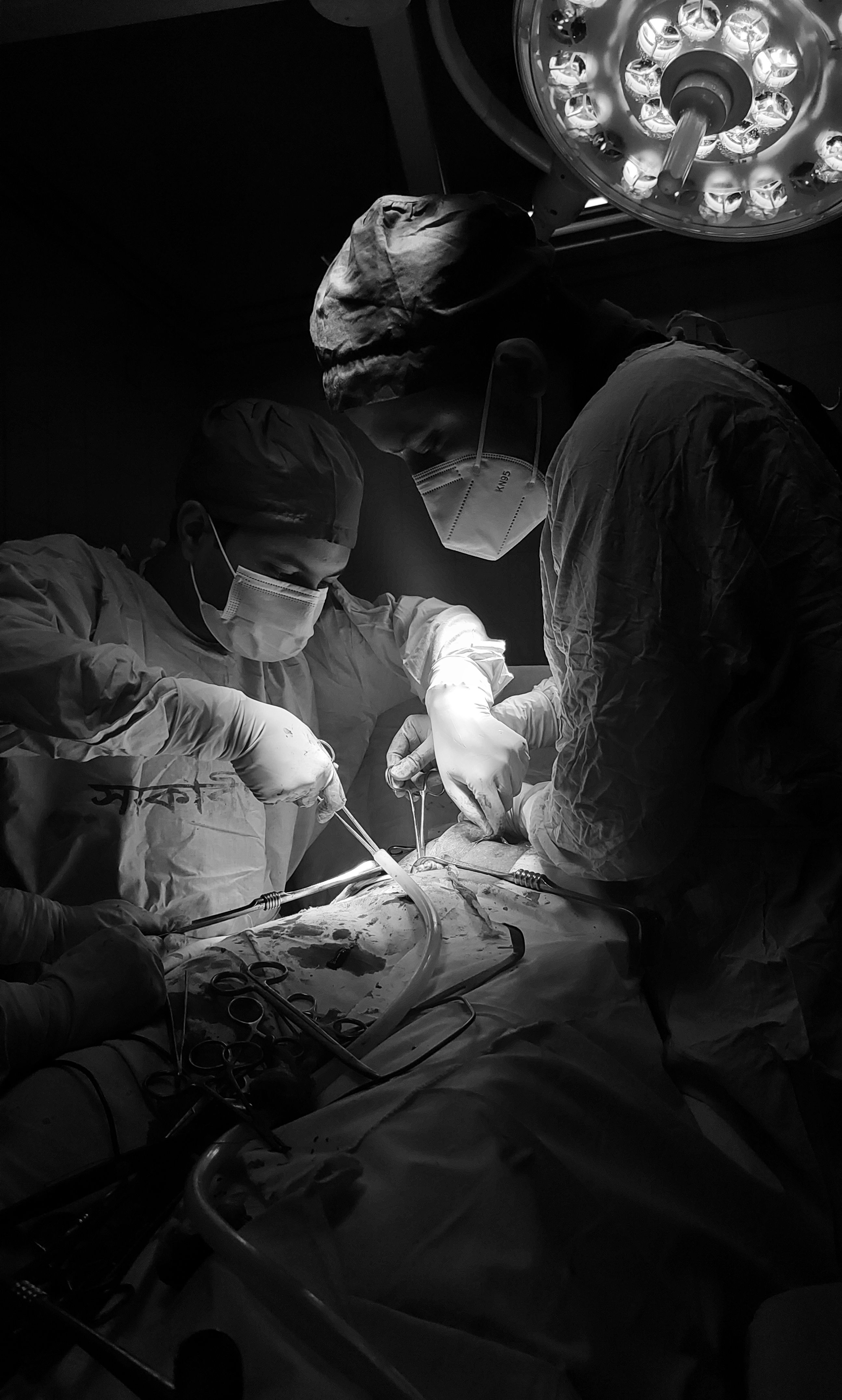
Combined transplant surgery with two or more specialized surgical teams
Extended post-operative ICU and HDU care
Multi-organ immunosuppression protocol and rejection monitoring
Dedicated transplant coordinator managing cross-specialty communication
Long-term follow-up protocol and telemedicine support for home physicians

Combined Organ Transplant

Coordinated from

$30,000

or message us on WhatsApp

No commitment required. Your data is never shared with third parties.

Simultaneous vs. Staged Combined Organ Transplant

When a patient needs transplants of two organs — such as a kidney and pancreas, or a liver and kidney — the two organs can be transplanted together in one operation or staged as two separate surgeries. Here is how the two approaches compare.

ParameterSimultaneous (Combined) TransplantStaged (Sequential) Transplant
Number of operationsBoth organs are transplanted in a single combined operation, under one anesthetic episode.Two separate operations, typically performed months to years apart as each organ's failure becomes clinically significant.
Typical operative timeA longer single operation — commonly reported in the range of roughly 6-9 hours combined for a simultaneous kidney-pancreas transplant, per peer-reviewed transplant surgery literature.Two shorter, separate procedures, each closer in length to a standalone single-organ transplant.
Best suited forPatients whose two organs are failing concurrently, such as type 1 diabetes with end-stage kidney disease, where combined surgery avoids a second major operation later.Patients whose organs fail at different times, or where donor-organ allocation and timing make sequencing the two transplants more practical.
Immunosuppression startOne combined immunosuppression protocol is initiated at once, covering both grafts from day one.Immunosuppression is initiated and adjusted twice — once after each surgery — with the regimen retuned around the second transplant.
Initial hospital stayA longer single hospital admission covering recovery from both organ transplants together.Two separate, typically shorter hospital admissions, one for each surgery.

The Procedure: Step by Step

The steps below outline a typical simultaneous combined organ transplant, using kidney-pancreas transplant as an illustrative example. Your transplant team will confirm the exact plan for your specific organ combination, which may differ for heart-lung or liver-kidney transplants.

1

Multi-disciplinary evaluation and organ matching

A transplant team spanning each relevant specialty (such as nephrology, endocrinology, cardiology, or hepatology alongside transplant surgery) evaluates whether the patient is a suitable candidate for combined transplantation, and the case is registered for matched-donor organ allocation.

2

Anesthesia and first organ implantation

Under general anesthesia, the surgical team implants the first donor organ, connecting its blood vessels and, where applicable, its duct or ureter to restore blood flow and function.

3

Second organ implantation and reconstruction

The second donor organ is then implanted in the same operation, with its own vascular and duct or ureteral reconstruction, before both grafts are checked for adequate blood flow and early function.

4

ICU stabilization and combined immunosuppression

The patient is transferred to intensive care for close monitoring of both new organs, and a combined immunosuppression protocol is started to reduce the risk of rejection of either graft.

Recovery Timeline

Recovery Timeline
First 1-2 weeks

Close ICU and high-dependency monitoring of both organ grafts, including frequent blood tests to check kidney and pancreas (or other organ) function and early detection of rejection or graft complications.

Weeks 2-6

Continued hospital-based or closely supervised recovery as immunosuppression doses are fine-tuned, wound healing progresses, and the patient is gradually mobilized; total hospital stay for combined transplants is typically longer than for a single-organ transplant.

Months 1-3

Return home or to a nearby recovery residence with regular outpatient follow-up, ongoing laboratory monitoring for both grafts, and dose adjustments to immunosuppression as the risk of early rejection declines.

Ongoing (lifelong)

Lifelong immunosuppression and periodic monitoring of both transplanted organs continue indefinitely, with most recipients able to return to normal daily activity while maintaining regular transplant clinic follow-up.

Source: American Society of Transplantation; Mayo Clinic; Cleveland Clinic; peer-reviewed simultaneous pancreas-kidney transplant literature. Individual recovery varies by organ combination and is guided by your transplant team.

Known Risks & Limitations

  • Each transplanted organ carries its own independent rejection risk, and the two grafts do not always reject together — published data on simultaneous kidney-pancreas transplant show that rejection can affect one organ without the other.
  • Combined immunosuppression to protect two grafts at once increases the overall risk of infection compared with single-organ transplantation, requiring careful monitoring and preventive care.
  • The surgery itself is more complex and longer than a single-organ transplant, which is associated with recognized risks including graft thrombosis, and generally translates to a longer hospital stay and recovery period.
  • Suitable donor organs for combined transplants are scarce, and deceased-donor allocation is generally restricted to a country's own citizens and residents in most transplant systems worldwide, per the Declaration of Istanbul — international patients should expect combined transplants to rely primarily on living-donor or self-arranged options where locally permitted, not on a host country's deceased-donor waiting list.
  • Lifelong immunosuppression is required after a combined transplant, carrying long-term considerations such as increased infection susceptibility and elevated risk of certain cancers, which your transplant team will monitor for indefinitely.

Source: UNOS/OPTN; American Society of Transplantation; Mayo Clinic; Cleveland Clinic; peer-reviewed transplant literature. No procedure is without risk; your transplant team will review your individual case.

The CureSureMedico Care Pathway

Remote case review

Share your medical records, organ function tests, and prior treatment history with our coordination team, who forward your case for an initial multi-disciplinary review of suitability for combined transplantation abroad.

Transplant center and team matching

We match you with an accredited transplant center with a track record in your specific organ combination and confirm the surgical and specialist teams involved in your care.

Cost estimate and eligibility clarity

We issue a consolidated cost estimate covering evaluation, surgery, immunosuppression, and extended hospital stay, and clarify upfront what donor-organ pathways (living-donor or otherwise) are realistically available to you as an international patient.

Travel planning for an extended stay

Given the longer combined-transplant recovery period, we help plan an extended trip length covering pre-transplant workup, surgery, and the initial weeks of close post-operative monitoring.

Follow-up and continuity of care

Before you depart, your full transplant records, immunosuppression regimen, and monitoring schedule are shared with your home-country transplant physician so they can continue your lifelong follow-up care.

Global cost comparison — Combined Organ Transplant

Average coordinated costs across our partner centres. Final pricing depends on clinical complexity and chosen hospital.

CountryAvg. costvs. cheapest
🇮🇳

India

New Delhi · Chennai · Bengaluru · Hyderabad · Mumbai · Kochi

Best value
$40,000
chevron_right
🇹🇷

Turkey

Istanbul

$80,000
chevron_right

Costs are indicative estimates and vary by procedure specifics, hospital, and clinical complexity. Request a personalised estimate for your specific case.

Partner hospitals

1 centres
View all hospitals
Amrita Hospital Kochi

Amrita Hospital Kochi

Kochi, India

Amrita Hospital Kochi is a major teaching hospital in Kerala with extensive departments, advanced diagnostics and strong academic/research links. Established in 1998, it operates 1350 beds with 450 doctors across cardiology, oncology, haematology, neurology and orthopaedics, and holds NABH, NABL and ISO 9000:2015 accreditation, combining tertiary clinical care with medical education and research.

NABHNABLISO 9000:2015

450+

Specialists

1,350+

Beds

View Profile

Frequently asked questions

Simultaneous multi-organ transplantation is preferred when the disease process has damaged more than one organ and transplanting one alone would be insufficient or unsafe. The classic example is simultaneous kidney-pancreas transplant for Type 1 diabetics with end-stage renal disease — transplanting only the kidney without the pancreas would mean ongoing diabetes continues damaging the new kidney. Similarly, certain congenital heart diseases cause irreversible lung hypertension requiring both organs to be replaced together. Doing the transplants simultaneously also means one anesthetic event and a single immunological challenge, reducing cumulative risk.

No fees. No commitment.

Our guidance is completely free

We are compensated by our partner hospitals — never by patients. You get independent clinical matching, cost transparency, and end-to-end coordination at no cost to you.

Message us on WhatsApp