
CureSureMedico
|
EN

Pediatric Ophthalmology & Squint Correction

Ophthalmology

payments

Starting from

$1,000

Up to $6,000 depending on centre

schedule

Typical duration

5–10 days

Including pre-operative work-up

arrow_downwardlocal_hospital

Partner hospitals

1

Vetted for outcome data & accreditation

Dr. Rodina Ainasoa

Content reviewed for medical accuracy by: Dr. Rodina Ainasoa · Medical Content Writer & Health Communications

Overview

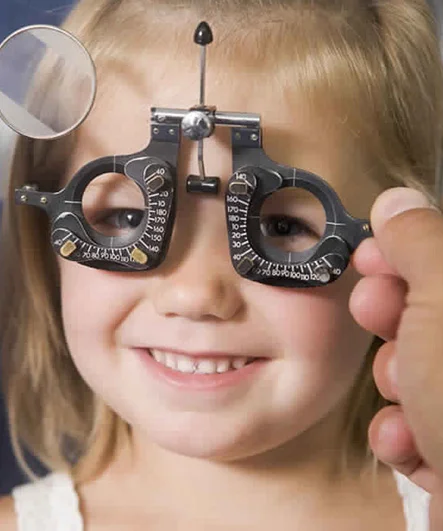
Specialist paediatric eye care diagnoses and treats childhood vision conditions — strabismus (squint), amblyopia (lazy eye), congenital cataracts, and childhood glaucoma — during the critical developmental window when intervention is most effective. International paediatric ophthalmologists deliver surgical and non-surgical care for children whose conditions are undertreated in their home country.

Your case is matched to a centre on the basis of clinical outcome data, not marketing. We coordinate every step — from pre-operative work-up to post-treatment follow-up — with a dedicated care coordinator.

What's included

Comprehensive paediatric eye examination under sedation/general anaesthesia where needed
Paediatric ophthalmologist & anaesthesia fees
Surgical correction (muscle recession/resection or other indicated procedure)
Post-operative patching regimen and spectacle prescription if required
Follow-up alignment assessment at 1 week
Interpreter & family care coordinator

Pediatric Ophthalmology & Squint Correction

Coordinated from

$1,000

or message us on WhatsApp

No commitment required. Your data is never shared with third parties.

Adjustable-Suture vs. Standard (Non-Adjustable) Strabismus Surgery

Squint (strabismus) surgery repositions the eye muscles to improve alignment, and can be performed with a standard fixed suture technique or an adjustable suture that allows fine-tuning shortly after the operation. Here is how the two approaches compare for a child's surgery.

ParameterStandard (Non-Adjustable) SutureAdjustable Suture
How the muscle is securedThe eye muscle is repositioned and the suture is tied off permanently during the same operation.The suture is tied with a temporary adjustable knot, allowing the surgeon to fine-tune eye position within the first day after surgery before it is secured permanently.
Typical use in young childrenThe routine approach for most infants and younger children, who cannot reliably cooperate with a post-operative adjustment while awake.Used more selectively in pediatric cases — most commonly in older, cooperative children or re-operations — since the adjustment step generally requires the patient to cooperate while awake, per AAPOS.
Reported motor success ratePublished series report success rates roughly in the 65-88% range depending on the type and complexity of misalignment.Some studies report a higher success rate with adjustable sutures, particularly for esotropia (inward-turning eyes), though the overall advantage over standard sutures is not consistently proven across all strabismus types, per peer-reviewed comparative studies.
Anesthesia considerationsPerformed entirely under general anesthesia, as is standard for pediatric eye muscle surgery.Also performed under general anesthesia; any adjustment is generally done with the child awake and cooperative, or the technique is not used, which is why it is less common in very young children.
Best suited forInfants, toddlers, and most children undergoing first-time, straightforward strabismus correction.Older children who can cooperate with an awake adjustment, or complex/re-operative cases where fine-tuning eye position after surgery is expected to be valuable.

The Procedure: Step by Step

The steps below outline a typical pediatric strabismus (squint) surgery. Your child's pediatric ophthalmologist will confirm the exact surgical plan based on the type and severity of misalignment, and whether pediatric cataract surgery or another procedure is instead indicated.

1

Comprehensive exam under anesthesia

Because young children cannot reliably cooperate with a detailed eye exam while awake, a comprehensive assessment — including measurement of eye alignment, refraction, and examination of the retina and lens — is often completed under the same general anesthesia used for surgery, confirming the final surgical plan.

2

Surgical correction of eye alignment

The surgeon accesses the eye muscles through a small incision in the conjunctiva (the eye's clear surface membrane) and repositions one or more muscles — through recession (weakening) or resection (strengthening) — to correct the misalignment.

3

Post-operative monitoring and recovery

Your child is monitored in recovery as the anesthesia wears off, with a protective eye shield sometimes used overnight, and given guidance on activity limits, eye drops, and pain relief appropriate for their age.

4

Follow-up vision and alignment assessment

A follow-up visit within one to two weeks checks eye alignment, healing, and vision, and your pediatric ophthalmologist confirms whether ongoing amblyopia treatment (such as patching) or a change in glasses prescription is needed.

Recovery Timeline

Recovery Timeline
First 24-48 hours

Redness, mild swelling, and some discomfort in the operated eye(s) are common as the anesthesia wears off; young children often want extra comfort and rest, and over-the-counter pain relief appropriate for their age and weight is usually sufficient, per AAPOS.

First 1-2 weeks

Redness typically improves over one to two weeks; swimming, dusty environments, and rubbing the eyes should be avoided, and most children can return to school once comfortable, per Cleveland Clinic and Mayo Clinic guidance.

Weeks to a few months

Eye alignment continues to settle over the following weeks; any prescribed amblyopia (lazy eye) patching or atropine drops and updated glasses are continued as directed, since surgery corrects alignment but does not by itself resolve amblyopia.

Ongoing (through childhood)

Regular pediatric ophthalmology follow-up continues through the childhood visual development years, since alignment and vision can change as a child grows, and some children require an additional procedure later in childhood.

Source: American Association for Pediatric Ophthalmology and Strabismus (AAPOS); Mayo Clinic; Cleveland Clinic. Individual recovery varies and is guided by your child's treating pediatric ophthalmologist.

Known Risks & Limitations

  • If an underlying lazy eye (amblyopia) is not identified and treated early — typically with patching or atropine drops in addition to any surgery — visual development in the weaker eye can be permanently affected, per AAPOS.
  • Surgery corrects eye alignment but does not always fully resolve amblyopia or the need for glasses; many children continue to need patching, vision therapy, or corrective lenses alongside surgical treatment.
  • Reoperation is a recognized possibility — published series report roughly 10-20% of strabismus surgeries require a further procedure over time, as alignment can drift as a child grows, per peer-reviewed pediatric ophthalmology literature.
  • General anesthesia in infants and young children carries its own considerations, and your child's anesthesia team will review individual fitness for surgery, including age, weight, and any underlying medical conditions.
  • Timing matters for visual development outcomes — conditions such as congenital cataract and significant strabismus are generally treated as early as safely possible, since the visual system is most responsive to correction during early childhood, per the American Academy of Ophthalmology.

Source: American Association for Pediatric Ophthalmology and Strabismus (AAPOS); American Academy of Ophthalmology; Mayo Clinic; Cleveland Clinic. No procedure is without risk; your child's treating pediatric ophthalmologist will review their individual case.

The CureSureMedico Care Pathway

Remote case review for your child

Share your child's eye photographs, prior exam records, and any glasses prescription with our coordination team, who forward the case to a paediatric ophthalmologist for an initial review of the likely diagnosis and treatment options.

Specialist and hospital matching

We match your child with an accredited paediatric ophthalmologist and children's eye care unit experienced in strabismus surgery, amblyopia management, and paediatric cataract surgery.

Cost estimate and family travel planning

Once your child's case is reviewed, we issue a consolidated cost estimate covering the examination under anesthesia, surgery, and follow-up visits, and help plan a trip length and accommodation suited to travelling with a young child and family.

Treatment, comfort, and family support

Your child is examined and treated with a paediatric-experienced anesthesia and nursing team, and our care coordinator remains available throughout to support you and your family with translation, logistics, and day-to-day questions.

Follow-up and continuity of care

Before you depart, your child's surgical records, alignment measurements, and any ongoing patching or glasses plan are shared with your home-country pediatric ophthalmologist so they can continue monitoring visual development.

Global cost comparison — Pediatric Ophthalmology & Squint Correction

Average coordinated costs across our partner centres. Final pricing depends on clinical complexity and chosen hospital.

CountryAvg. costvs. cheapest
🇮🇳

India

New Delhi · Chennai · Bengaluru · Hyderabad · Mumbai · Kochi

Best value
$1,500
chevron_right
🇹🇷

Turkey

Istanbul

$3,000
chevron_right

Costs are indicative estimates and vary by procedure specifics, hospital, and clinical complexity. Request a personalised estimate for your specific case.

Partner hospitals

1 centres
View all hospitals
Amrita Hospital

Amrita Hospital

Faridabad, India

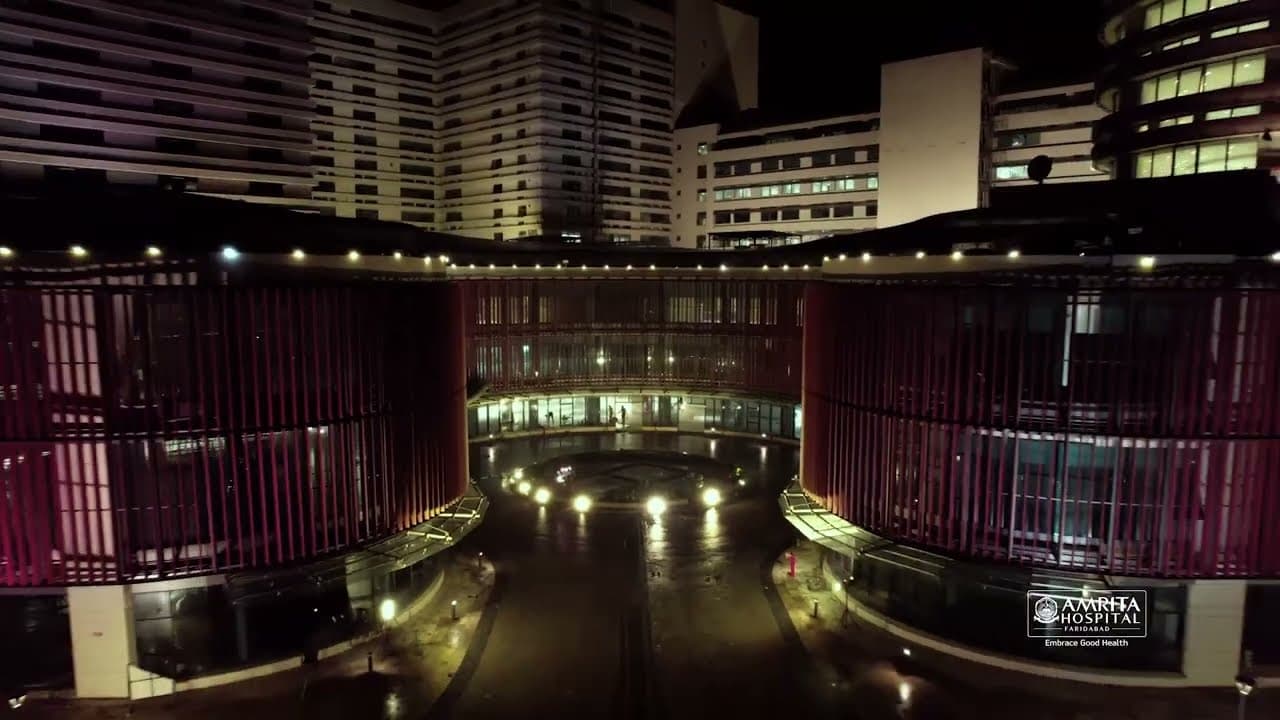
Asia's largest private hospital — 2,600 beds, 64 operation theatres, 81 specialties on a 130-acre campus in Delhi NCR. NABH & NABL accredited. Centres of excellence in oncology, cardiac surgery, BMT, organ transplantation, neurosciences, and IVF.

NABHNABL

800+

Specialists

2,600+

Beds

View Profile

Frequently asked questions

Strabismus surgery can be performed safely from infancy onwards — early correction is preferred to allow normal binocular vision development. However, surgery to improve eye alignment for cosmetic and functional reasons can be performed at any age, even in adults. Amblyopia (lazy eye) treatment is most effective before age 7–8 when the visual cortex is still developing, but improvement is possible up to early adolescence. We recommend assessment as soon as a problem is identified rather than waiting.

No fees. No commitment.

Our guidance is completely free

We are compensated by our partner hospitals — never by patients. You get independent clinical matching, cost transparency, and end-to-end coordination at no cost to you.

Message us on WhatsApp