CureSureMedico
|
EN

Pediatric Urology

Urology

payments

Starting from

$2,000

Up to $10,000 depending on centre

schedule

Typical duration

5–14 days

Including pre-operative work-up

arrow_downwardlocal_hospital

Partner hospitals

3

Vetted for outcome data & accreditation

Dr. Rodina Ainasoa

Content reviewed for medical accuracy by: Dr. Rodina Ainasoa · Medical Content Writer & Health Communications

Overview

Expert surgical correction of congenital and acquired urological conditions in children — including hypospadias repair, orchidopexy for undescended testes, pyeloplasty for hydronephrosis, and endoscopic treatment of vesicoureteral reflux — performed by dedicated pediatric urology specialists at internationally accredited children's hospitals.

Your case is matched to a centre on the basis of clinical outcome data, not marketing. We coordinate every step — from pre-operative work-up to post-treatment follow-up — with a dedicated care coordinator.

What's included

Pediatric urology consultation with review of ultrasound, voiding cystourethrogram (VCUG), and prior records
Surgical procedure by a dedicated pediatric urologist at a JCI-accredited children's hospital
3–7 night hospital stay with pediatric nursing care and parent accommodation support
Post-operative imaging or voiding assessment as required (e.g., post-op renal ultrasound)
Pediatric patient coordinator, child life support, and interpreter services
Comprehensive surgical and follow-up report for the child's home pediatrician and urologist

Pediatric Urology

Coordinated from

$2,000

or message us on WhatsApp

No commitment required. Your data is never shared with third parties.

Treatment approaches

Standard and robotic-assisted Pediatric Urology

Standard Approach

Standard (Laparoscopic) Pediatric Pyeloplasty

$2,000

514 days

Robotic-Assisted Option

Robotic-Assisted Pediatric Pyeloplasty

$6,000

410 days

Comparing the two approaches

StandardRobotic-Assisted
ProcedureStandard (Laparoscopic) Pediatric PyeloplastyRobotic-Assisted Pediatric Pyeloplasty
TechnologyConventional surgical instrumentsRobotic-assisted surgical system with surgeon oversight
AvailabilityHospital-dependentSelected hospitals with robotic capability
SpecialistProcedure specialistSpecialist with relevant robotic experience
Clinical suitabilityCase-dependentCase-dependent
Tariff$2,000–$10,000$6,000–$16,000
Duration5–14 days4–10 days

Eligibility for robotic-assisted treatment

  • Confirmed UPJ obstruction/hydronephrosis on imaging suitable for a minimally invasive repair
  • Child's age, weight, and abdominal size appropriate for pediatric-sized robotic instrumentation — very young infants and the smallest children are sometimes better suited to the open approach
  • No prior abdominal or renal surgery that would complicate robotic access
  • Availability of a pediatric robotic surgical program with surgeons experienced specifically in children, at your selected hospital

Risks and limitations of robotic-assisted surgery

  • Robotic assistance does not eliminate the surgical risks associated with pyeloplasty
  • The surgeon remains responsible for the procedure; robotic guidance is an aid, not a substitute for surgical judgement
  • Not every child is a suitable candidate for the robotic-assisted approach — the open approach may still be recommended for the smallest infants
  • Availability depends on the individual hospital's pediatric robotic program and, in some cases, the treating specialist's experience with pediatric-specific instrumentation

Tariff structure

Standard procedure$2,000$10,000
Robotic-assisted technology fee+$1,800$3,800
Total estimated robotic-assisted tariff$6,000$16,000

Why can robotic-assisted procedures cost more?

Robotic-assisted procedures rely on additional technology and equipment beyond the standard operating platform and clinical team. This additional technology component is generally not included in standard case pricing.

Is robotic-assisted surgery always recommended?

No. Robotic-assisted surgery is not appropriate for every procedure or patient. Availability and suitability are determined by the treating specialist, based on your imaging, clinical condition, and the treating hospital's capabilities.

Global cost comparison — Pediatric Urology

Average coordinated costs across our partner centres. Final pricing depends on clinical complexity and chosen hospital.

CountryAvg. costvs. cheapest
🇮🇳

India

New Delhi · Chennai · Bengaluru · Hyderabad · Mumbai · Kochi

Best value
$2,500
chevron_right
🇹🇷

Turkey

Istanbul

$5,000
chevron_right

Costs are indicative estimates and vary by procedure specifics, hospital, and clinical complexity. Request a personalised estimate for your specific case.

Cost & recovery by procedure

This treatment category covers several different operations with different levels of invasiveness, recovery times, and costs. The country averages above blend all of them together — use the breakdown below for a more realistic, procedure-specific estimate.

Hypospadias Repair

The urethral opening, which is misplaced on the underside of the penis instead of at the tip, is surgically reconstructed — often using a tubularized incised plate (TIP) technique — so the child can urinate in a normal, straight stream when standing. Surgeons typically operate between 6 and 18 months of age, a window when children have little memory of the surgery and recovery tends to be easier.

Typical recovery · 1–2 weeks

Often day-case or a single overnight stay, with a urinary stent left in place for about 1–2 weeks to protect the repair while it heals; parents manage a dressing and pain relief at home. Most boys are seen twice in the first three months for follow-up, with the repaired penis expected to look and function normally within about 6 months, though a small proportion need a minor revision later.

India

$2,000–$4,500

Turkey

Estimate pending verification — ask your care coordinator for a current quote

Thailand

Estimate pending verification — ask your care coordinator for a current quote

Orchidopexy for Undescended Testes

A testicle that has not descended into the scrotum on its own is surgically moved down and fixed in place, usually through a small groin incision or laparoscopically. To give the best chance of normal future fertility and reduce long-term cancer risk, guidelines recommend surgery before 12–18 months of age if the testis has not descended by around 6 months.

Typical recovery · 3–7 days

Usually a same-day procedure, with the child going home a few hours after surgery unless another medical condition requires overnight observation. Children typically return to normal activity within 3–7 days, with a brief restriction on straddle toys, baths, and rough play; a follow-up visit confirms the testicle remains in a good position.

India

$1,500–$3,000

Turkey

Estimate pending verification — ask your care coordinator for a current quote

Thailand

Estimate pending verification — ask your care coordinator for a current quote

Pediatric Pyeloplasty for Hydronephrosis

The narrowed segment where the kidney's drainage tube (ureter) joins the kidney (the ureteropelvic junction) is removed and the healthy ends rejoined, relieving the blockage that causes hydronephrosis (kidney swelling). It is most often performed laparoscopically or with robotic assistance, and can be needed anywhere from infancy through later childhood depending on when the obstruction is diagnosed and how severe it is.

Typical recovery · 1–2 weeks

Hospital stay is typically 2–5 days depending on the surgical approach and the child's age. A temporary internal stent or drain is often left in place for 1–3 weeks and removed at a follow-up visit; most children resume normal activity within 1–2 weeks, though a follow-up ultrasound (and sometimes a nuclear renal scan) over the following months confirms the drainage has improved.

India

$3,500–$6,500

Turkey

Estimate pending verification — ask your care coordinator for a current quote

Thailand

Estimate pending verification — ask your care coordinator for a current quote

Vesicoureteral Reflux (VUR) Treatment

Vesicoureteral reflux — where urine flows backward from the bladder toward the kidneys, raising the risk of kidney infections — is often managed conservatively at first with observation and, if needed, daily low-dose preventive antibiotics, since many mild cases resolve as the child grows. When surgery is needed, options range from a same-day cystoscopic injection of a bulking gel (Deflux) at the ureter opening to open or minimally invasive ureteral reimplantation for higher-grade or persistent reflux.

Typical recovery · 1 day–2 weeks

Endoscopic Deflux injection is typically a day-case procedure with return to normal activity within a day or two, though it has a lower long-term success rate than reimplantation and reflux can recur. Open or laparoscopic ureteral reimplantation involves a 1–3 night hospital stay, a bladder catheter for several days, and roughly 1–2 weeks of restricted activity, but offers a higher single-procedure success rate. A follow-up ultrasound or voiding study confirms the reflux has resolved.

India

$2,000–$5,000

Turkey

Estimate pending verification — ask your care coordinator for a current quote

Thailand

Estimate pending verification — ask your care coordinator for a current quote

Cost ranges are indicative estimates for international patients and vary with implant choice, number of levels treated, surgeon, and hospital. Request a personalised quote for your specific case.

Clinical detail: AAOS OrthoInfo, Mayo Clinic Health System, Cleveland Clinic. Cost ranges cross-checked across multiple independent medical-tourism sources per country where marked; ranges flagged "pending verification" could not be independently confirmed at the time of writing.

Partner hospitals

3 centres
View all hospitals
Amrita Hospital

Amrita Hospital

Faridabad, India

Asia's largest private hospital — 2,600 beds, 64 operation theatres, 81 specialties on a 130-acre campus in Delhi NCR. NABH & NABL accredited. Centres of excellence in oncology, cardiac surgery, BMT, organ transplantation, neurosciences, and IVF.

NABHNABL

800+

Specialists

2,600+

Beds

View Profile
Rainbow Children’s Hospital

Rainbow Children’s Hospital

Hyderabad, India

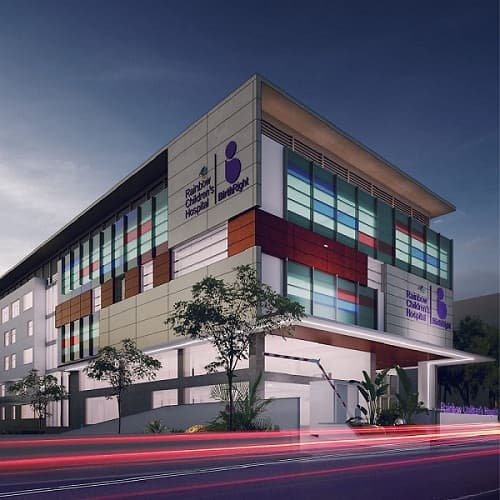
Rainbow Children's Hospitals is India's foremost dedicated pediatric, women's, and fertility care hospital chain, operating 24 hospitals with 2,400+ beds and 1,300+ doctors across Hyderabad, Bengaluru, Chennai, Delhi, Guwahati, Vijayawada, Visakhapatnam, Warangal, and Rajahmundry. Headquartered in Hyderabad, the group has delivered 2 lakh+ babies and served 12.5 lakh+ patients across 40+ clinical specialties. Its child care centres of excellence cover general paediatrics, neonatal ICU, paediatric cardiology, haematology and oncology, nephrology, neurosurgery, and bone marrow transplantation. The women's care programme spans obstetrics, high-risk pregnancy, fetal medicine, painless delivery, and gynaecological surgery, while the fertility division — established in 2010 — offers IVF, ICSI, embryo transfer, cryopreservation, and donor treatments. Rainbow Hospitals received the Outlook Health Awards 2023 for excellence in paediatric and women's healthcare.

JCINABH

1,300+

Specialists

2,400+

Beds

View Profile
Amrita Hospital Kochi

Amrita Hospital Kochi

Kochi, India

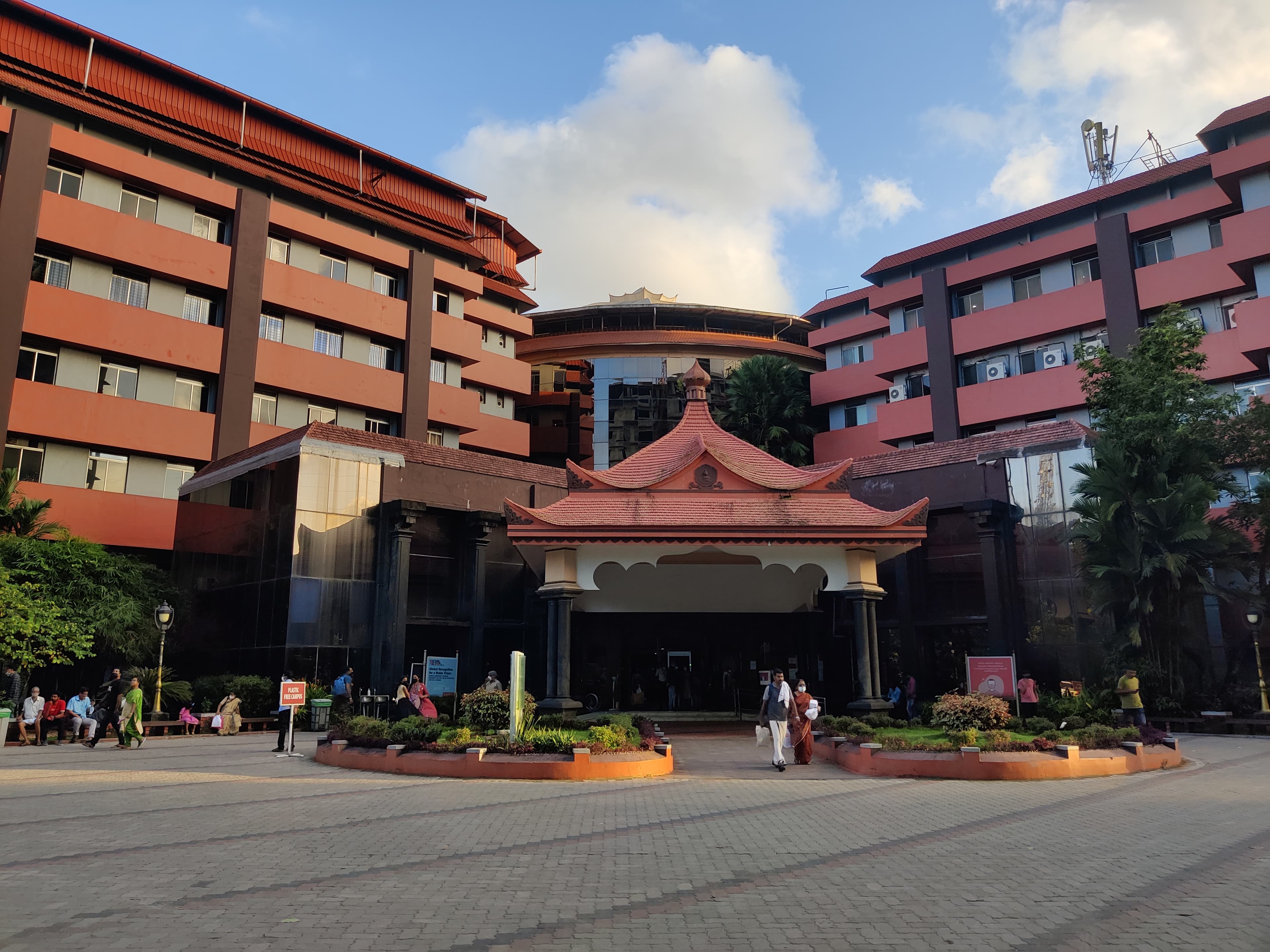
Amrita Hospital Kochi is a major teaching hospital in Kerala with extensive departments, advanced diagnostics and strong academic/research links. Established in 1998, it operates 1350 beds with 450 doctors across cardiology, oncology, haematology, neurology and orthopaedics, and holds NABH, NABL and ISO 9000:2015 accreditation, combining tertiary clinical care with medical education and research.

NABHNABLISO 9000:2015

450+

Specialists

1,350+

Beds

View Profile

Frequently asked questions

Most pediatric urologists recommend hypospadias repair between 6 and 18 months of age — before the child develops procedural awareness and psychological impact, and while penile tissue is most pliable. Simple distal hypospadias can sometimes be safely delayed to 12–24 months without functional consequence, but proximal or severe forms should be addressed earlier. If your child is already older (2–5 years), repair is still entirely feasible with excellent outcomes. Traveling for hypospadias surgery is common, especially for redo (salvage) repairs where high-volume specialist centers abroad offer significantly more experience than local providers. Our coordinators will review your child's photos and records with the surgeon before you book travel to confirm timing and feasibility.

No fees. No commitment.

Our guidance is completely free

We are compensated by our partner hospitals — never by patients. You get independent clinical matching, cost transparency, and end-to-end coordination at no cost to you.

Message us on WhatsApp