CureSureMedico
|
EN

Peripheral Artery Disease Treatment

Vascular Surgery

payments

Starting from

$4,000

Up to $15,000 depending on centre

schedule

Typical duration

7–14 days

Including pre-operative work-up

arrow_downwardlocal_hospital

Partner hospitals

2

Vetted for outcome data & accreditation

Dr. Rodina Ainasoa

Content reviewed for medical accuracy by: Dr. Rodina Ainasoa · Medical Content Writer & Health Communications

Overview

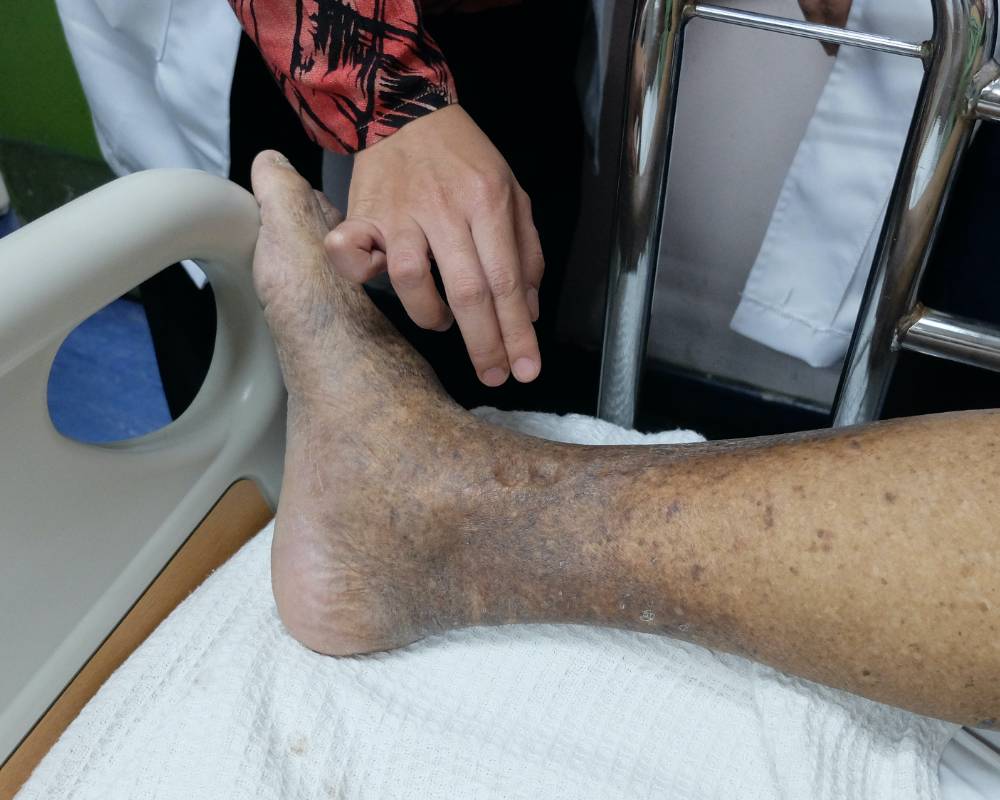
Comprehensive endovascular and surgical management of peripheral artery disease (PAD), including balloon angioplasty, drug-eluting stents, bypass surgery, and atherectomy to restore blood flow to ischaemic limbs and relieve claudication. India and Turkey provide high-volume vascular centers with cutting-edge catheter-based technology at dramatically lower costs.

Your case is matched to a centre on the basis of clinical outcome data, not marketing. We coordinate every step — from pre-operative work-up to post-treatment follow-up — with a dedicated care coordinator.

What's included

Vascular consultation with Doppler ultrasound and angiography review
Endovascular or surgical procedure by specialist vascular team
Hospital stay (2–7 nights depending on procedure)
Stents, balloons, or bypass graft materials included
Post-procedure vascular imaging before discharge
Coordinator support, interpreter, and teleconsultation for follow-up

Peripheral Artery Disease Treatment

Coordinated from

$4,000

or message us on WhatsApp

No commitment required. Your data is never shared with third parties.

Endovascular Angioplasty/Stenting vs. Open Bypass Surgery

Peripheral artery disease (PAD) can be treated with a minimally invasive catheter-based approach or with open surgical bypass, depending on the location, length, and severity of the arterial blockage. Here is how the two approaches compare.

ParameterEndovascular Angioplasty/StentingOpen Bypass Surgery
InvasivenessMinimally invasive — performed through a small needle puncture or tiny incision in the groin or arm, without general anaesthesia in most cases.Open surgery — requires a larger incision to expose the artery above and below the blockage and graft in a new blood-flow channel, typically under general or regional anaesthesia.
Typical procedure timeUsually 1-2 hours, often as a same-day or overnight-stay procedure.Typically 2-5 hours, with a hospital stay of roughly 3-7 days.
Best suited forShorter, more focal blockages in larger arteries (iliac, femoral) and patients who may not tolerate open surgery well.Long, diffuse, or heavily calcified blockages, prior failed endovascular treatment, or cases where a durable long-term result is prioritized, particularly in patients with good-quality vein available for grafting.
Durability / need for repeat treatmentEffective at restoring blood flow, but treated segments can re-narrow (restenosis) over time, which may require repeat angioplasty or stenting.Bypass grafts, especially with the patient's own vein, tend to have lower re-intervention rates over the long term, though graft surveillance is still required.
Evidence on long-term outcomesLandmark trials (e.g. BASIL) found no significant difference in amputation-free or overall survival versus bypass-first strategies at 2-year follow-up, per the Journal of Vascular Surgery.Patients who survived beyond 2 years in the BASIL trial tended to do somewhat better with a surgery-first strategy, particularly when good vein was available for grafting.

The Procedure: Step by Step

The steps below outline the general process for catheter-based PAD treatment; open bypass surgery follows a related but distinct surgical pathway. Your vascular surgeon will confirm the exact plan based on your angiogram findings.

1

Diagnostic imaging and angiography

Doppler ultrasound, CT angiography, or catheter-based angiography maps the location, length, and severity of arterial blockages to determine whether angioplasty/stenting, bypass, or a hybrid approach is most appropriate.

2

Vascular access or surgical incision

For endovascular treatment, the interventional team accesses the artery through a small needle puncture, usually in the groin, and guides a catheter to the blockage using live X-ray (fluoroscopy) guidance; for open bypass, the surgeon makes an incision to expose the artery above and below the diseased segment.

3

Restoring blood flow

In angioplasty, a balloon-tipped catheter widens the narrowed artery, often followed by placement of a metal stent to hold the vessel open; in atherectomy, plaque is mechanically shaved or removed; in bypass surgery, a graft (the patient's own vein or a synthetic tube) is sewn in to reroute blood flow around the blockage.

4

Closure and post-procedure monitoring

The access site is closed (with manual pressure, a closure device, or sutures) and pulses, imaging, or ankle-brachial index measurements confirm restored blood flow before you are moved to recovery for monitoring.

Recovery Timeline

Recovery Timeline
First 24-48 hours

After endovascular treatment, most patients go home the same day or after one overnight stay, with some groin tenderness or bruising at the access site; after open bypass, patients remain hospitalized for pain control, wound monitoring, and early mobilization, per Society for Vascular Surgery and Cleveland Clinic guidance.

First 1-2 weeks

Endovascular patients typically resume light daily activities within days, avoiding strenuous exertion and heavy lifting for about a week; bypass surgery patients continue wound care at home and gradually increase walking, with incisional discomfort easing over this period.

2-6 weeks

Endovascular patients are usually back to full normal activity by 2-4 weeks; open bypass recovery is longer, generally 4-6 weeks before a full return to normal activity, with a structured walking program supporting healing and circulation.

Ongoing

Regular follow-up with duplex ultrasound surveillance and ankle-brachial index testing monitors the treated artery or graft for restenosis or narrowing; lifelong risk-factor management (smoking cessation, blood pressure and cholesterol control, supervised exercise) is essential to protect the result, per the American Heart Association.

Source: Society for Vascular Surgery; American Heart Association; Mayo Clinic; Cleveland Clinic. Individual recovery varies and is guided by your treating vascular surgeon.

Known Risks & Limitations

  • Restenosis — the treated artery segment narrowing again over time — is a recognised limitation of angioplasty and stenting, and may require repeat intervention, per the Society for Vascular Surgery.
  • Bleeding, bruising, or other complications at the catheter access site (such as a false aneurysm) can occur after endovascular procedures, per Mayo Clinic and Cleveland Clinic.
  • Bypass graft failure or occlusion — the graft narrowing or blocking off over time — is a recognised risk, particularly with synthetic grafts compared with the patient's own vein, and is why ongoing graft surveillance is recommended.
  • As with any procedure for advanced arterial blockage, there is a risk that blood flow to the limb cannot be fully or durably restored, which in severe or advanced cases can still progress toward critical limb ischemia.
  • A meaningful proportion of patients require a repeat intervention — either another endovascular procedure or conversion to bypass — over their lifetime, underscoring the importance of long-term follow-up and risk-factor control.

Source: Society for Vascular Surgery; American Heart Association; Mayo Clinic; Cleveland Clinic. No procedure is without risk; your treating vascular surgeon will review your individual case.

The CureSureMedico Care Pathway

Remote case review

Share your imaging (Doppler ultrasound, CT angiogram, or prior angiogram reports) and symptom history with our coordination team, who forward your case for an initial review of whether endovascular treatment, bypass surgery, or a hybrid approach is likely to be recommended.

Vascular specialist matching

We match you with an accredited vascular surgery center experienced in both catheter-based peripheral interventions and open bypass surgery, so your treatment plan is chosen on clinical grounds rather than what a single center happens to offer.

Cost estimate and travel planning

Once your case is reviewed, we issue a consolidated cost estimate covering the procedure, stents or graft materials if needed, hospital stay, and follow-up imaging, and help plan a trip length that matches whether your case points toward the shorter endovascular pathway or the longer bypass recovery.

Procedure and in-hospital recovery

You undergo your angioplasty, stenting, atherectomy, or bypass procedure with the vascular team, with post-procedure imaging or ankle-brachial index testing performed before discharge to confirm restored blood flow.

Follow-up and continuity of care

Before you depart, your procedure records, imaging, and medication plan are shared with your home-country physician so they can continue surveillance imaging and risk-factor management once you are home.

Global cost comparison — Peripheral Artery Disease Treatment

Average coordinated costs across our partner centres. Final pricing depends on clinical complexity and chosen hospital.

CountryAvg. costvs. cheapest
🇮🇳

India

New Delhi · Chennai · Bengaluru · Hyderabad · Mumbai · Kochi

Best value
$5,000
chevron_right
🇹🇷

Turkey

Istanbul

$9,000
chevron_right

Costs are indicative estimates and vary by procedure specifics, hospital, and clinical complexity. Request a personalised estimate for your specific case.

Partner hospitals

2 centres
View all hospitals
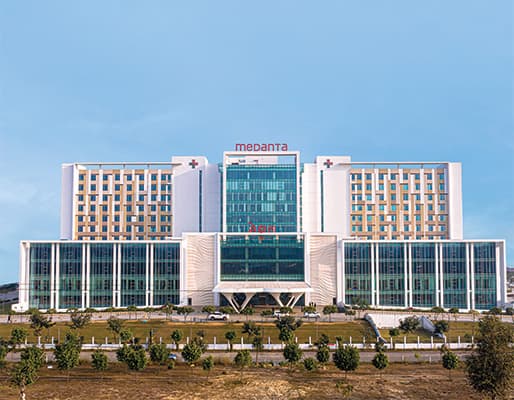
Medanta – The Medicity

Medanta – The Medicity

Gurugram, India

Medanta – The Medicity is India's #1 hospital (Newsweek World's Best Hospitals 2026), founded by renowned cardiovascular surgeon Dr. Naresh Trehan on a 43-acre campus in Sector 38, Gurugram. The flagship facility operates 1,391 beds including 270+ ICU beds, 40 operating theatres, and 900+ experienced physicians across 30+ specialties. Medanta is the only Indian private hospital to be consistently ranked among the world's top 150 medical facilities, and receives over 20,000 international patients annually from more than 130 countries. Its centres of excellence span cardiac care, oncology, neurosciences, organ transplantation, gastrosciences, and orthopaedics, backed by JCI, NABH, and NABL accreditation.

JCINABHNABL

900+

Specialists

1,391+

Beds

View Profile
Indraprastha Apollo Hospital

Indraprastha Apollo Hospital

New Delhi, India

Indraprastha Apollo Hospital in Sarita Vihar, New Delhi is one of India's foremost multi-specialty tertiary care centres, part of the Apollo Hospitals network established by Dr. Prathap C Reddy in 1983. The 710-bed facility records 1,600+ daily OPD visits, 1,000+ international patient consultations monthly, and receives 5,000+ international patients per year from over 120 countries. Its Centres of Excellence span cardiac sciences, oncology, neurosciences, organ transplantation, nephrology, orthopaedics, gastroenterology, and bariatric surgery. The hospital is equipped with Da Vinci XI robotic systems, CyberKnife radiosurgery, 3 Tesla MRI, LINAC, ECMO, and a 3D neuro-navigation system.

JCINABHNABL

700+

Specialists

710+

Beds

View Profile

Frequently asked questions

The choice depends on the location, length, and severity of the arterial blockage, as well as your overall cardiovascular health. Short, focal blockages in larger arteries (iliac, femoral) are ideal for angioplasty and stenting — a same-day or overnight procedure with rapid recovery. Long, diffuse, or heavily calcified blockages may require bypass surgery using a vein or synthetic graft. Your vascular surgeon will assess your peripheral angiogram or CT angiogram and recommend the most appropriate and durable option. Many centers use a hybrid approach combining both techniques in a single session.

No fees. No commitment.

Our guidance is completely free

We are compensated by our partner hospitals — never by patients. You get independent clinical matching, cost transparency, and end-to-end coordination at no cost to you.

Message us on WhatsApp