
CureSureMedico
|
EN

Sleep Disorder Evaluation & Treatment

Pulmonology

payments

Starting from

$500

Up to $3,500 depending on centre

schedule

Typical duration

3–10 days

Including pre-operative work-up

arrow_downwardlocal_hospital

Partner hospitals

1

Vetted for outcome data & accreditation

Dr. Rodina Ainasoa

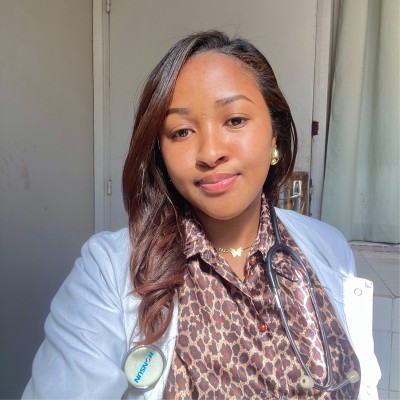
Content reviewed for medical accuracy by: Dr. Rodina Ainasoa · Medical Content Writer & Health Communications

Overview

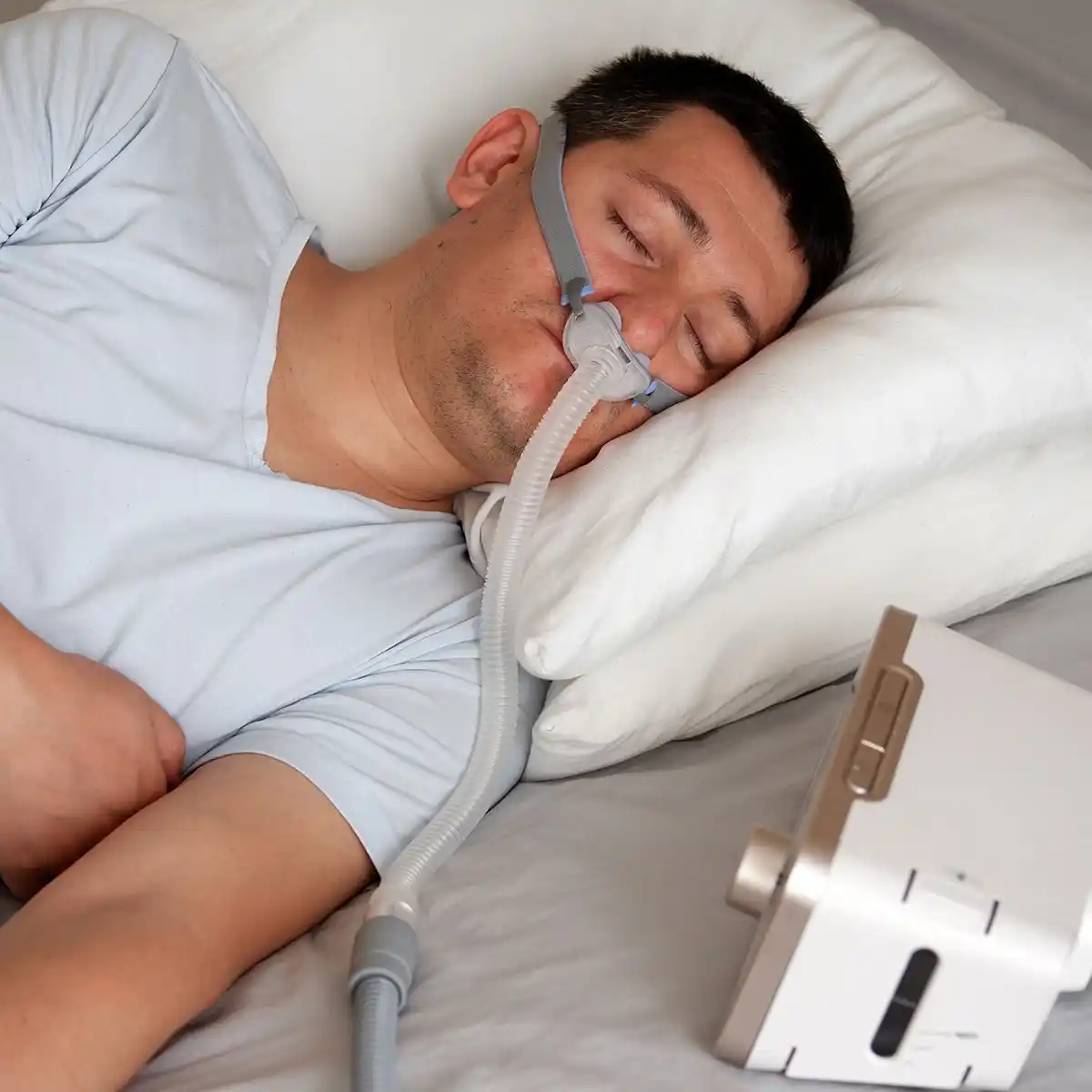
Comprehensive evaluation and treatment of obstructive sleep apnoea, narcolepsy, and other sleep-breathing disorders through overnight polysomnography, CPAP titration, oral appliance therapy, and surgical options — all in accredited sleep laboratories. International patients receive a full diagnostic workup and personalised treatment plan within a short stay.

Your case is matched to a centre on the basis of clinical outcome data, not marketing. We coordinate every step — from pre-operative work-up to post-treatment follow-up — with a dedicated care coordinator.

What's included

Sleep specialist consultation and Epworth sleepiness scale assessment
Full-night in-lab polysomnography (PSG)
CPAP or BiPAP titration study if indicated
Results review and personalised treatment plan
CPAP device prescription and fitting if required
International patient coordinator and hotel-to-clinic transfer

Sleep Disorder Evaluation & Treatment

Coordinated from

$500

or message us on WhatsApp

No commitment required. Your data is never shared with third parties.

CPAP / Conservative Management vs. Surgical Treatment

Obstructive sleep apnoea (OSA) is most often managed first with CPAP or an oral appliance; surgery — including uvulopalatopharyngoplasty (UPPP), hypoglossal nerve stimulation, or, for select tongue-base obstruction, transoral robotic surgery (TORS) — is generally considered when conservative therapy fails or is not tolerated. Here is how the two broad approaches compare.

ParameterCPAP / Oral ApplianceSurgical Treatment (UPPP, hypoglossal nerve stimulation, or TORS)
First-line statusThe first-line treatment for most adults with moderate-to-severe OSA, per the American Academy of Sleep Medicine (AASM); an oral appliance is an alternative for mild-to-moderate cases or CPAP intolerance.Generally reserved for patients who cannot tolerate or adequately adhere to CPAP, or who have anatomy (such as base-of-tongue hypertrophy) that a specialist identifies as surgically correctable.
How it worksA machine delivers continuous or auto-adjusting air pressure through a mask to keep the airway open during sleep; it does not change anatomy and must be worn nightly to be effective.UPPP removes or repositions excess soft-palate and throat tissue; hypoglossal nerve stimulation implants a device that stimulates the tongue-protruding nerve during sleep; TORS removes obstructive tongue-base tissue in carefully selected patients with confirmed base-of-tongue hypertrophy.
Effectiveness and adherenceHighly effective when used consistently, but real-world adherence is a well-documented challenge — reported nightly-use rates commonly range from roughly 30% to 80% depending on the study population, per peer-reviewed adherence research.Success (defined as a meaningful reduction in the apnoea-hypopnoea index) varies significantly by procedure, anatomy, and OSA severity; published TORS series for tongue-base reduction report success rates of roughly 55-86% in carefully selected patients, per peer-reviewed systematic reviews.
Invasiveness and recoveryNon-invasive; there is no surgical recovery, though mask fit, dryness, and congestion can affect comfort and consistent use.Involves anaesthesia and a surgical recovery period; the specific risks and downtime depend on which procedure is performed and are discussed individually with your surgeon.
Long-term commitmentRequires ongoing nightly use indefinitely, plus periodic mask, filter, and device replacement and follow-up.May reduce or, less commonly, eliminate the need for CPAP, but a confirmatory follow-up sleep study is recommended to verify actual treatment success, since anatomical correction does not guarantee full resolution of OSA in every patient.

The Process: Step by Step

The steps below outline a typical pathway for diagnosing and treating a sleep-breathing disorder. Your sleep physician will confirm the exact plan based on your overnight study results, anatomy, and treatment history.

1

Overnight sleep study and diagnosis

An overnight polysomnography (PSG) or, for suspected narcolepsy, a multiple sleep latency test (MSLT), records breathing patterns, oxygen levels, and sleep stages to establish the apnoea-hypopnoea index (AHI) or confirm the underlying diagnosis.

2

Treatment selection

Based on the severity of OSA, your anatomy, and any prior treatment attempts, your sleep physician recommends an initial approach — most commonly CPAP or an oral appliance — and, where relevant, refers you for a surgical evaluation.

3

Intervention: CPAP titration or surgery

If CPAP is chosen, a titration study determines the pressure setting that best controls your breathing events; if surgery is indicated, the specific procedure (such as UPPP, hypoglossal nerve stimulator implantation, or TORS for confirmed base-of-tongue obstruction) is performed by the treating surgical team.

4

Follow-up and confirmation of efficacy

A follow-up review — and, where appropriate, a repeat sleep study — confirms whether the chosen treatment is adequately controlling your AHI and symptoms, with adjustments made to device settings or care plan as needed.

Recovery & Ongoing Management Timeline

Recovery & Ongoing Management Timeline
First 1-2 weeks

For CPAP or oral appliance therapy, this period is spent adjusting to the device — mask fit, pressure comfort, or appliance fit — with support from your care team; for surgical patients, this is the initial post-operative recovery window, with specifics depending on the procedure performed.

Weeks 2-6

CPAP or appliance users typically settle into a nightly routine, with adherence data reviewed remotely where available; surgical patients continue healing and gradually resume normal diet and activity as advised by their surgeon.

~2-3 months

A follow-up consultation, and often a repeat sleep study, assesses whether the treatment — device-based or surgical — has meaningfully reduced the AHI and improved symptoms such as daytime sleepiness, per American Academy of Sleep Medicine guidance.

Ongoing

CPAP and oral appliance therapy require indefinite nightly use and periodic equipment servicing; surgical treatment outcomes are generally stable long-term once healed, but periodic review is still recommended, since weight changes or ageing can affect airway anatomy over time.

Source: American Academy of Sleep Medicine; Mayo Clinic; Cleveland Clinic. Individual recovery and management needs vary and are guided by your treating sleep physician or surgeon.

Known Risks & Limitations

  • CPAP adherence is a well-documented challenge — many patients struggle with nightly mask use long-term, and treatment only works on nights the device is actually worn, per peer-reviewed adherence studies.
  • Surgical options (UPPP, hypoglossal nerve stimulation, TORS) carry standard surgical and anaesthesia risks, including bleeding, infection, swallowing difficulty, and temporary voice or taste changes, with the specific risk profile depending on the procedure performed.
  • Treatment success varies significantly by individual anatomy and OSA severity — no single treatment, device-based or surgical, resolves sleep apnoea for every patient, and outcomes should be discussed realistically rather than assumed.
  • TORS and other tongue-base procedures are appropriate only for a carefully selected subset of patients with confirmed base-of-tongue obstruction; published success rates (roughly 55-86%) are lower and more variable than for more established robotic applications such as head-and-neck cancer resection.
  • A follow-up sleep study is generally recommended after any treatment change to objectively confirm whether the AHI has improved, since symptom relief alone does not reliably indicate that breathing events have resolved, per Cleveland Clinic and Mayo Clinic.

Source: American Academy of Sleep Medicine; Mayo Clinic; Cleveland Clinic; peer-reviewed sleep medicine literature. No treatment is without risk or guaranteed to succeed; your treating sleep physician or surgeon will review your individual case.

The CureSureMedico Care Pathway

Remote case review

Share your symptoms, any prior sleep study results, and CPAP or treatment history with our coordination team, who forward your case for an initial review of the most suitable diagnostic and treatment pathway abroad.

Sleep centre and specialist matching

We match you with an accredited sleep laboratory and, where a surgical evaluation is appropriate, a specialist experienced in the relevant procedure (UPPP, hypoglossal nerve stimulation, or TORS).

Cost estimate and travel planning

Once your case is reviewed, we issue a consolidated cost estimate covering the sleep study, titration, and any device or surgical costs, and help plan a trip length that matches whether your case involves diagnosis alone, CPAP fitting, or surgery.

Diagnosis and treatment

You attend your overnight sleep study and, depending on the outcome, your CPAP/BiPAP titration or surgical procedure, with your care coordinator managing appointments and logistics throughout your stay.

Follow-up and continuity of care

Before you depart, your sleep study results, device settings or surgical records, and a recommended follow-up schedule are shared with your home-country physician so your ongoing management can continue without interruption.

Global cost comparison — Sleep Disorder Evaluation & Treatment

Average coordinated costs across our partner centres. Final pricing depends on clinical complexity and chosen hospital.

CountryAvg. costvs. cheapest
🇮🇳

India

New Delhi · Chennai · Bengaluru · Hyderabad · Mumbai · Kochi

Best value
$800
chevron_right
🇹🇷

Turkey

Istanbul

$1,500
chevron_right

Costs are indicative estimates and vary by procedure specifics, hospital, and clinical complexity. Request a personalised estimate for your specific case.

Partner hospitals

1 centres
View all hospitals
Amrita Hospital

Amrita Hospital

Faridabad, India

Asia's largest private hospital — 2,600 beds, 64 operation theatres, 81 specialties on a 130-acre campus in Delhi NCR. NABH & NABL accredited. Centres of excellence in oncology, cardiac surgery, BMT, organ transplantation, neurosciences, and IVF.

NABHNABL

800+

Specialists

2,600+

Beds

View Profile

Frequently asked questions

Yes. If CPAP or BiPAP therapy is recommended, the centre will prescribe and fit you with a device before you leave. The prescription and detailed sleep study report are provided in English (and translated if needed) so your local physician or equipment supplier can service the device at home. Partner centres also offer auto-titrating CPAP devices that self-adjust, reducing the need for in-person follow-up adjustments.

No fees. No commitment.

Our guidance is completely free

We are compensated by our partner hospitals — never by patients. You get independent clinical matching, cost transparency, and end-to-end coordination at no cost to you.

Message us on WhatsApp