

CureSureMedico
|
EN

Tonsillectomy and Adenoidectomy

ENT

payments

Starting from

$1,750

Up to $4,000 depending on centre

schedule

Typical duration

4–7 days

Including pre-operative work-up

arrow_downwardlocal_hospital

Partner hospitals

2

Vetted for outcome data & accreditation

Dr. Rodina Ainasoa

Content reviewed for medical accuracy by: Dr. Rodina Ainasoa · Medical Content Writer & Health Communications

Overview

Tonsillectomy and adenoidectomy are among the most commonly performed ENT surgeries worldwide, offering permanent relief from recurrent throat infections, obstructive sleep apnea, and airway obstruction in both children and adults. Internationally accredited hospitals in India, Thailand, and Malaysia provide these procedures at highly affordable rates with short recovery stays.

Your case is matched to a centre on the basis of clinical outcome data, not marketing. We coordinate every step — from pre-operative work-up to post-treatment follow-up — with a dedicated care coordinator.

What's included

Pre-operative ENT consultation and throat examination
Pre-surgical blood tests and anesthesia fitness evaluation
Surgery under general anesthesia with pediatric-friendly facilities available
Same-day discharge for most patients, with overnight observation offered where clinically advised
Post-operative pain management medications and soft diet guidance
Discharge instructions and surgeon contact for remote follow-up

Tonsillectomy and Adenoidectomy

Coordinated from

$1,750

or message us on WhatsApp

No commitment required. Your data is never shared with third parties.

Pediatric vs. Adult Tonsillectomy

Tonsillectomy is most common in children, but adults sometimes need it too. The surgery is similar in both, but bleeding risk and recovery time differ meaningfully by age, per Cleveland Clinic and published research.

ParameterChildrenAdults
Most common reason for surgeryRecurrent tonsillitis or tonsils/adenoids enlarged enough to obstruct breathing during sleep, per Cleveland Clinic.Less common overall, since tonsils tend to shrink with age; when needed, it is usually for recurrent tonsillitis, chronic infection, or suspected abnormal tissue, per Cleveland Clinic.
Surgical difficultyTonsils are typically less embedded in surrounding tissue, per specialty ENT sources.Tonsils are often more embedded and adults tend to have more scar tissue from past infections, which can make the surgery more difficult, per specialty ENT sources.
Post-tonsillectomy bleeding (return to theatre)Reported in about 1.16% of cases in a UK Hospital Episode Statistics study of post-tonsillectomy haemorrhage (2016–2022).Reported in about 3.80% of cases in the same study — more than three times the rate seen in children.
Typical recovery timeAround one week for most children, per specialty ENT sources.Around two weeks before returning to work, as adults generally heal more slowly than children, per specialty ENT sources.
Pain and dehydration riskGenerally better tolerated, with most children back to normal eating within about two weeks, per Cleveland Clinic.Adults are generally more prone to significant pain and dehydration after surgery, per Cleveland Clinic and specialty ENT sources.

The Procedure: Step by Step

The description below outlines the general tonsillectomy/adenotonsillectomy process. Your ENT surgeon will confirm the specific technique and any adjustments for your case.

1

Pre-operative assessment

An ENT surgeon examines the throat and reviews the medical history; children generally also receive an anesthesia fitness evaluation and basic pre-surgical blood tests.

2

General anesthesia

The procedure is performed under general anesthesia, so the patient is fully asleep and feels nothing during surgery, per Cleveland Clinic.

3

Tonsil (and adenoid) removal

The surgeon removes the tonsils — and adenoids too, if adenoidectomy is combined — using one of several techniques, including electrocautery (heat), a microdebrider (motorized shaver), or coblation (radiofrequency and plasma energy). The operation itself typically takes about 20 to 30 minutes, longer if adenoids are also removed, per Cleveland Clinic.

4

Recovery room monitoring & same-day discharge

The patient is monitored in a recovery area as the anesthesia wears off. Tonsillectomy is usually performed as an outpatient (day) procedure with same-day discharge; an overnight hospital stay is generally reserved for cases where complications arise or closer observation is advised, per Cleveland Clinic.

Recovery Timeline

Recovery Timeline
Days 1-2

Sore throat, low-grade fever, fatigue, and throat fullness from swelling; focus on frequent sips of fluids and soft, cool foods, per Cleveland Clinic.

Days 3-4

Often the most difficult period — pain may worsen as scabs form at the surgical site, making swallowing more uncomfortable; maintaining hydration and calorie intake remains important, per Cleveland Clinic.

Days 5-10

Scabs begin to separate from the surgical site; this is also the period of highest risk for secondary (delayed) bleeding, so continued rest and avoiding strenuous activity is advised, per AAO-HNS.

Days 10-14

Most patients can return to a regular diet, sleep through the night without pain medicine, and resume school or work; full recovery is typically reached around two weeks, per Cleveland Clinic.

Source: Cleveland Clinic; AAO-HNS (American Academy of Otolaryngology-Head and Neck Surgery). Individual recovery varies and is guided by your ENT surgeon.

Known Risks & Limitations

  • Primary post-tonsillectomy bleeding (within 24 hours of surgery) occurs in a pooled rate of about 1% of cases across techniques, per published meta-analysis data reviewed by AAO-HNS.
  • Secondary post-tonsillectomy bleeding (more than 24 hours after surgery, typically peaking around days 5 to 7 and possible up to about day 10-14) occurs in a pooled rate of about 5.7-5.8% of cases across techniques, per published meta-analysis data reviewed by AAO-HNS.
  • Adults face a meaningfully higher bleeding risk than children — about 3.80% of adults required a return to theatre for bleeding control versus about 1.16% of children, per a UK Hospital Episode Statistics study (2016–2022).
  • Other possible complications include throat and ear pain, nausea and vomiting, dehydration from reduced fluid intake, temporary changes in voice or taste, and injury to the tongue, teeth, or surrounding tissue during surgery, per Cleveland Clinic.
  • As with any procedure under general anesthesia, there is a small risk of an adverse anesthesia reaction; wound infection is also possible, per Cleveland Clinic.

Source: Cleveland Clinic; AAO-HNS (American Academy of Otolaryngology-Head and Neck Surgery); UK Hospital Episode Statistics study of post-tonsillectomy haemorrhage (2016-2022). No procedure is without risk; your surgeon will review your individual case.

The CureSureMedico Care Pathway

Remote ENT review

Share your (or your child's) symptoms, ENT history, and any prior imaging or sleep-study results. Our coordination team forwards your case to an ENT surgeon for an initial suitability assessment.

Surgeon & hospital matching

Based on age, medical history, and preferred technique, we match you with an ENT surgeon and a hospital equipped with pediatric-friendly facilities where relevant.

Cost estimate & travel planning

A consolidated cost estimate covering pre-operative consultation, the surgery itself, and the immediate post-operative period is issued before you travel, along with guidance on the recommended minimum stay before flying home.

Surgery day & recovery monitoring

Your pre-operative work-up, the surgery, and recovery-room monitoring are coordinated with your care team, followed by discharge with clear diet and pain-management guidance.

Continuity of care post-return

Discharge instructions and surgeon contact details are shared before you travel home, with remote coordination available if any concerns arise, such as signs of delayed bleeding, during the healing window.

Global cost comparison — Tonsillectomy and Adenoidectomy

Average coordinated costs across our partner centres. Final pricing depends on clinical complexity and chosen hospital.

CountryAvg. costvs. cheapest
🇮🇳

India

New Delhi · Chennai · Bengaluru · Hyderabad · Mumbai · Kochi

Best valueEstimate
$2,463
chevron_right
🇹🇷

Turkey

Istanbul

Estimate
$3,000
chevron_right

Costs are indicative estimates and vary by procedure specifics, hospital, and clinical complexity. Request a personalised estimate for your specific case.

Cost & recovery by procedure

This treatment category covers several different operations with different levels of invasiveness, recovery times, and costs. The country averages above blend all of them together — use the breakdown below for a more realistic, procedure-specific estimate.

Tonsillectomy

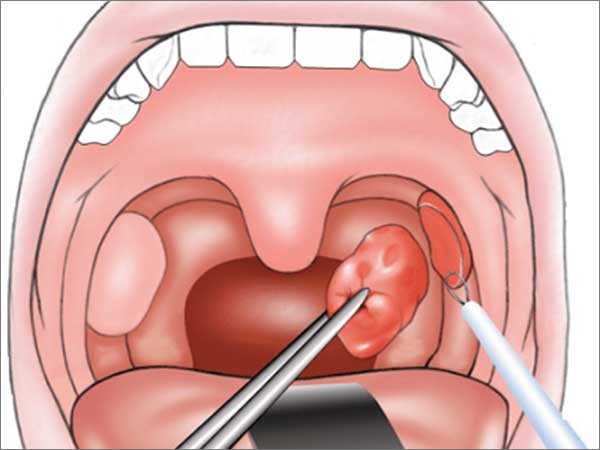
The tonsils — two lymphoid tissue pads at the back of the throat — are surgically removed, most often using traditional cold-steel dissection, electrocautery, or a harmonic scalpel. It is performed for recurrent throat infections, chronic tonsillitis, or airway obstruction, and remains the standard technique used worldwide.

Typical recovery · 10–14 days

Usually a day-case procedure or one overnight stay for observation, especially in younger children. A sore throat, ear pain, and a soft/liquid diet are expected for 7–10 days; the main risk to watch for is post-operative (secondary) bleeding, which can occur up to 2 weeks after surgery, so strenuous activity and flying are avoided until the surgeon confirms healing at follow-up.

India

$800–$1,800

Turkey

$1,200–$1,800

Thailand

$1,200–$2,000

Adenoidectomy

The adenoids — lymphoid tissue located behind the nose above the soft palate — are removed through the mouth, without any external incision. It relieves chronic nasal blockage, recurrent ear infections, and mouth breathing caused by enlarged adenoids, and is often performed on its own in younger children.

Typical recovery · 5–7 days

Typically a day-case procedure with same-day discharge. Mild nasal congestion, bad breath, and a low-grade fever can occur for a few days; recovery is generally faster and less painful than tonsillectomy since there is no throat wound, and most children return to normal activity within a week.

India

$600–$1,400

Turkey

$1,000–$1,500

Thailand

$1,000–$1,700

Adenotonsillectomy

Tonsillectomy and adenoidectomy are performed together in a single operation under one anesthesia — the most common combined ENT procedure in children — typically for obstructive sleep apnea, recurrent tonsillitis with adenoid enlargement, or chronic mouth breathing and snoring.

Typical recovery · 10–14 days

Usually a day-case procedure, though overnight observation is commonly recommended for younger children or those with significant sleep apnea, due to a higher risk of airway swelling right after surgery. Recovery follows the tonsillectomy timeline of 10–14 days, with a soft diet, pain management, and monitoring for secondary bleeding; snoring and sleep quality typically improve noticeably within the first few weeks.

India

$1,000–$2,200

Turkey

$1,500–$2,400

Thailand

$1,500–$2,600

Coblation Tonsillectomy

Tonsil tissue is removed using a coblation (radiofrequency-based) or similar low-temperature technique rather than traditional cautery, which generates less thermal damage to surrounding tissue. It is used for the same indications as conventional tonsillectomy, with the technique chosen based on surgeon preference and available equipment.

Typical recovery · 7–12 days

Usually a day-case procedure with less post-operative pain and faster return to normal eating than traditional cold-steel tonsillectomy, according to Cochrane-reviewed evidence. Some studies note a small increase in delayed (secondary) bleeding risk compared to traditional techniques, so the same 2-week vigilance for bleeding and travel restriction still applies.

India

$900–$2,000

Turkey

$1,400–$2,100

Thailand

Estimate pending verification — ask your care coordinator for a current quote

Cost ranges are indicative estimates for international patients and vary with implant choice, number of levels treated, surgeon, and hospital. Request a personalised quote for your specific case.

Clinical detail: AAOS OrthoInfo, Mayo Clinic Health System, Cleveland Clinic. Cost ranges cross-checked across multiple independent medical-tourism sources per country where marked; ranges flagged "pending verification" could not be independently confirmed at the time of writing.

Partner hospitals

2 centres
View all hospitals
Amrita Hospital

Amrita Hospital

Faridabad, India

Asia's largest private hospital — 2,600 beds, 64 operation theatres, 81 specialties on a 130-acre campus in Delhi NCR. NABH & NABL accredited. Centres of excellence in oncology, cardiac surgery, BMT, organ transplantation, neurosciences, and IVF.

NABHNABL

800+

Specialists

2,600+

Beds

View Profile
Manipal Hospital Old Airport Road

Manipal Hospital Old Airport Road

Bengaluru, India

Manipal Hospitals Old Airport Road is the flagship and founding campus of one of India's largest healthcare networks, established in 1991 on HAL Old Airport Road, Kodihalli, Bengaluru. Part of the Manipal Education and Medical Group (MEMG), the network spans 49 hospitals and 12,600+ beds across India. The Old Airport Road campus anchors the group's academic and clinical identity, housing specialist institutes including the Manipal Institute for Joint Replacement and Robotic Surgery (MIJRRS), the Manipal Robotic Spine Surgery centre (MIRSS), the Manipal Skull Base Institute (MSBI), and the Manipal Institute for Bariatric Surgery (MIBS). Its quaternary-level capabilities cover cardiology, oncology, neurosurgery, organ transplantation, orthopaedics, spine surgery, bariatric surgery, and paediatrics, all within a NABH and NABL accredited environment. The hospital provides dedicated international patient services through the Manipal Global network, with support for visa, travel, language, and end-to-end care coordination.

NABHNABL

264+

Specialists

600+

Beds

View Profile

Frequently asked questions

Yes, tonsillectomy is a routine and well-tolerated procedure in children. JCI-accredited hospitals abroad maintain the same pediatric anesthesia protocols and post-operative monitoring standards as top Western hospitals. Parents travel with the child and most hospitals provide family accommodation support.

No fees. No commitment.

Our guidance is completely free

We are compensated by our partner hospitals — never by patients. You get independent clinical matching, cost transparency, and end-to-end coordination at no cost to you.

Message us on WhatsApp