
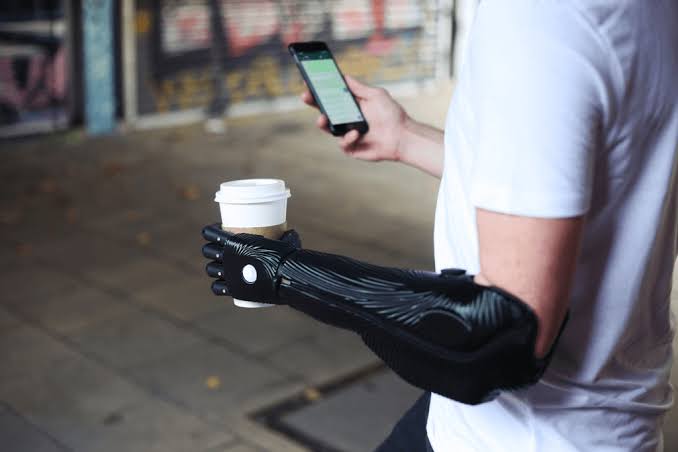
Advanced Bionic & Myoelectric Limbs
Rehabilitation
Starting from
$15,000
Up to $60,000 depending on centre
Typical duration
7–21 days
Including pre-operative work-up
Content reviewed for medical accuracy by: Dr. Rodina Ainasoa · Medical Content Writer & Health Communications
Overview
Gain access to advanced myoelectric prosthetic arms and bionic limbs at internationally accredited centres, at a fraction of Western pricing. Specialist upper-limb prosthetists deliver precision fitting, muscle-signal calibration, and rehabilitation for patients seeking state-of-the-art prosthetic technology abroad.
Your case is matched to a centre on the basis of clinical outcome data, not marketing. We coordinate every step — from pre-operative work-up to post-treatment follow-up — with a dedicated care coordinator.
What's included
Advanced Bionic & Myoelectric Limbs
Coordinated from
or message us on WhatsApp
No commitment required. Your data is never shared with third parties.
Body-Powered vs. Myoelectric/Bionic Prosthetic Arms
Upper-limb prostheses generally fall into two categories: cable-operated body-powered devices and electronically controlled myoelectric (bionic) devices. Here is how the two approaches compare.
| Parameter | Body-Powered Prosthesis | Myoelectric/Bionic Prosthesis |
|---|---|---|
| Control mechanism | A harness and cable system operated by shoulder or arm movement opens and closes the terminal device. | Surface electrodes detect electrical signals (EMG) from residual forearm or upper-arm muscles, which are translated into hand or wrist movement. |
| Grip and movement options | Typically a single-function terminal device (hook or basic hand) with one open/close motion. | Multi-articulating bionic hands can offer several grip patterns and individually moving digits, per the Amputee Coalition. |
| Sensory feedback | Provides some proprioceptive feedback through cable tension and harness pressure, which many experienced users value. | Relies mainly on visual feedback; some newer devices add limited vibratory or pressure feedback, though this is not yet standard. |
| Weight, durability & maintenance | Lighter, mechanically simpler, and generally more resistant to water, dust, and heavy manual work. | Heavier, with a battery to charge and electronic components that require servicing and occasional part replacement. |
| Typical device and fitting cost | Generally lower upfront device cost, per the American Academy of Orthotists and Prosthetists. | Higher upfront cost given the electronic components, custom socket, and calibration time involved, though functional gains vary by individual. |
The Fitting & Calibration Process: Step by Step
The steps below outline a typical myoelectric or bionic prosthetic fitting. Your prosthetist will confirm the exact plan based on your residual limb, muscle signal quality, and functional goals.
Residual limb and muscle-signal assessment
The prosthetist examines the residual limb's shape, skin condition, and strength, and uses surface EMG testing to identify which muscle sites produce the clearest, most controllable signals for the prosthetic hand or arm.
Custom socket and electrode fitting
A custom socket is fabricated to fit the residual limb securely and comfortably, with electrodes positioned over the identified muscle sites so the device can reliably read the signals during daily use.
Myoelectric control training
Using the fitted device, you practice isolating and contracting specific muscles to open, close, and rotate the hand or wrist, starting with simple exercises and progressing to functional tasks such as grasping objects of different shapes.
Ongoing calibration and functional training
The prosthetist fine-tunes electrode sensitivity and grip settings as your control improves, and occupational therapy continues with real-world tasks — dressing, eating, handling tools — to build confidence and dexterity.
Adaptation Timeline
The initial socket fitting and electrode placement typically take several days, with adjustments made as swelling settles and the socket fit is refined for comfort.
Initial control training focuses on producing consistent, isolated muscle signals; most patients can perform basic open/close movements within the first one to two weeks of structured practice, per occupational therapy literature.
Functional proficiency builds gradually as daily-task practice continues; refined, confident use of multiple grip patterns typically develops over several months rather than weeks.
Control continues to improve with regular use over the first year and beyond, and periodic follow-up allows for socket adjustments, electrode recalibration, or device upgrades as needs change.
Source: American Academy of Orthotists and Prosthetists; Amputee Coalition. Individual adaptation varies and is guided by your treating prosthetist and occupational therapy team.
Known Risks & Limitations
- The learning curve for myoelectric control varies significantly between patients — factors such as residual muscle strength, signal clarity, and consistency of practice all affect how quickly functional control develops.
- Advanced bionic components carry ongoing costs for battery charging, servicing, and eventual part replacement, and repairs may require sourcing parts from the original manufacturer.
- Socket fit and skin condition can change over time due to limb volume fluctuation, perspiration, or skin irritation at electrode contact points, sometimes requiring socket adjustment or refitting.
- Functional gains, while often meaningful, are not equivalent to a natural limb — grip speed, sensory feedback, and fine motor control remain more limited than intact hand function, per the Amputee Coalition.
- Setting realistic expectations before treatment is important: not every patient achieves the same level of dexterity, and a period of trial, adjustment, and sustained practice is normally required to reach functional benefit.
Source: American Academy of Orthotists and Prosthetists; Amputee Coalition (National Limb Loss Resource Center); peer-reviewed myoelectric-control literature. No device or procedure is without limitations; your treating prosthetist will review your individual case.
Considering a bone-anchored implant instead of a socket? Osseointegration now has its own dedicated guide covering the surgical process, recovery timeline, and how it compares to a traditional socket prosthesis. Learn more about Osseointegration →
Specifically interested in an advanced multi-grip bionic hand? It now has its own dedicated guide covering pattern-recognition training, recovery, and how it compares to a basic single-grip myoelectric hand. Learn more about the Advanced Bionic Hand →
The CureSureMedico Care Pathway
Remote case review
Share details of your residual limb, prior prosthetic history, and functional goals with our coordination team, who forward your case for an initial suitability assessment for myoelectric or bionic fitting abroad.
Prosthetist and device matching
We match you with an accredited upper-limb prosthetist experienced in myoelectric and bionic devices, and help you compare suitable device options for your goals and budget.
Cost estimate and travel planning
Once your case is reviewed, we issue a consolidated cost estimate covering the device, fitting, calibration sessions, and occupational therapy, and help plan a trip length that allows time for socket fitting and initial training.
Fitting, calibration, and initial training
You attend your fitting and EMG electrode mapping sessions, followed by structured myoelectric control training with an occupational therapist before you complete your stay.
Follow-up and continuity of care
Before you depart, your device specifications and training progress are shared with a prosthetist near you, along with remote follow-up support as you continue building functional control at home.
Global cost comparison — Advanced Bionic & Myoelectric Limbs
Average coordinated costs across our partner centres. Final pricing depends on clinical complexity and chosen hospital.
| Country | Avg. cost | vs. cheapest |
|---|---|---|
🇮🇳 India New Delhi · Chennai · Bengaluru · Hyderabad · Mumbai · Kochi | $20,000 | —chevron_right |
🇹🇷 Turkey Istanbul | $40,000 | +100%chevron_right |
Costs are indicative estimates and vary by procedure specifics, hospital, and clinical complexity. Request a personalised estimate for your specific case.
Frequently asked questions
Most patients achieve basic functional control within the first week of training, with more refined movements improving over several months of daily practice. Myoelectric signal calibration is performed by the prosthetist during your stay, and occupational therapists guide you through exercises to maximise dexterity and confidence before you return home.
No fees. No commitment.
Our guidance is completely free
We are compensated by our partner hospitals — never by patients. You get independent clinical matching, cost transparency, and end-to-end coordination at no cost to you.