

CureSureMedico
|
EN

Prostate Enlargement (BPH) Treatment

Urology

payments

Starting from

$2,000

Up to $8,000 depending on centre

schedule

Typical duration

5–10 days

Including pre-operative work-up

arrow_downwardlocal_hospital

Partner hospitals

1

Vetted for outcome data & accreditation

Dr. Rodina Ainasoa

Content reviewed for medical accuracy by: Dr. Rodina Ainasoa · Medical Content Writer & Health Communications

Overview

Effective surgical and minimally invasive treatment for benign prostatic hyperplasia (BPH) — from gold-standard TURP and laser enucleation (HoLEP) to the innovative UroLift procedure — delivering lasting relief from urinary obstruction symptoms without the long-term side effects feared by many patients.

Your case is matched to a centre on the basis of clinical outcome data, not marketing. We coordinate every step — from pre-operative work-up to post-treatment follow-up — with a dedicated care coordinator.

What's included

Pre-operative consultation, prostate ultrasound (volume assessment), uroflowmetry, and PSA test
Primary BPH procedure — TURP, HoLEP, UroLift, or Rezūm as recommended
2–4 night hospital stay with catheter management and nursing care
Post-operative uroflow check and void trial before discharge
Patient coordinator and interpreter throughout hospital stay
Follow-up symptom score assessment and home urologist communication package

Prostate Enlargement (BPH) Treatment

Coordinated from

$2,000

or message us on WhatsApp

No commitment required. Your data is never shared with third parties.

Treatment approaches

Standard and robotic-assisted Prostate Enlargement (BPH) Treatment

Standard Approach

Transurethral Resection of the Prostate (TURP)

$2,000

510 days

Robotic-Assisted Option

Aquablation Therapy (Robotic Waterjet Ablation)

$3,800

37 days

Comparing the two approaches

StandardRobotic-Assisted
ProcedureTransurethral Resection of the Prostate (TURP)Aquablation Therapy (Robotic Waterjet Ablation)
TechnologyConventional surgical instrumentsRobotic-assisted surgical system with surgeon oversight
AvailabilityHospital-dependentSelected hospitals with robotic capability
SpecialistProcedure specialistSpecialist with relevant robotic experience
Clinical suitabilityCase-dependentCase-dependent
Tariff$2,000–$8,000$3,800–$11,000
Duration5–10 days3–7 days

Eligibility for robotic-assisted treatment

  • Prostate volume and anatomy confirmed on ultrasound as suitable for image-guided waterjet ablation — Aquablation is approved for a wide range of prostate sizes, including larger glands (up to roughly 150 mL) that would otherwise need HoLEP or open surgery
  • No suspicion of prostate cancer requiring separate oncologic treatment, and no prior prostate surgery that would significantly distort the anatomy used for real-time ultrasound mapping
  • Pre-procedure ultrasound-based surgical planning and clinical review confirming candidacy, along with fitness for general or spinal anesthesia
  • Availability of the AquaBeam/HYDROS robotic waterjet platform and a urologist trained on the system at your selected hospital — this is offered at fewer centers than conventional TURP

Risks and limitations of robotic-assisted surgery

  • Robotic assistance does not eliminate the surgical risks of prostate ablation, including bleeding, infection, and the need for temporary catheterization
  • The urologist remains responsible for the procedure; the robotic waterjet is an aid to precision and consistency, not a substitute for surgical judgement
  • Clinical trial data (the WATER and WATER II studies) show Aquablation carries meaningfully lower rates of irreversible sexual side effects — including retrograde ejaculation and erectile dysfunction — than TURP, HoLEP, or open prostatectomy, though blood loss and transfusion rates, while lower than open surgery, can be modestly higher than with laser enucleation
  • This is a newer, less widely available technology than conventional TURP — availability, published long-term outcomes, and surgeon experience vary between hospitals, so confirm the treating center's Aquablation case volume before proceeding

Tariff structure

Standard procedure$2,000$8,000
Robotic-assisted technology fee+$1,500$3,200
Total estimated robotic-assisted tariff$3,800$11,000

Why can robotic-assisted procedures cost more?

Robotic-assisted procedures rely on additional technology and equipment beyond the standard operating platform and clinical team. This additional technology component is generally not included in standard case pricing.

Is robotic-assisted surgery always recommended?

No. Robotic-assisted surgery is not appropriate for every procedure or patient. Availability and suitability are determined by the treating specialist, based on your imaging, clinical condition, and the treating hospital's capabilities.

Global cost comparison — Prostate Enlargement (BPH) Treatment

Average coordinated costs across our partner centres. Final pricing depends on clinical complexity and chosen hospital.

CountryAvg. costvs. cheapest
🇮🇳

India

New Delhi · Chennai · Bengaluru · Hyderabad · Mumbai · Kochi

Best value
$2,500
chevron_right
🇹🇷

Turkey

Istanbul

$5,000
chevron_right

Costs are indicative estimates and vary by procedure specifics, hospital, and clinical complexity. Request a personalised estimate for your specific case.

Cost & recovery by procedure

This treatment category covers several different operations with different levels of invasiveness, recovery times, and costs. The country averages above blend all of them together — use the breakdown below for a more realistic, procedure-specific estimate.

Transurethral Resection of Prostate (TURP)

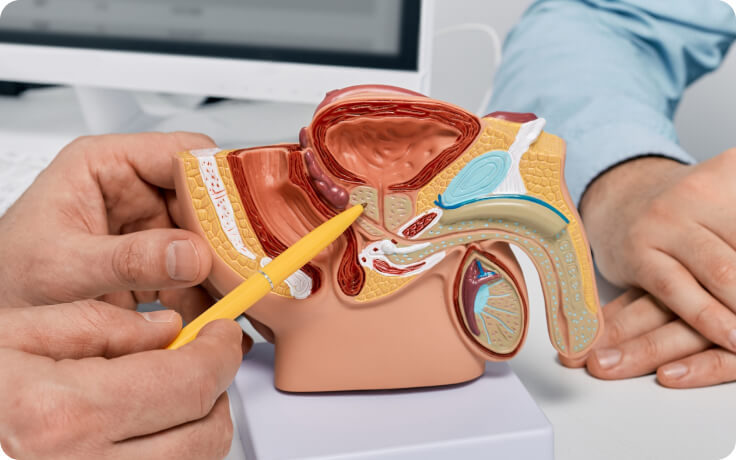
The traditional gold-standard surgery for an enlarged prostate: a resectoscope is passed through the urethra and an electrical loop shaves away the obstructing prostate tissue piece by piece, with no external incision. It works well for small-to-moderately-enlarged glands, but the electrical current causes more bleeding and a longer catheter time than the newer laser and office-based options below.

Typical recovery · 4–6 weeks

Typically a 2–3 night hospital stay with a catheter left in for 1–3 days and continuous bladder irrigation immediately after surgery; light activity resumes within 1–2 weeks, with full recovery and unrestricted activity (including heavy lifting) by 4–6 weeks. Retrograde ejaculation (harmless, but causes infertility) occurs in roughly 65–90% of men.

India

$3,000–$6,000

Turkey

$4,500–$7,500

Thailand

Estimate pending verification — ask your care coordinator for a current quote

Holmium Laser Enucleation of Prostate (HoLEP)

A holmium laser is used to peel the entire enlarged inner portion of the prostate away from its outer capsule (much as a surgeon would in open removal), and the freed tissue is then cut into pieces and suctioned out. Because it removes the whole obstructing adenoma regardless of size, HoLEP is especially suited to very large prostates that might otherwise need open surgery, with less bleeding and a shorter catheter time than TURP — though it requires specialized laser equipment and a highly experienced surgeon.

Typical recovery · 2–3 weeks

Hospital stay is usually 1–2 nights, with the catheter typically removed within 24 hours (versus 1–3 days for TURP) thanks to the laser's superior bleeding control. Most patients resume light activity within a week and are fully recovered by 2–3 weeks. Retrograde ejaculation rates are similar to TURP, but transfusion and re-treatment rates are lower.

India

$3,500–$6,500

Turkey

$6,500–$13,000

Thailand

Estimate pending verification — ask your care coordinator for a current quote

UroLift Procedure

Small permanent implants (like tiny suture anchors) are placed through a cystoscope to pull the enlarged prostate lobes apart and hold the urethral channel open, without cutting, heating, or removing any tissue. Because nothing is cut or burned, UroLift preserves sexual and ejaculatory function better than any other option here, and can often be done in an office setting — but it works best in small-to-moderate glands without a large obstructing middle lobe, and its symptom relief is more modest with a higher chance of needing a repeat procedure later.

Typical recovery · days–2 weeks

Usually a same-day, catheter-free or short-catheter (24–48 hour) procedure done under local anesthesia or light sedation; most men return to normal activity within a few days to 2 weeks, faster than any surgical alternative. Retrograde ejaculation occurs in under 1–2% of patients, but roughly 13% of patients need a further procedure within 5 years, higher than TURP, HoLEP, or Rezūm.

India

$4,000–$6,000

Turkey

Estimate pending verification — ask your care coordinator for a current quote

Thailand

Estimate pending verification — ask your care coordinator for a current quote

Rezūm Water Vapor Therapy

A handheld device delivers short bursts of sterile water vapor (steam) directly into the enlarged prostate tissue; as the vapor condenses it releases thermal energy that kills the excess cells, which the body then gradually reabsorbs and shrinks over the following weeks to months. Like UroLift, it is a quick, tissue-preserving, office-based option with minimal effect on sexual function, but symptom improvement is gradual rather than immediate, and it is generally reserved for small-to-moderate prostates rather than very large glands.

Typical recovery · 2–4 weeks

Performed in a single short outpatient session under light sedation or local anesthetic, but a catheter is usually needed afterward for about 3–7 days while the initial swelling from treatment subsides — longer than UroLift's typical catheter time. Most men resume normal daily activity within 1–2 weeks, though the full symptom benefit builds gradually over 4–12 weeks as the treated tissue shrinks. New sexual or ejaculatory dysfunction is rare.

India

$3,000–$5,000

Turkey

$2,900–$5,200

Thailand

Estimate pending verification — ask your care coordinator for a current quote

Cost ranges are indicative estimates for international patients and vary with implant choice, number of levels treated, surgeon, and hospital. Request a personalised quote for your specific case.

Clinical detail: AAOS OrthoInfo, Mayo Clinic Health System, Cleveland Clinic. Cost ranges cross-checked across multiple independent medical-tourism sources per country where marked; ranges flagged "pending verification" could not be independently confirmed at the time of writing.

Partner hospitals

1 centres
View all hospitals
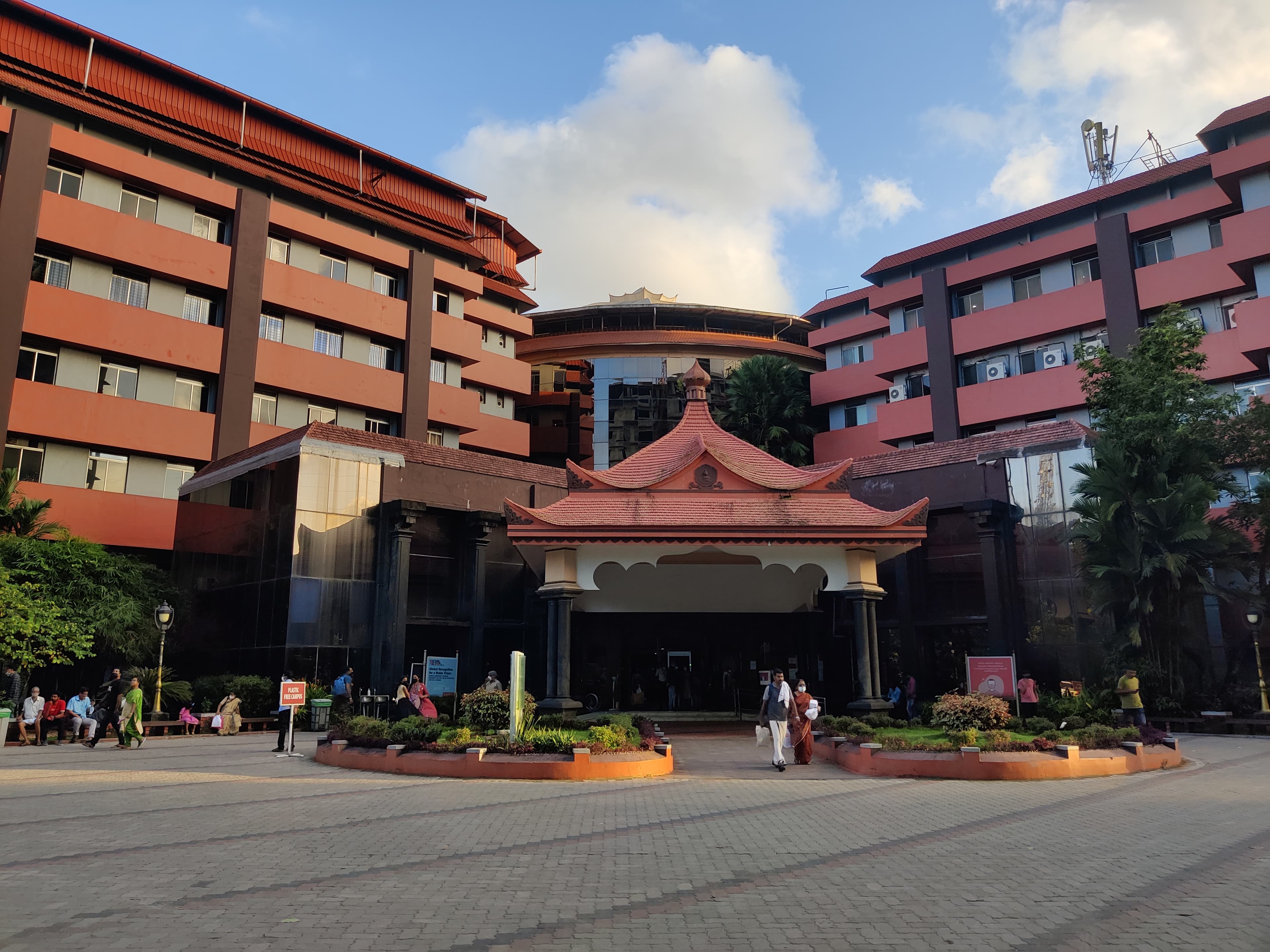
Amrita Hospital Kochi

Amrita Hospital Kochi

Kochi, India

Amrita Hospital Kochi is a major teaching hospital in Kerala with extensive departments, advanced diagnostics and strong academic/research links. Established in 1998, it operates 1350 beds with 450 doctors across cardiology, oncology, haematology, neurology and orthopaedics, and holds NABH, NABL and ISO 9000:2015 accreditation, combining tertiary clinical care with medical education and research.

NABHNABLISO 9000:2015

450+

Specialists

1,350+

Beds

View Profile

Frequently asked questions

Both TURP and HoLEP are highly effective surgical treatments for BPH, but they differ in scope and ideal candidates. TURP (Transurethral Resection of the Prostate) is the traditional gold standard, best suited for prostate glands of moderate size (30–80 mL). HoLEP (Holmium Laser Enucleation) is preferred for very large prostates (over 80 mL) that might otherwise require open surgery — it removes the entire obstructive tissue using a laser and has lower blood loss, shorter catheter time, and a durable long-term result. HoLEP requires specialized equipment and a highly skilled surgeon, which is why international centers with high caseloads can offer a quality advantage. Your urologist will assess your prostate volume, urinary flow rate, and overall health to recommend the most appropriate option.

No fees. No commitment.

Our guidance is completely free

We are compensated by our partner hospitals — never by patients. You get independent clinical matching, cost transparency, and end-to-end coordination at no cost to you.

Message us on WhatsApp