
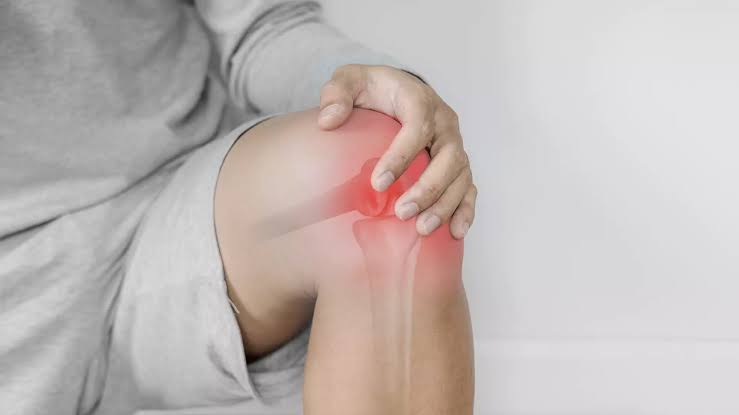
Joint Preservation Procedures
Orthopedics
Starting from
$1,500
Up to $11,000 depending on centre
Typical duration
5–14 days
Including pre-operative work-up
Content reviewed for medical accuracy by: Dr. Rodina Ainasoa · Medical Content Writer & Health Communications
Overview
Innovative surgical and regenerative techniques — including osteotomy, cartilage restoration, PRP injections, and arthroscopic debridement — designed to restore function and delay or eliminate the need for joint replacement. Medical tourists choose India and Thailand for access to high-volume joint preservation specialists at 50–70% less than Western prices.
Your case is matched to a centre on the basis of clinical outcome data, not marketing. We coordinate every step — from pre-operative work-up to post-treatment follow-up — with a dedicated care coordinator.
What's included
Joint Preservation Procedures
Coordinated from
or message us on WhatsApp
No commitment required. Your data is never shared with third parties.
High Tibial Osteotomy vs. Cartilage Restoration
Joint preservation covers several distinct techniques chosen based on where the damage is and how the joint is aligned. Two of the most common surgical approaches are compared below; PRP injections and arthroscopic debridement are typically used as earlier-stage or adjunct options rather than alternatives to these two.
| Parameter | High Tibial Osteotomy (HTO) | Cartilage Restoration (ACI/MACI/Osteochondral Graft) |
|---|---|---|
| What it addresses | Corrects malalignment (commonly a bowlegged, varus knee) by cutting and repositioning the shin bone so weight shifts away from the worn compartment of the joint, per AAOS. | Repairs or replaces a focal area of damaged or missing cartilage using the patient's own cultured cells, an osteochondral plug, or donor tissue, per AAOS and AOSSM. |
| Best suited for | Younger, active patients with early-to-moderate arthritis confined to one side of the knee and a correctable alignment deformity. | Younger patients with a well-defined, localized cartilage defect and largely normal joint alignment on either side of the damaged area. |
| Typical procedure time | Roughly 1-2 hours; a metal plate and screws hold the corrected bone position while it heals. | Roughly 1-2 hours for single-stage grafting; cell-based techniques such as ACI/MACI require an earlier arthroscopic biopsy visit before the main implantation procedure. |
| Hospital stay and early recovery | Typically 1-3 nights in hospital, with weight-bearing restricted on crutches for roughly 6-8 weeks while the bone heals, per Cleveland Clinic. | Often a short stay or day case, with a protected weight-bearing and bracing period of roughly 6-8 weeks to allow the graft to integrate, per AAOS. |
| Return to sport or full activity | Bone healing and full recovery generally take 6-12 months before return to higher-impact activity. | Cartilage maturation is gradual; most cell-based techniques allow return to sport at roughly 9-18 months, per AOSSM. |
The Procedure: Step by Step
The steps below outline a typical joint preservation pathway; the exact technique depends on whether osteotomy, cartilage restoration, PRP, or arthroscopic debridement is recommended for your joint.
Imaging-based assessment and planning
Weight-bearing X-rays and an MRI are used to map the size and location of cartilage damage and to measure joint alignment, confirming whether osteotomy, cartilage restoration, a biologic injection, or debridement is the appropriate technique.
Arthroscopic evaluation
A small camera (arthroscope) is inserted through tiny incisions to directly inspect the cartilage surface, confirm the extent of damage, and, for cell-based cartilage restoration, harvest a small cartilage sample for laboratory culturing at an earlier visit.
Correction or repair
For osteotomy, the surgeon cuts and repositions the bone and secures it with a plate and screws; for cartilage restoration, the damaged area is prepared and filled with cultured cells, an osteochondral plug, or donor graft tissue; for biologic or debridement approaches, PRP is injected or loose or damaged tissue is smoothed and removed.
Closure and initial protection
Incisions are closed, and a brace or protected weight-bearing plan is put in place to support healing while the corrected bone or graft integrates with the surrounding joint.
Recovery Timeline
Pain and swelling are managed with elevation, ice, and prescribed medication; crutches or a brace protect the joint, and a physiotherapist begins gentle range-of-motion exercises early to prevent stiffness, per AAOS.
Weight-bearing is gradually increased on follow-up X-ray or clinical confirmation that bone healing or graft integration is progressing as expected; structured physiotherapy continues to rebuild strength and motion.
Most patients resume low-impact daily activities and light exercise; higher-impact or pivoting sports remain restricted until strength, stability, and imaging findings support progression, per Cleveland Clinic.
Bone remodeling after osteotomy and cartilage maturation after restoration procedures continue over this longer horizon; full return to demanding sport or labor is guided by your surgeon's assessment rather than a fixed calendar date, per AOSSM.
Source: American Academy of Orthopaedic Surgeons (AAOS); American Orthopaedic Society for Sports Medicine (AOSSM); Mayo Clinic; Cleveland Clinic. Individual recovery varies and is guided by your treating orthopedic surgeon.
Known Risks & Limitations
- Joint preservation is intended for appropriately selected, typically younger or earlier-stage patients; it is not a substitute for joint replacement once arthritis is advanced, and your surgeon will advise honestly if your imaging does not support a preservation approach, per AAOS.
- Graft or repair failure — the corrected bone position, cartilage graft, or repaired tissue not healing or integrating as expected — is a recognised complication that may require revision surgery, per AOSSM.
- Results are not always permanent: many patients who undergo osteotomy or cartilage restoration eventually progress to needing partial or total joint replacement years later as the joint continues to age, per AAOS and Cleveland Clinic.
- As with any surgery, general risks including infection, blood clots (deep vein thrombosis), stiffness, and hardware-related discomfort from plates or screws apply, and a minority of patients require a second procedure to remove hardware once healing is complete.
- Biologic options such as PRP injections have more limited and variable evidence of long-term effectiveness compared with surgical techniques, and their benefit tends to be temporary rather than a lasting structural repair, per peer-reviewed orthopedic literature.
Source: American Academy of Orthopaedic Surgeons (AAOS); American Orthopaedic Society for Sports Medicine (AOSSM); Mayo Clinic; Cleveland Clinic. No procedure is without risk; your treating orthopedic surgeon will review your individual case.
The CureSureMedico Care Pathway
Remote imaging review
Share your X-rays, MRI, and symptom history with our coordination team, who forward your case for an orthopedic review of whether osteotomy, cartilage restoration, PRP, or debridement is realistically appropriate for your joint.
Specialist and hospital matching
We match you with an accredited orthopedic surgeon and hospital experienced in the specific joint preservation technique your case requires.
Transparent cost estimate and trip planning
Once your case is reviewed, we issue a consolidated cost estimate covering the consultation, procedure, biologic materials or graft where applicable, and hospital stay, and help plan a trip length matched to your expected weight-bearing restrictions.
Procedure and early rehabilitation
You undergo your procedure with in-country support from our patient coordinator and interpreter, and begin guided physiotherapy before you are cleared to travel home.
Follow-up and continuity of care
We share your operative notes, imaging, and rehabilitation plan with your home-country physiotherapist or orthopedic team so your longer recovery and any future joint monitoring continue smoothly after you return.
Global cost comparison — Joint Preservation Procedures
Average coordinated costs across our partner centres. Final pricing depends on clinical complexity and chosen hospital.
| Country | Avg. cost | vs. cheapest |
|---|---|---|
🇮🇳 India New Delhi · Chennai · Bengaluru · Hyderabad · Mumbai · Kochi | $2,000 | —chevron_right |
🇹🇷 Turkey Istanbul | $4,000 | +100%chevron_right |
Costs are indicative estimates and vary by procedure specifics, hospital, and clinical complexity. Request a personalised estimate for your specific case.
Frequently asked questions
Joint preservation is most effective for patients under 55 to 60 years old with localized cartilage damage or early-to-moderate osteoarthritis, adequate bone stock, and a stable joint. Your suitability is assessed based on X-rays, MRI findings, BMI, activity level, and alignment. If your deformity or cartilage loss is too advanced, the surgeon will advise you honestly and may recommend a partial or total knee replacement instead. A remote second-opinion consultation with your imaging is the first step and carries no obligation.
No fees. No commitment.
Our guidance is completely free
We are compensated by our partner hospitals — never by patients. You get independent clinical matching, cost transparency, and end-to-end coordination at no cost to you.